
Fire Feature Installation
- Home
- Fire Features in Northeast Ohio
Radiant Heating With Engineered Footings
A custom fire feature transforms your outdoor living space into a luxurious year-round destination. As the seasons shift in Northeast Ohio, a masterfully designed fire pit or outdoor fireplace provides the essential warmth to comfortably entertain from early spring through late autumn. Instead of retreating indoors when the evenings cool, you and your guests can continue to enjoy a sophisticated, inviting atmosphere.
Bee Green Outdoor Living constructs striking fire pits, grand outdoor fireplaces, modern fire tables, and sleek linear fire walls for properties throughout Greater Cleveland, Akron, and Medina. Every installation is engineered with meticulous attention to detail, ensuring flawless structural footings, seamless fuel system integration, and strict adherence to all local municipal codes and setback requirements.
Your outdoor heating elements should reflect how you naturally entertain. Whether you envision intimate evenings around a classic hearth or hosting large-scale events alongside a dramatic linear fire wall, we tailor the design to your lifestyle. We carefully consider the scale of your gatherings, optimal placement, concealed utility routing, and your preference for ease of maintenance to create a flawless gathering space.
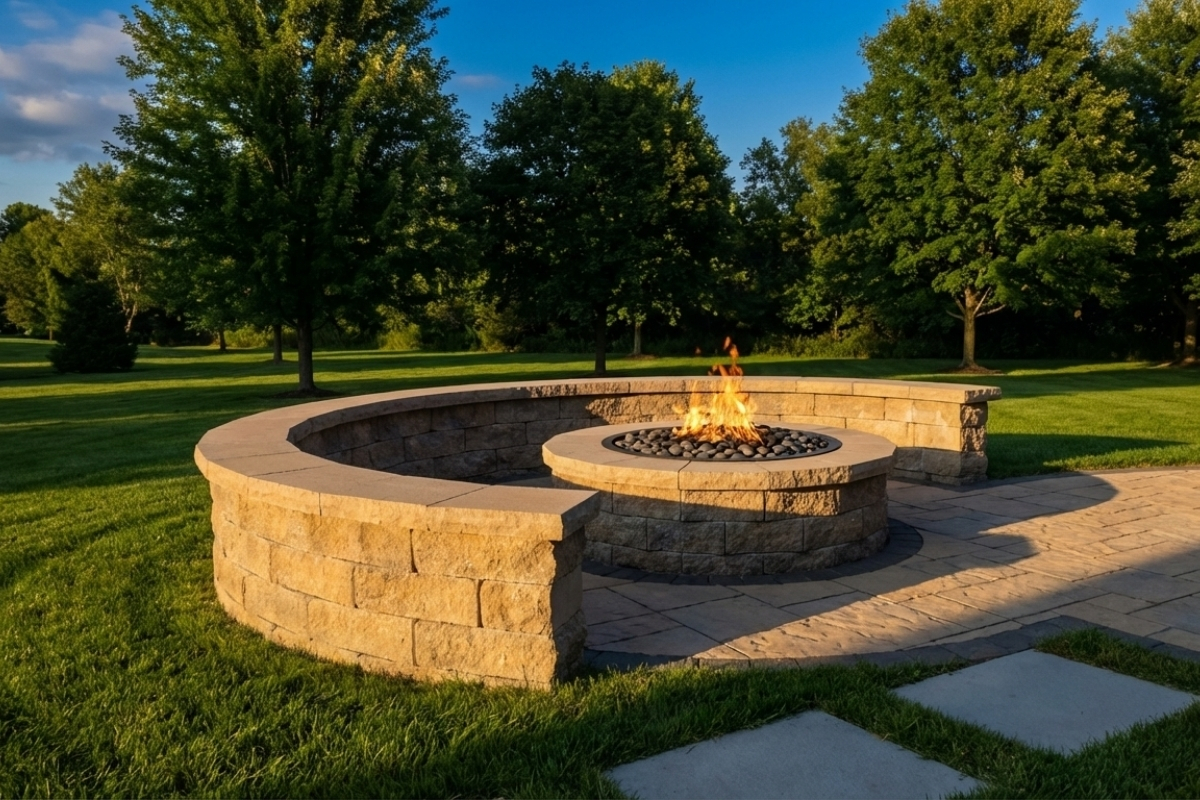
Select the ideal fuel source to complement your entertaining style and landscape design. We offer expertly integrated gas and traditional wood-burning configurations, each providing a distinct ambiance for your outdoor living area.
Natural gas systems deliver the ultimate in sophisticated convenience, allowing you to ignite a brilliant, warming display with the turn of a key or a smart device. This effortless operation is perfect for spontaneous evening gatherings and refined outdoor dining. Alternatively, a custom wood-burning feature provides the timeless, sensory experience of a crackling fire, creating a classic focal point for your patio or grounds. We guide you through selecting the perfect system to harmonize with your property layout and personal lifestyle.
Types of Fire Features We Build
From classic wood-burning fire pits to modern linear gas burners, we design and build every type of outdoor fire feature. Each is custom-built for your specific site, fuel source, and the way you use your outdoor space.
Our Fire Feature Types
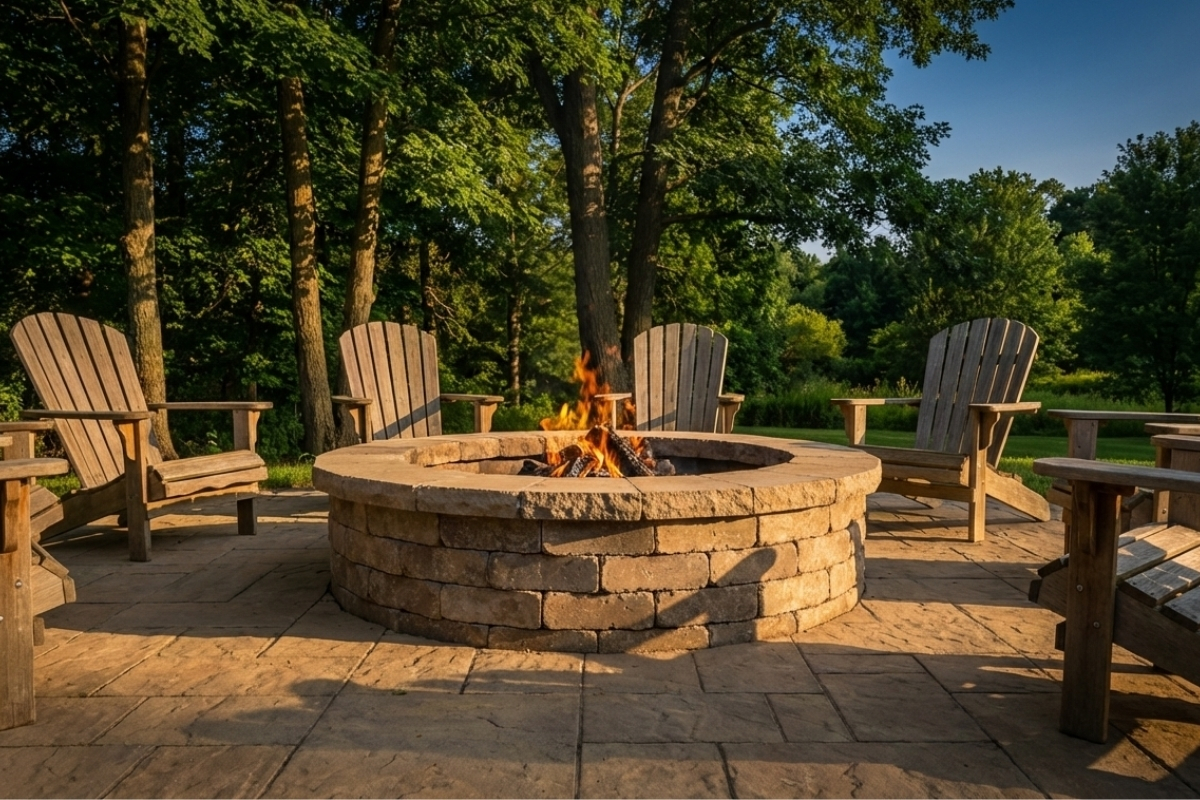
Custom Fire Pits
Round, square, and freeform fire pits built from natural stone, manufactured stone veneer, concrete block, or poured concrete. Fire-rated liner, proper drainage, and cap stone included on every build.
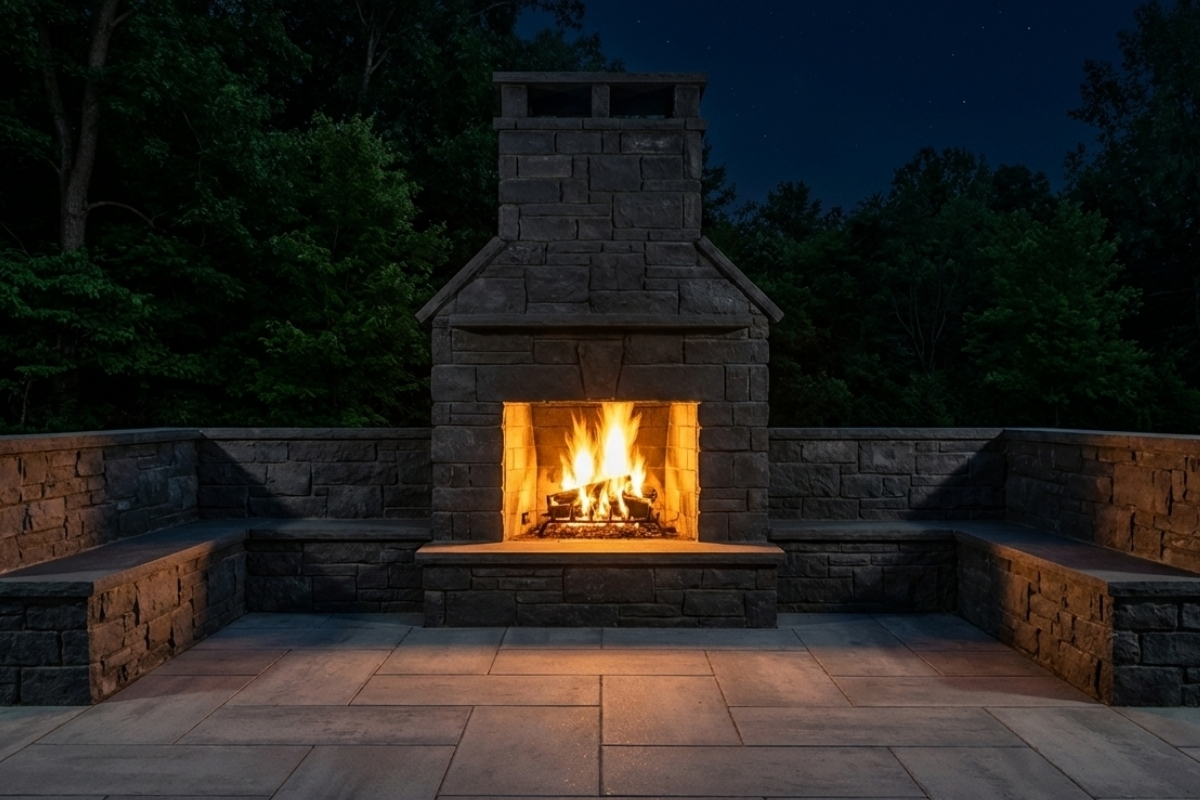
Outdoor Fireplaces
Single-sided, see-through, and corner fireplaces with full firebox, smoke shelf, damper, chimney, and structural footing. Wood-burning or gas. Built to the same code standards as an indoor fireplace.
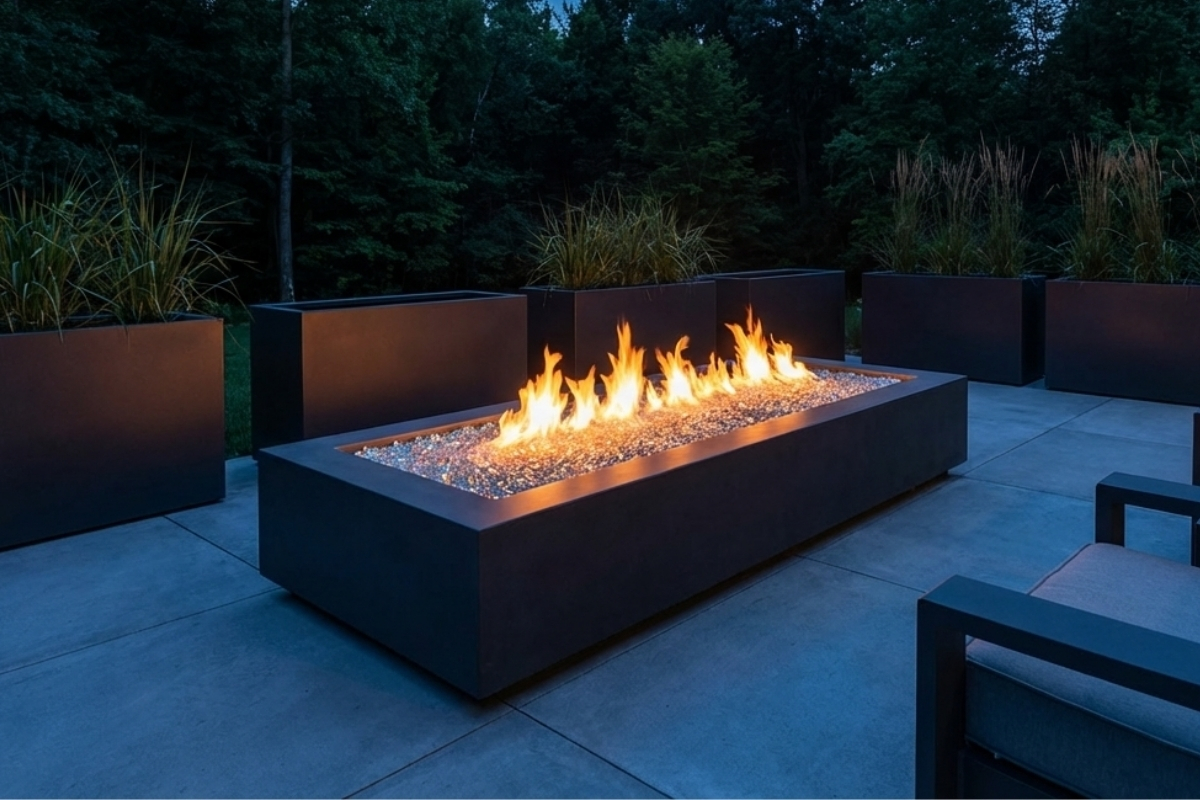
Fire Tables
Custom dining and cocktail tables with integrated gas burners. Concrete, stone, or tile surfaces with lava rock, fire glass, or ceramic log media. No smoke, no ash — clean gas flame only.
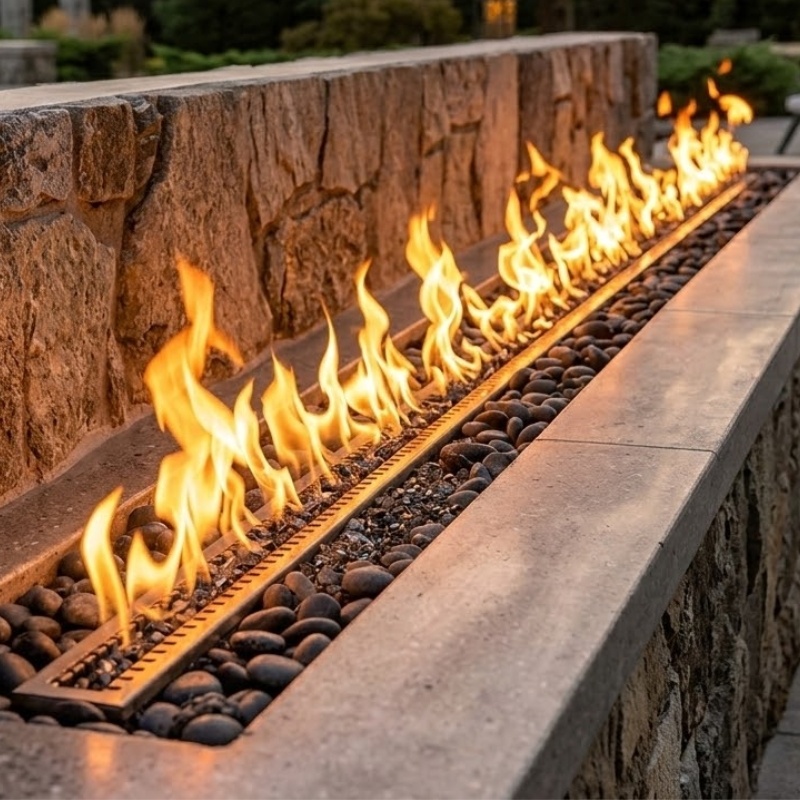
Fire Walls & Linear Burners
Contemporary linear gas burners set into retaining walls, seat walls, and freestanding features. Long, thin flame profiles from 24″ to 72″. Integrated into concrete block, natural stone, or poured concrete.
Gas vs. Wood-Burning: What Works in Northeast Ohio
Both fuel types perform well in Northeast Ohio. The choice comes down to how you use the feature, what access you have to a natural gas supply, and how much ongoing maintenance you want.
What Drives the Choice
Wood-burning delivers the authentic fire experience — crackling sounds, wood smoke aroma, and no gas line required. The trade-off is higher ongoing maintenance: ash cleanup after every use, spark management, wood storage, and occasional fire brick inspection. Wood features are also subject to local burn restrictions during dry periods.
Gas offers instant on/off with a switch or key valve, no smoke or ash, and season-round use regardless of burn restrictions. Natural gas requires a dedicated supply line from your meter; propane requires a tank. Installation cost is higher, but lifetime maintenance is lower.
We strongly recommend gas if your home has natural gas and the fire feature location is reasonably close to your meter. If you want an authentic experience or the location is far from the gas supply, wood-burning remains a highly practical and enjoyable option.
Our Construction Standards
- Concrete footing poured below 42" frost line on every permanent build
- Fire brick interior liner rated to 2,300°F on all fireboxes
- Stainless steel burner pans and gas fittings on all gas units
- Dedicated gas line sized to exact BTU requirement of each burner
- Drain ports and perforated pipe under every fire pit burn area
- All permits obtained, all inspections scheduled and completed
Footing Failures
Without a concrete footing below the 42" frost line, fire features heave, crack, and shift. Every permanent structure we build sits on a code-compliant concrete footing.
Gas Line Sizing
Undersized supply lines starve burners and create pressure drop under load. We engineer gas lines to the exact BTU requirement and handle all permit applications and inspections.
Water Infiltration
Standing water in a fire pit destroys fireboxes and burner pans over time. Every build includes drain ports, perforated pipe below the burn area, and proper grade to direct water away.
Materials & Construction Standards
Concrete Footings
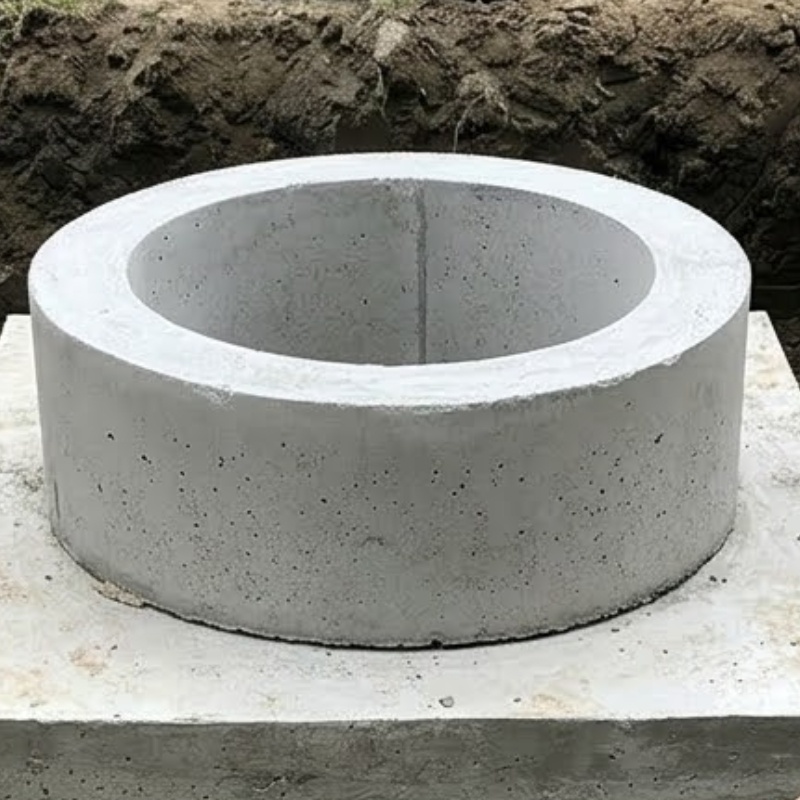
Every permanent fire feature we build has a structural concrete footing poured below the frost line — 42 inches in Northeast Ohio. This is non-negotiable. A fire pit on a gravel pad or floating slab will heave, crack, and shift through the first few freeze-thaw cycles.
Footing size is engineered to the load of the masonry structure. A heavy natural stone fireplace with full chimney requires a different footing than a lightweight concrete fire pit. We size the footing to the structure, not to the smallest footing we can get away with.
Fire-Rated Interior Components
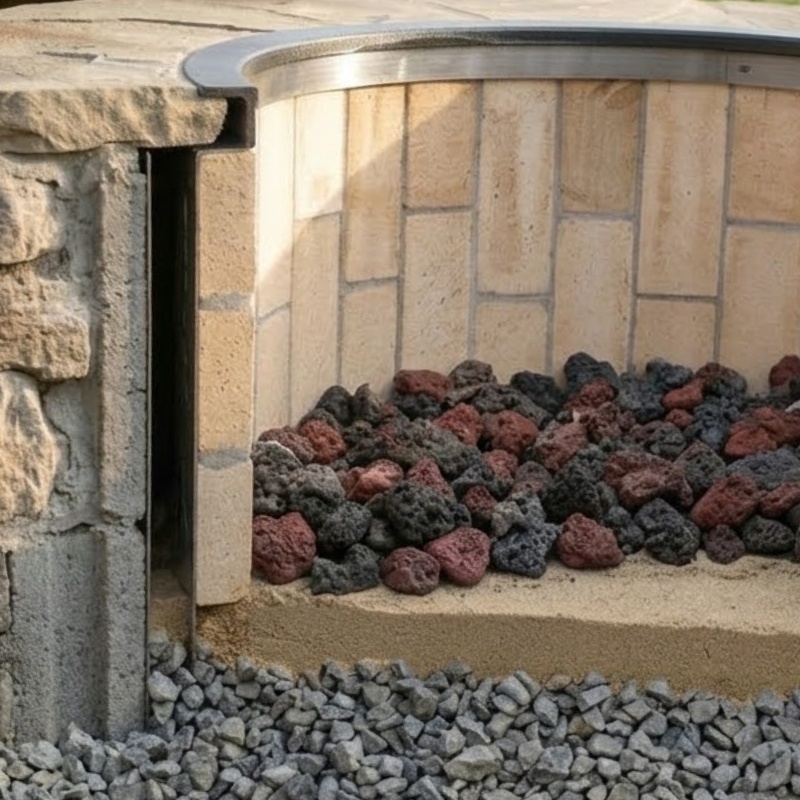
Interior surfaces that see direct flame must be built with materials rated for high heat. We use fire brick (rated to 2,300°F) for all firebox liners, fire-rated mortar for all masonry in the burn area, and stainless steel burner pans and gas fittings on all gas units. Standard concrete block is never used inside a firebox.
Gas Line Installation
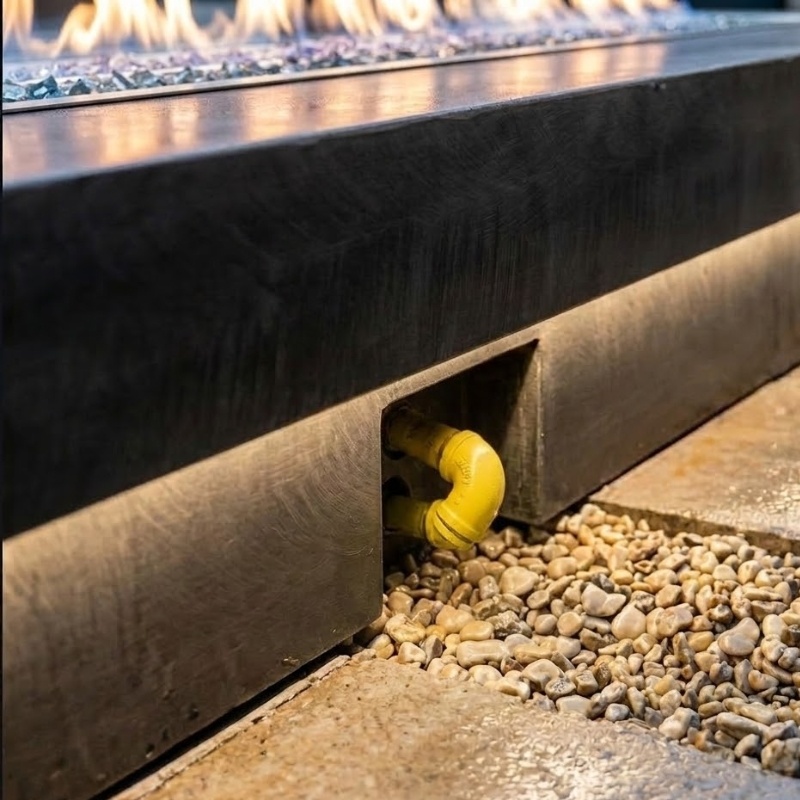
All gas line work is performed to code. A dedicated line is run from the meter to the fire feature, sized to the BTU rating of the burner. Shutoff valves, drip legs, and proper burial depth are included. Most municipalities in Northeast Ohio require permits and inspections for gas line work — we handle these for you.
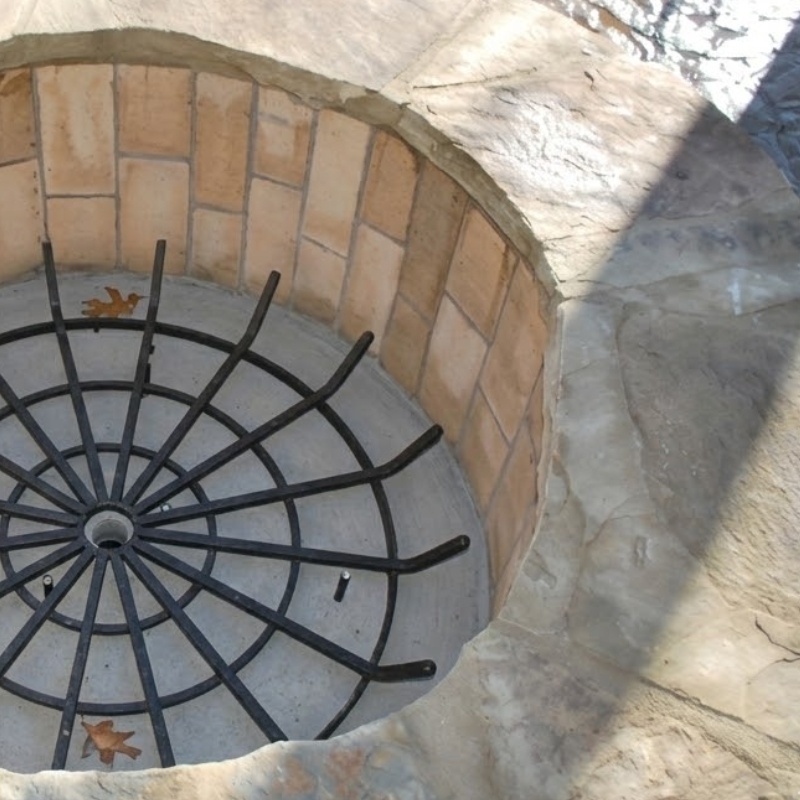
Drainage & Water Management
Water pooling in a fire pit is one of the most common problems we see. Our solution: drain gravel and a perforated pipe beneath every fire pit to direct rainwater away from the burn area. Gas burner pans include weep holes so water doesn’t collect. Wood-burning fire pit floors are built with a slight pitch to the center drain.
Our Fire Feature Installation Process
Phase 1
Consultation
We discuss how you plan to use the fire feature, preferred fuel type (gas or wood), and location in the yard. We evaluate the site for gas line access, drainage, setbacks from structures and property lines, and how the feature will integrate with your existing or planned patio.
Phase 2
Permitting & Design
Permits are pulled before design work begins. Gas permits are required in most municipalities — we handle the application and coordinate all required inspections. Design drawings show the feature footprint, footing depth, gas line routing, and all clearances from structures and property lines.
Phase 3
Excavation & Footings
We excavate to below the frost line (42" in Northeast Ohio) and pour a structural concrete footing. No fire feature we build sits on a gravel base or floating pad — the footing is what prevents heaving, cracking, and shifting over time. Drainage infrastructure is installed during this phase.
Phase 4
Construction
Masonry construction begins on the approved footing. Gas lines, burner pans, fire brick liner, and drainage components are installed during construction — not retrofitted after. Capstone, veneer, and finish materials are applied and mortared. All gas connections are pressure-tested prior to completion.
Phase 5
Final Walkthrough
We walk you through operating the ignition system, locating the gas shutoff, and seasonal maintenance procedures. Warranty documentation for all components is provided. The fire feature is ready to use the same day — we deliver a finished installation, not a punch list.
Fire Features and the Larger Outdoor Living Picture
Fire features are almost always part of a larger outdoor living project. Most of our fire pit and fireplace installations connect with one or more of the following:
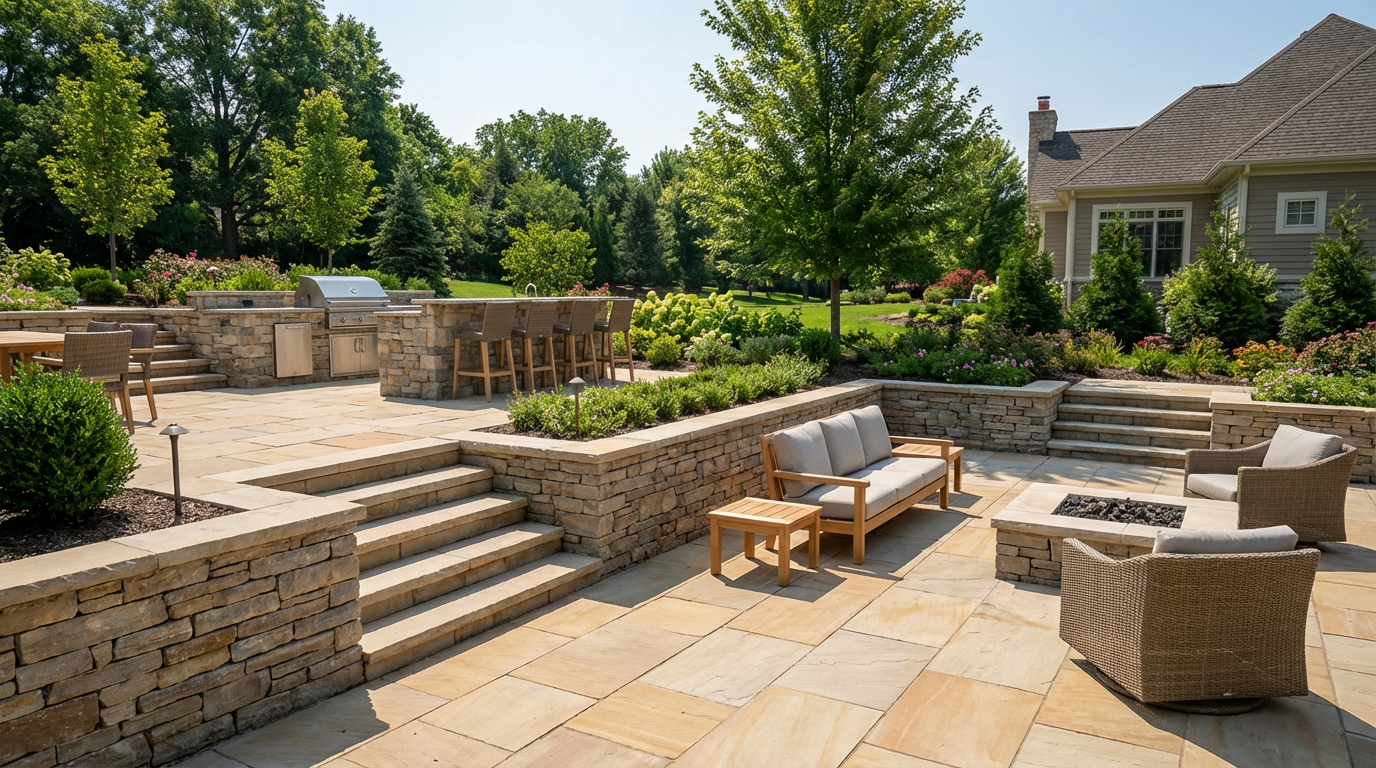
Patio Installation
A fire pit needs a level, heat-rated surface beneath it. We build patios with non-combustible pavers and reinforced bases designed to support fire features safely.
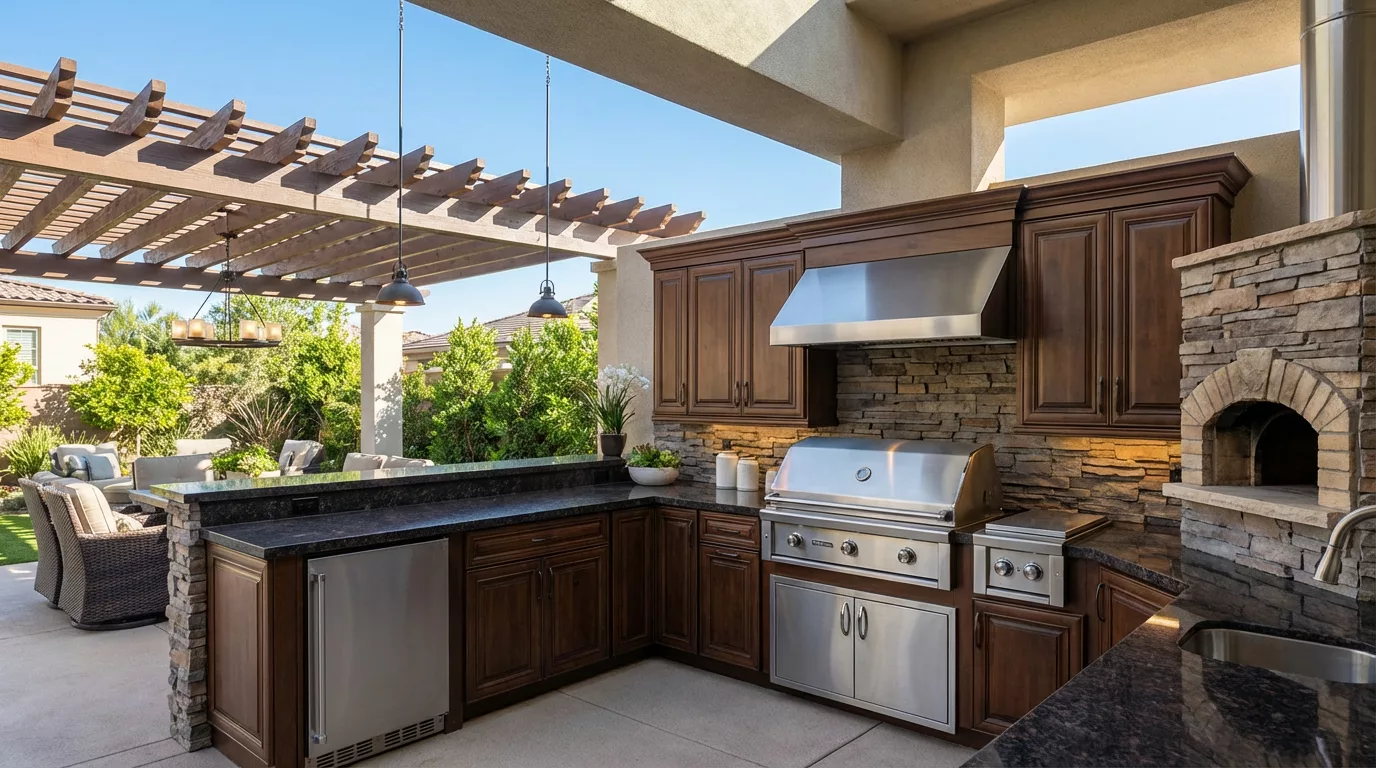
Outdoor Kitchens
Fire features and outdoor kitchens share gas lines, footings, and seating areas. We coordinate both builds so utilities run cleanly and the layout flows naturally.
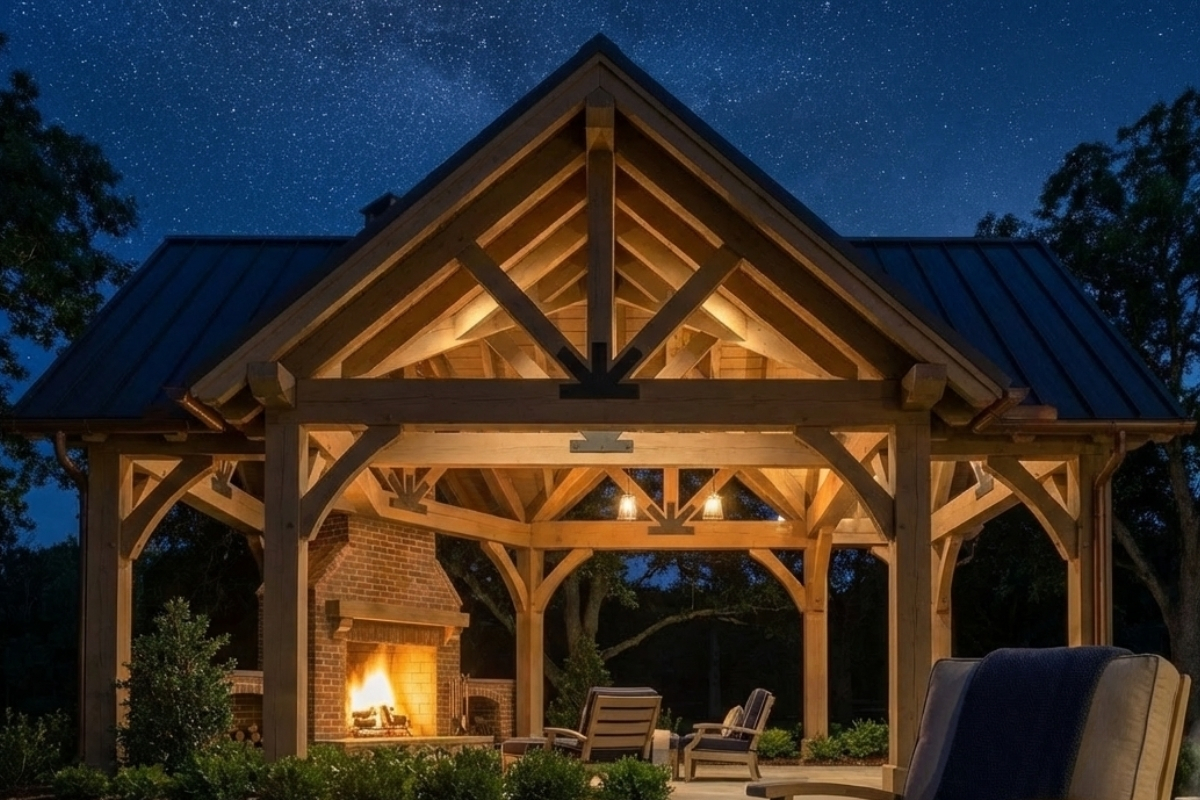
Pergolas & Shade Structures
Pergolas frame fire features and define the seating zone around them. We position columns and beams with proper clearance so warmth and shade work together.
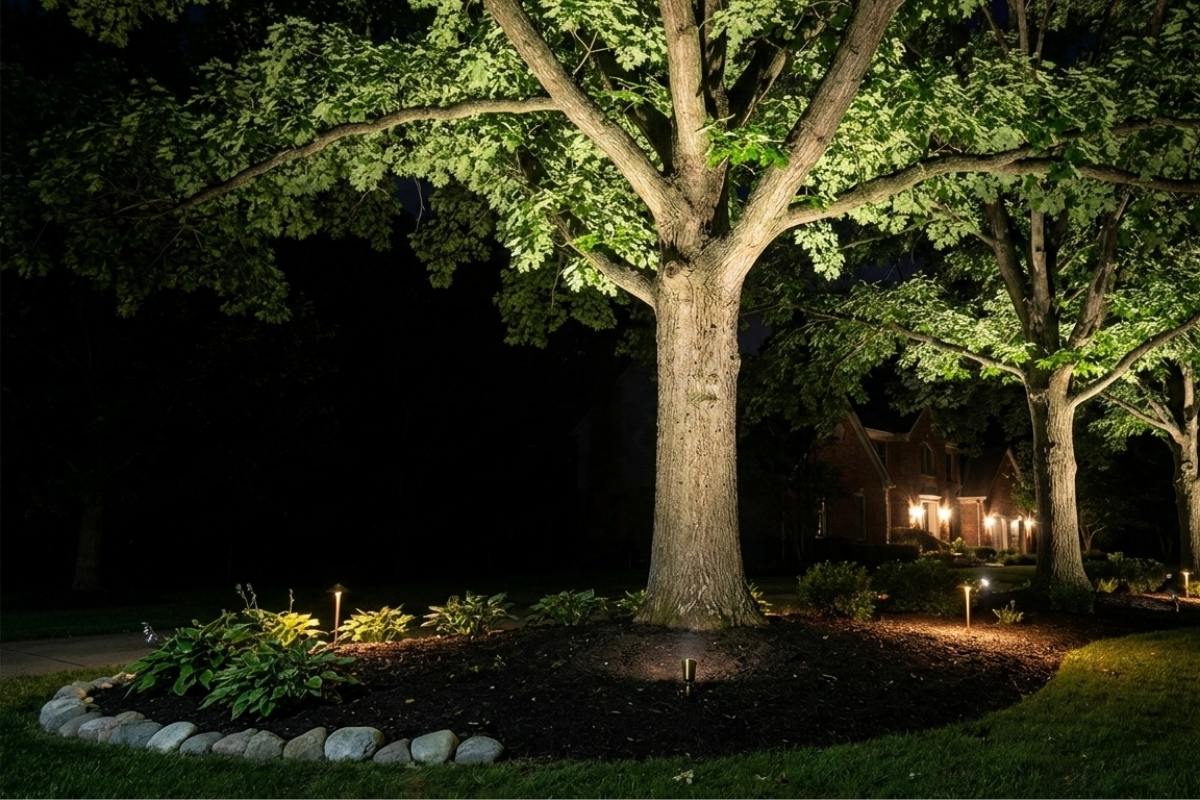
Outdoor Lighting
Low-voltage lighting around a fire feature extends your evenings and highlights the stonework. We wire pathway and accent lights during construction to avoid digging later.
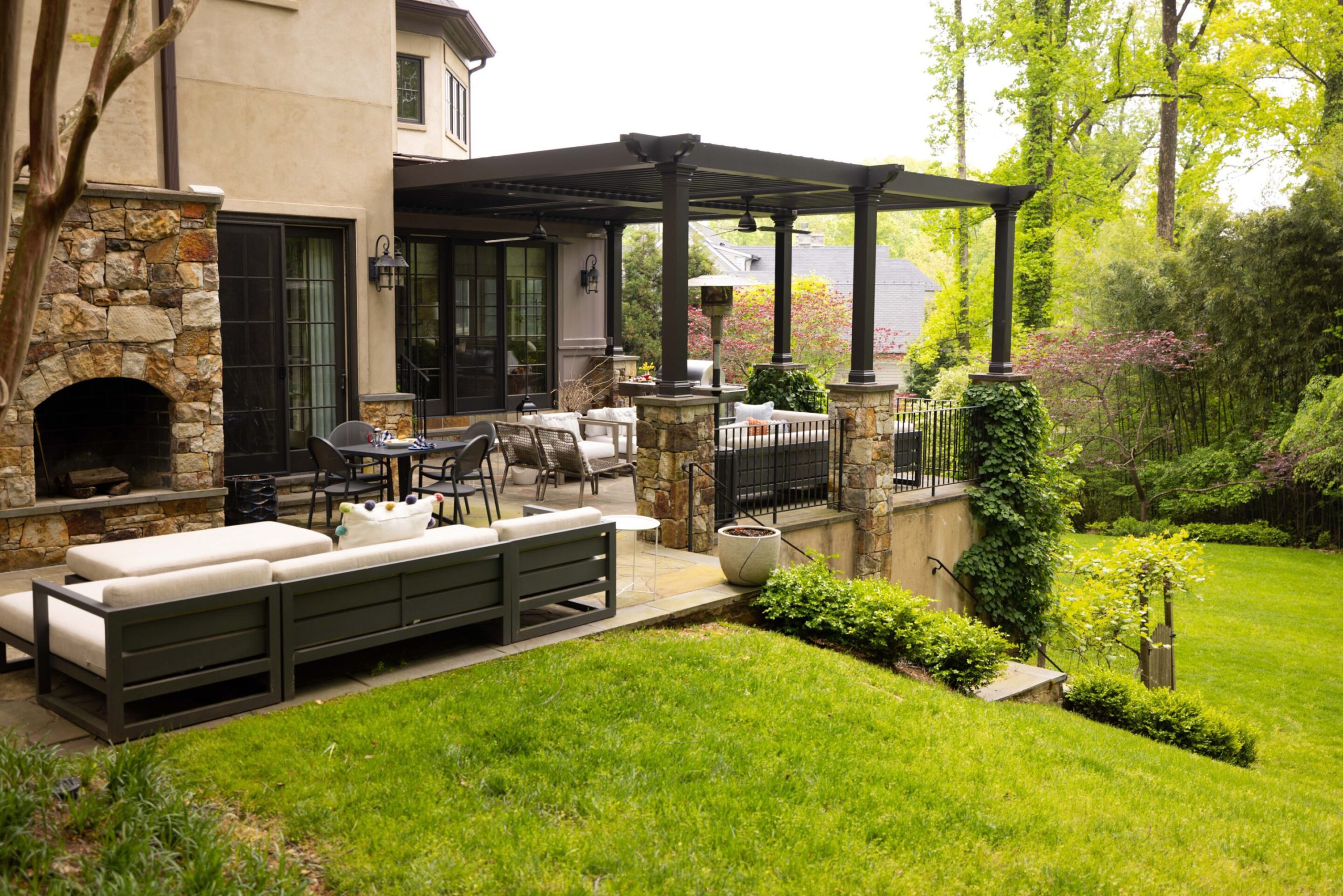
Hardscaping
Fire pits and fireplaces are built into the hardscape — matching stone, integrated seat walls, and paver surrounds create a cohesive outdoor living area.
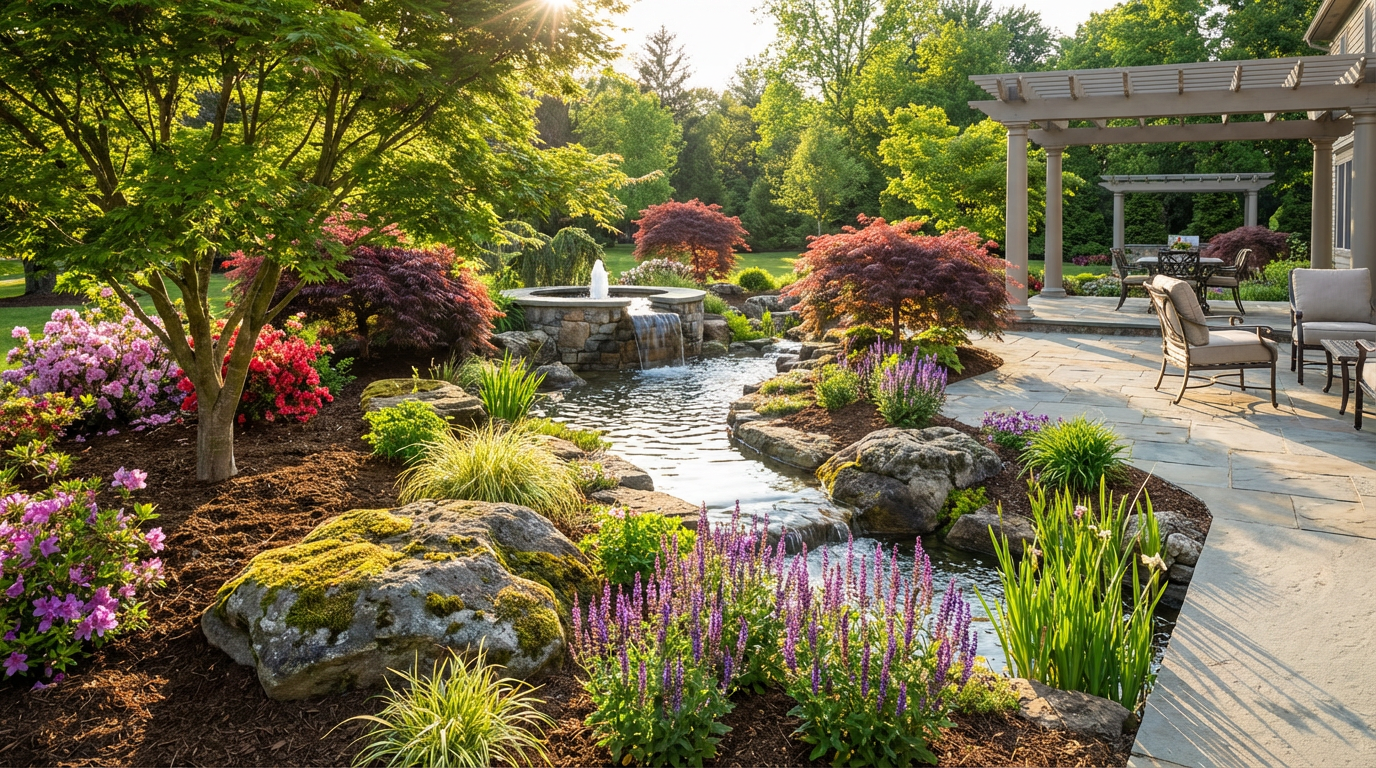
Landscaping
Landscape plantings soften the edges around fire features and create natural privacy screens. We select heat-tolerant species and position them at safe clearances.
Areas We Serve
Bee Green Outdoor Living designs and installs fire pits, outdoor fireplaces, and fire features across Northeast Ohio:
Returning to overview…
Click any city to explore
This map highlights many of the communities where we regularly work. If you don’t see your area listed, give us a call — we’d love to discuss your project.
Frequently Asked Questions
How much does a fire pit cost in Northeast Ohio?
A basic natural stone or block fire pit with a simple paver surround will fall in the range of $3,500–$8,000. A custom stone fire pit with seat walls and larger hardscaping will be in the range of $8,000–$20,000.
Outdoor fireplaces start around $12,000 and work up to $30,000 and beyond for large masonry builds with stone veneer and substantial chimney work. Adding a gas line can increase the cost by $1,500–$4,000, depending on the length of the run from the meter.
Can I add a fire pit to my existing patio?
Most of the time, yes. We assess the current patio surface and foundation to determine if it can support the weight of the fire feature and whether the necessary utilities can be run without a full reconstruction.
If the existing patio has a solid, properly compacted base and sufficient space, a retrofit fire pit is a practical and cost-effective option. In some cases, drainage or foundation repairs are needed first — we'll identify these during the initial site visit.
How close can a fire pit be to my house?
Each municipality sets its own setback rules. Typically, for wood-burning fire features we follow a 10 to 15 foot minimum from any combustible structure. For gas fire features, the minimum is usually 5 to 10 feet — though this varies by product and jurisdiction.
Other factors to consider are covered porches, overhanging trees, and fence lines. We verify all applicable setbacks with the local municipality before beginning any design work — permits handle this formally for gas installations.
Do gas fire features work in winter?
Yes. Gas fire features ignite in cold weather and burn steadily regardless of temperature. They are particularly well-suited for the shoulder seasons in Northeast Ohio.
Many of our clients use their gas fire pits year round — from March through December. The only limitation is extreme weather where you wouldn't want to be outside anyway. Wood-burning features work fine in winter too, though wood storage becomes a consideration.
What maintenance does a fire pit require?
Gas fire features require periodic cleaning of fire glass or lava rock media, an annual inspection of all gas connections, and an occasional check of the ignition system. Most of this is simple homeowner maintenance.
Wood-burning fire pits require more attention: thorough ash cleanup after each use, periodic cleaning of the capstone to prevent smoke staining, and fire brick inspection every few years for cracks. Full maintenance instructions are provided at the final walkthrough for every installation.