How Much Does Hardscaping Cost in Northeast Ohio?
During site visits, someone usually asks something like “how much will this cost?” That question feels right to me — hardscaping isn’t value, so people want clear answers before moving forward.
It’s not easy finding reliable info online — most cost calculators toss out numbers based on averages that barely match real-world expenses in places like Greater Cleveland, Medina, or Lorain County. What you get instead are broad figures ignoring local differences in materials, wages, underground layout, even how much ice needs removing. Take base layers under patios: down south, such as Georgia, builders often call up 4 inches, mostly compacted stone. Over clay soil where frost can penetrate, we’re laying down 8-inch thick layers backed by geotextile — this one feels unlike the last. Cold ground changes how things go down.
This is where professional hardscaping really hits in cost, shown clearly through many project outcomes. Facts stand out. No extra words cloud the view.
Hardscaping Costs by Project Type
These ranges reflect installed pricing — materials, labor, base construction, drainage, and cleanup — across Cuyahoga, Medina, and Lorain counties. Where your project lands within a range depends on material selection, site conditions, and scope.
Paver Patio: $25 – $50 per Square Foot
This is the bread and butter of residential hardscaping. A paver patio on a proper base with edge restraint and polymeric sand joints.
Typical project costs (for a deeper dive, see our patio cost guide for Cleveland):
- 300 sq ft patio (small dining area): $8,000 – $15,000
- 500 sq ft patio (dining + lounge): $13,000 – $22,000
- 800 sq ft patio (full outdoor living platform): $20,000 – $38,000
The range within those numbers comes down to the paver itself. A standard Belgard or Cambridge tumbled paver in a running bond pattern runs about $25–$30 per square foot installed. Step up to a Unilock Beacon Hill or Techo-Bloc Blu Grande in a custom pattern and you’re at $35–$45. Natural stone-look porcelain pavers push into the $40–$50 range.
The base construction cost is roughly the same regardless of what goes on top. You’re paying for excavation, geotextile, 6–8 inches of compacted aggregate, bedding sand, edge restraint, and polymeric sand on every patio we build. That base is what keeps your patio flat and draining properly 10 years from now. Read more about our patio installation approach.
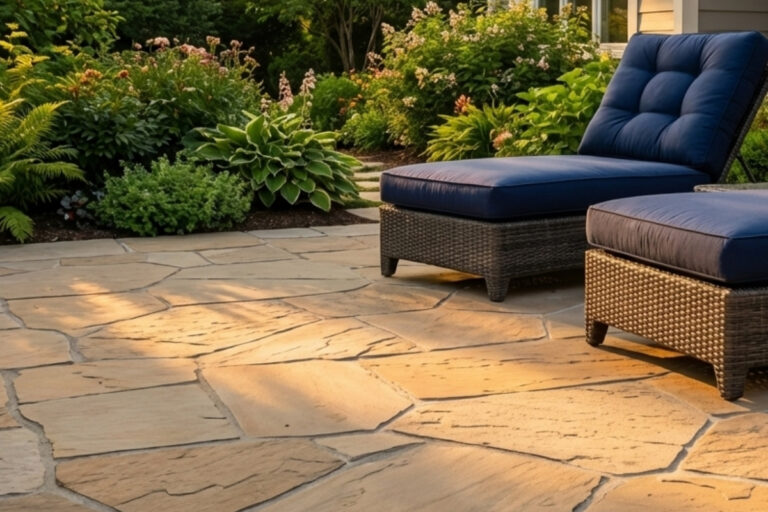
Natural Stone Patio: $35 – $70 per Square Foot
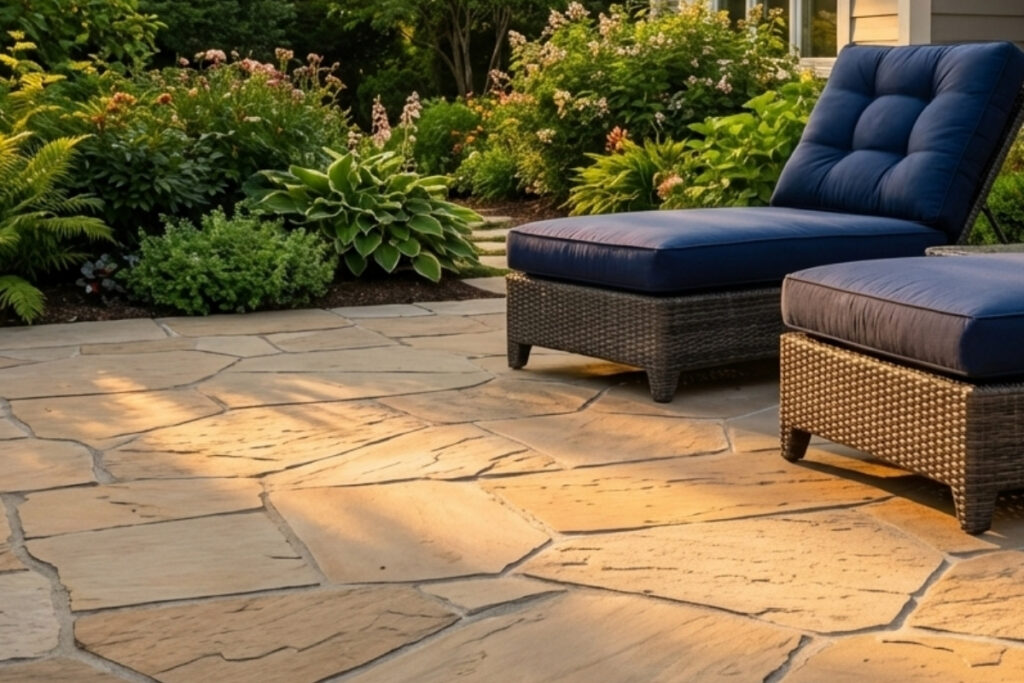
Bluestone, limestone, granite, or irregular flagstone. Natural stone costs more because the material is quarried (not manufactured) and the installation is more labor-intensive — irregular shapes require more cutting, fitting, and waste.
Typical project costs:
- 300 sq ft bluestone patio: $12,000 – $18,000
- 500 sq ft limestone patio: $18,000 – $30,000
Worth it? On the right project, absolutely. Natural stone has a visual depth and character that manufactured pavers approximate but don’t replicate. If your home has stone or brick elements and the design calls for that level of detail, the premium pays off in the finished result. The Interlocking Concrete Pavement Institute (ICPI) maintains standards for both manufactured and natural stone installations that we follow on every project.
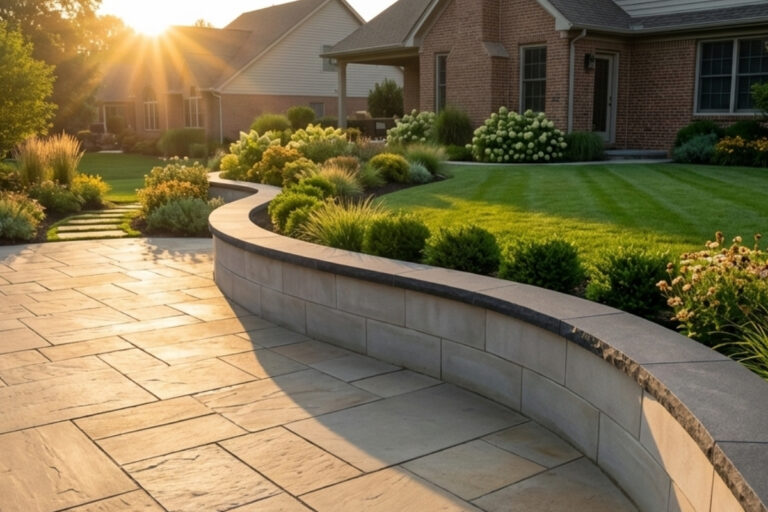
Retaining Walls: $35 – $85 per Face Foot
Retaining wall pricing varies more than almost any other hardscaping element because so much depends on height, structural requirements, and site access.
What “face foot” means: One square foot of the exposed wall face. A wall that’s 30 feet long and 3 feet tall is 90 face feet.
Cost breakdown by wall type:
- Gravity wall (under 3 ft): $35–$55 per face foot. These walls hold themselves in place through mass alone. Common for garden terracing, bed edging, and minor grade changes.
- Structural wall (3–6 ft): $55–$75 per face foot. Requires geogrid reinforcement extending back into the retained soil. The National Concrete Masonry Association (NCMA) publishes design guidelines we follow for engineered wall systems.
- Engineered wall (6+ ft): $70–$85+ per face foot. Requires a professional engineer’s stamp on the design, deeper footings, more geogrid layers, and often a permit and inspection.
Typical project costs:
- 40 linear ft, 2 ft tall decorative wall: $3,000 – $5,000
- 60 linear ft, 3 ft tall terrace wall: $7,000 – $13,000
- 80 linear ft, 5 ft tall structural wall with geogrid: $20,000 – $35,000
The material matters, but less than you’d think. Allan Block, Versa-Lok, and Belgard wall units are all within 15–20% of each other. What drives cost is height (taller = exponentially more material and labor), access (can equipment reach the wall or is everything hand-carried?), and drainage behind the wall (every retaining wall needs drainage aggregate and pipe — skip it and hydrostatic pressure will push the wall over). Learn more about our retaining wall services.
Walkways and Steps: $30 – $55 per Square Foot / $150 – $400 per Step
Walkways follow the same base construction as patios. The cost per square foot is slightly higher because narrower widths mean proportionally more edge restraint and cutting.
Typical walkway costs:
- 4-foot-wide, 30-foot-long front walk: $4,000 – $7,000
- Curved garden path (3 ft wide, 50 linear ft): $5,000 – $8,500
Steps add up fast. Each step requires individual base preparation, precise rise-and-run calculation (per building code: 6–8 inch rise, minimum 11 inch tread), and often a concrete or compacted aggregate footing. Natural stone steps with 6-inch-thick treads cost more than paver steps on a block base. Four to six steps connecting a patio to the yard is a common element and typically adds $1,200–$2,500 to the project.
Seat Walls and Pillars: $60 – $120 per Linear Foot
A 2-foot-tall seat wall around a fire pit or patio edge with a natural stone or manufactured stone cap. Pillars at the end of a seat wall or framing a walkway entrance run $800–$2,000 each depending on height and finish material.
These elements add dimension and definition to a hardscape design. A flat patio with a seat wall and pillars looks and functions completely differently than the same patio without them.
Full Outdoor Living Hardscape: $30,000 – $100,000+
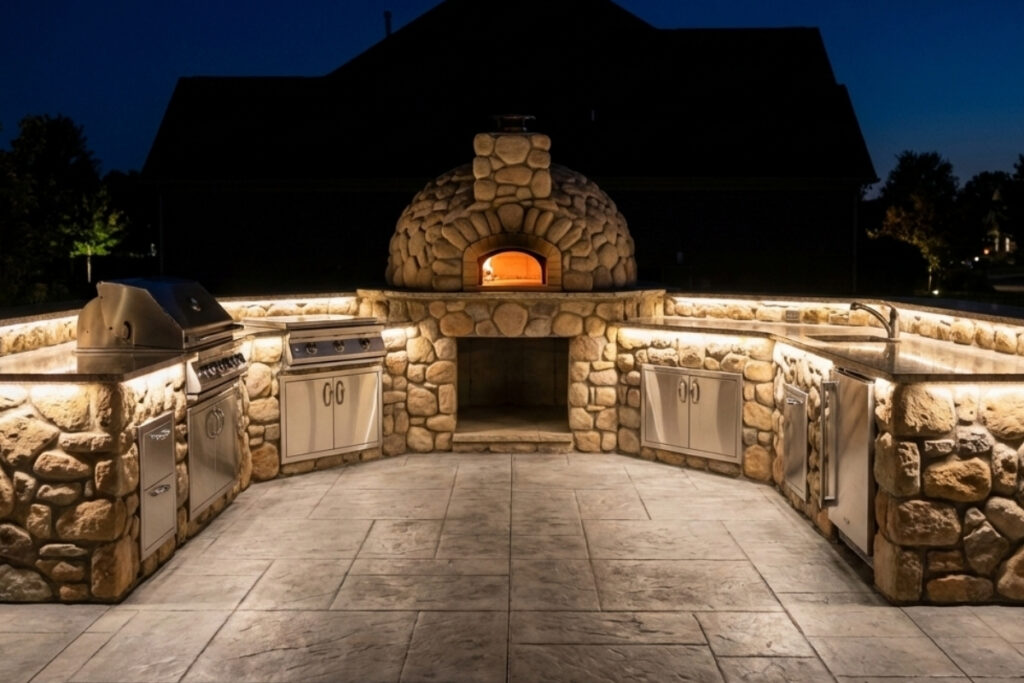
When a project combines a patio, retaining walls, walkways, steps, seat walls, an outdoor kitchen base, and fire pit construction, the total adds up — but you also get significant efficiencies from doing it all at once.
Here’s why combined projects save money: Excavation equipment mobilizes once. Base material is delivered in bulk. Drainage is planned as a system, not patched together across separate phases. Grading addresses the entire site. We’ve seen projects where phasing the same scope over three years would have cost 25–30% more than building it in one season.
Typical full-build ranges:
- Mid-range (patio + wall + walkway + steps): $30,000 – $55,000
- Upper-mid (above + outdoor kitchen base + fire pit): $55,000 – $85,000
- Estate-level (multi-level, multiple zones, full integration): $85,000 – $150,000+
Where Your Money Goes: Cost Breakdown
Understanding the breakdown helps you make smart decisions about where to invest and where you can economize.
Materials: 35–45% of Total
Pavers, wall block, natural stone, caps, edge restraint, aggregate base, geotextile, bedding sand, polymeric sand. The surface material you choose is the single biggest variable in this category. But here’s the thing — the difference between a $4/sqft paver and an $8/sqft paver is real, but it’s a fraction of the total project cost. On a 500 sqft patio, that’s $2,000 difference on a $15,000+ project. Don’t choose your material solely on per-unit price.
Labor: 35–45% of Total
Hardscaping is skilled physical work. Our crews are excavating in heavy clay, moving tons of aggregate, cutting pavers with wet saws, hand-setting stone on screeded beds, building walls course by course, and grading surfaces to within 1/8 inch per foot for drainage. Qualified hardscape crews in Northeast Ohio run $50–$70 per man-hour. A typical patio project requires a 3–4 person crew working 3–5 days.
Equipment and Site Work: 10–15% of Total
Mini excavators, skid steers, plate compactors, concrete saws, dump trucks. Equipment costs are embedded in the project pricing. Site access can affect this — if we need to crane materials over a house or hand-carry everything through a 36-inch gate, labor and time increase.
Drainage: 5–10% of Total
Every hardscape surface redirects water. That water has to go somewhere planned, not somewhere problematic. Catch basins, channel drains, French drains, and pipe runs are part of nearly every project we build. Skipping drainage to save a few thousand dollars is how you end up with water pooling against the foundation or washing out the neighbor’s yard.
What Drives Hardscaping Costs Up
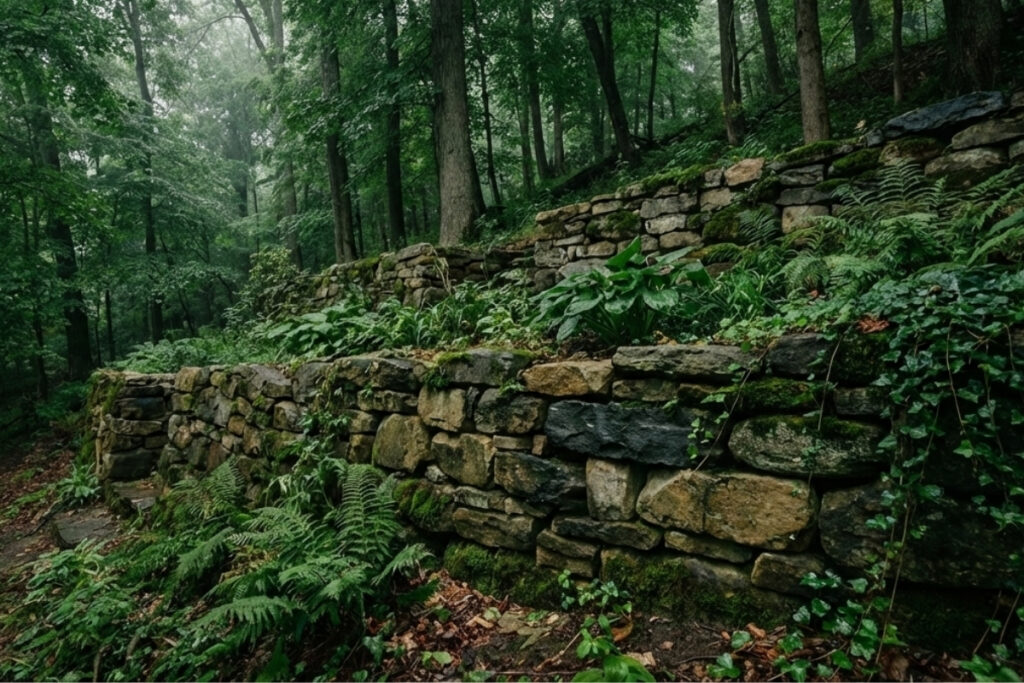
Site conditions matter more than most people expect. Steep slopes require more retaining structure. Poor soil needs deeper excavation and potentially additional base material. Limited access means more hand labor. Existing concrete or asphalt demo adds cost before new construction even begins.
Material selection is the most visible cost lever. But as I mentioned, the swing between a standard and premium paver is smaller than you’d think relative to the total project. Where material choice really moves the needle is natural stone vs. manufactured — that’s a 40–60% difference in surface material cost.
Project complexity adds up. Curved layouts require more paver cutting (and waste). Multi-level patios with walls and steps cost significantly more than flat single-level surfaces. Intricate patterns (circle kits, fan patterns, multi-color designs) require more installation time.
Things that DON’T matter as much as you’d think:
- Patio shape (curves vs. straight) — minor difference
- Paver color — same price within a product line
- Geographic location within NEO — we serve the whole region at consistent pricing
Is Hardscaping Worth the Investment?
Homeowners often give patios and walkways strong approval ratings plus half to two thirds back when selling per National Association of Realtors (NAR) data matched by similar findings in 75% of their. Outdoor spaces built with durable materials expand livable time even if added outside can take less money compared to extending indoors by feet that count just as much inside.
Still, here is something the ROI numbers miss – the ordinary days. A household where the backyard gets used more than one hundred nights annually, for ten years straight, feels benefits beyond numbers on paper. When spread across decades, the expense per event for such an outdoor space – its material build and time frame included – barely registers in cash terms. Picture how your work might take shape? Take a look at our creative hardscaping ideas collection for hints.
How to Budget for Hardscaping
After 20+ years in this industry, here’s how I’d approach it if I were on your side of the table:
- Start with how you want to use the space, not a dollar figure. Tell us you want a dining area for eight, a fire pit zone, and a walkway to the garage. We’ll design to that and tell you what it costs. Working backward from an arbitrary budget often produces a compromise that doesn’t fully deliver on any goal.
- Get real proposals, not ballpark estimates. A contractor who quotes “$12 a square foot for a paver patio” without visiting your site, evaluating drainage, specifying base depth, or naming a paver product hasn’t priced your project. They’ve thrown a number at you.
- Compare scope, not price. When you get three bids, the lowest-priced one almost always has the thinnest base, the least drainage, and the vaguest material specification. Ask every contractor: what’s your base depth? What aggregate spec? Do you install geotextile? What’s the edge restraint? How do you handle drainage? The answers tell you whether you’re comparing the same project or three different ones.
- Think about phasing if the budget is tight. Build the patio and walkway this year. Add the retaining wall and fire pit next year. We design the full plan upfront so the infrastructure (drainage, base prep, grading) accommodates future phases. Phasing costs slightly more total but spreads the investment.
Frequently Asked Questions
What’s the most affordable hardscaping option?
Standard concrete pavers in a simple pattern on a proper base — around $25–$30 per square foot installed. You can lower the cost by reducing the base, skipping geotextile, and using thinner aggregate. We don’t, because those shortcuts fail in Northeast Ohio’s climate within 3–5 years. Building it right the first time is always more cost-effective than rebuilding.
How much should I budget for a backyard patio and retaining wall?
A typical project with a 400–600 sqft paver patio and a 40–60 linear foot retaining wall (2–3 ft tall) runs $20,000–$40,000 depending on material selection and site conditions. Add walkways, steps, and a fire pit and you’re in the $35,000–$55,000 range.
Does hardscaping increase home value?
Yes. According to the National Association of Realtors, outdoor living improvements consistently rank among the highest-satisfaction and strongest-ROI home improvements. A professionally installed patio and hardscape can recover 50–75% of its cost at resale while significantly increasing the home’s appeal to buyers.
When is the best time to get hardscaping done in Northeast Ohio?
Construction season runs April through November. The best time to start the conversation is winter — January or February. Design work happens while the ground is frozen, material selections are confirmed, and your project goes on the build schedule for spring. Our calendar fills early. Waiting until May to call means you may be waiting until July or August for a start date.
Do I need a permit for a patio?
Ground-level patios and walkways typically don’t require a building permit. Retaining walls over 4 feet in height do — and they often require engineered drawings. Any gas or electrical work (outdoor kitchen, fire feature, lighting) requires respective trade permits. We check requirements for your specific municipality before starting. Ohio’s residential building code governs structural requirements.
Ready to talk numbers on your project? Every property is different, and online ranges only get you so far. Request your design consultation — we’ll walk the site with you and put together a detailed proposal with real pricing. No vague estimates. No pressure. Just the information you need to make a good decision.
Bee Green Outdoor Living provides professional hardscaping services across Northeast Ohio — Greater Cleveland, Medina County, and Lorain County.