Backyard Fire Pit Ideas for Northeast Ohio
That flame alters the whole way you live with your property. September closes the backyard time — by mid-month, nights grow too cool for comfort at Northeast Ohio. Once there's a fire pit, evenings stretch into October, November; sometimes March too, before warmth arrives.
Some folks once called about spaces like Strongsville and Medina — they said the fire pit ends up outside way more than anything else in their backyard setup.
Hundreds of fire features have been made using materials from Greater Cleveland, Medina County, and Lorain County. These layouts perform well under local conditions, tested on actual Northeast Ohio landforms.
Classic Fire Pit Designs
The Round Stone Fire Pit with Seat Wall
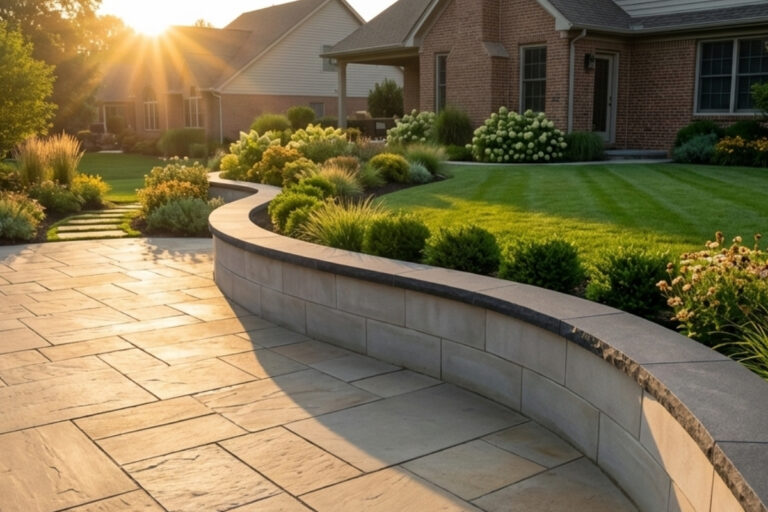
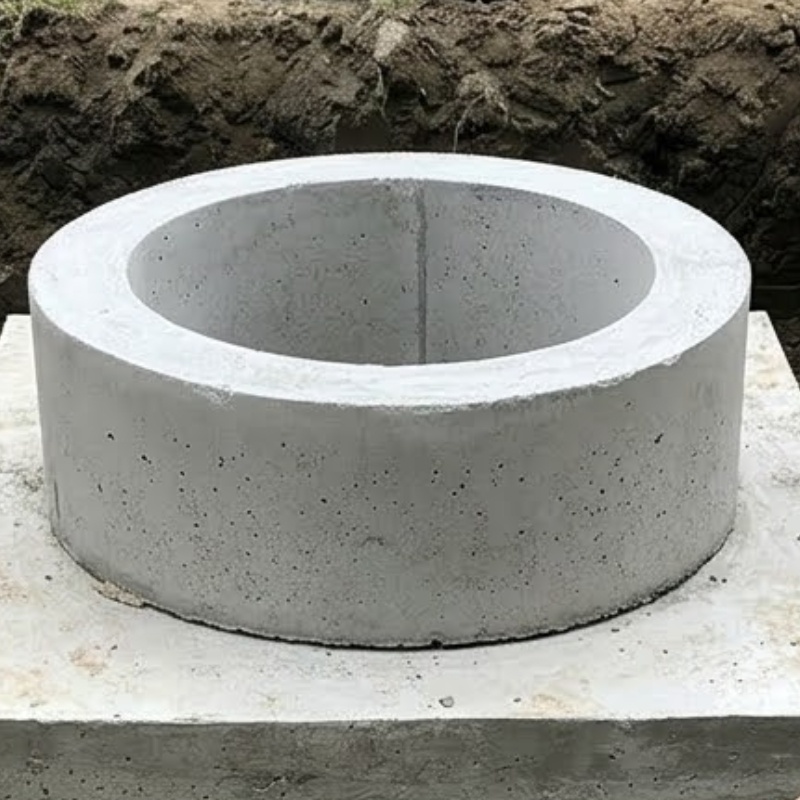
The most popular configuration we build — and for good reason. A circular fire pit (42–48 inches interior diameter) surrounded by a semicircular or full-circle seat wall (18–20 inches high) with a natural stone cap. The seat wall provides permanent seating for 8–12 people, doubles as a retaining element for grade changes, and anchors the fire zone visually.
Cap the seat wall with 2-inch thermal-finish bluestone or granite for comfort and durability. The natural stone cap stays cool enough to sit on even after hours near the fire.
Budget: $8,000–$18,000 for pit, seat wall, and surrounding paver surface. Material choice drives the range — manufactured block at the lower end, natural stone veneer at the top.
The Square Contemporary Fire Pit
A rectangular or square fire pit (typically 36×36 or 30×48 inches) in clean-lined concrete or smooth stone veneer. Pairs with modern patio furniture and large-format pavers from Techo-Bloc or Unilock. The angular shape creates a different energy than a circular pit — more architectural, less campfire.
Square fire pits look particularly sharp on contemporary homes in Westlake, Rocky River, and Bay Village where the architecture has clean geometry.
Fuel option: Gas is the natural choice here. The controlled flame and fire glass complement the modern aesthetic. A linear burner in a rectangular pit creates a dramatic flame line.
The Rustic Fieldstone Fire Pit
Natural fieldstone or boulders stacked to form a low-walled fire pit — 18–24 inches high, irregular in shape, with visible stone character. This is the fire pit for properties where a natural, organic look suits the setting better than precision masonry. Hinckley, Bath, and the wooded properties across southern Medina County.
Fieldstone pits work best with wood burning. The irregular stone, the real fire, the wooded surroundings — it all goes together. Add Adirondack chairs instead of a formal seat wall and you've got a gathering spot that feels like it grew out of the landscape.
Budget: $3,500–$8,000 depending on stone source and size. Local Ohio fieldstone keeps costs lower than imported stone.
Fire Pit Layouts and Configurations
Sunken Fire Pit
Drop the fire pit zone 12–18 inches below the main patio level. Wide steps down on all sides create built-in seating around the perimeter. The lower elevation puts the fire at eye level when you're seated — more comfortable than looking down at flames from a standard patio surface.
Sunken pits feel intimate. The step-down separates the fire zone from the rest of the patio psychologically, creating a distinct "room" within the larger outdoor space. On windy properties — Avon, Avon Lake, the Lorain County communities near the lake — the lower elevation also provides some wind protection.
Design detail: The surrounding step should be at least 36 inches deep (wide enough to sit comfortably) with proper drainage at the lowest point. Water pooling in a sunken pit area is the number one design mistake. We install a catch basin or channel drain at the low point to prevent this.
Elevated Fire Pit Terrace
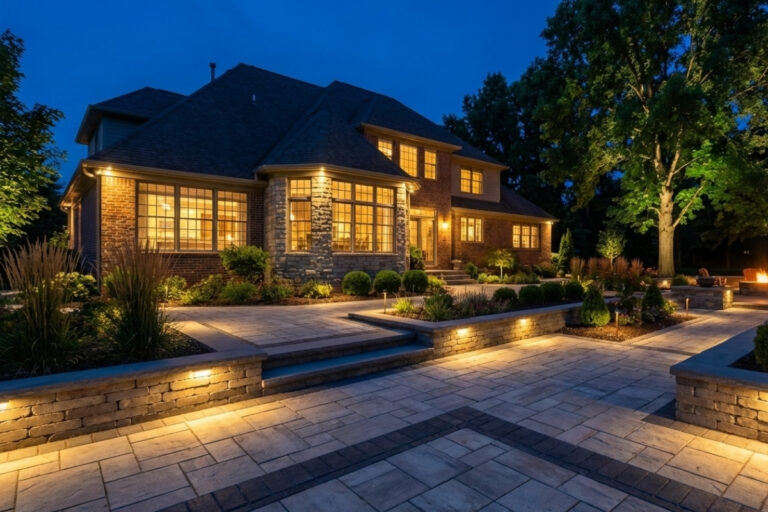
If your yard drops away from the house, put the fire pit at a lower terrace level connected to the main patio by wide stone steps. The elevation change creates natural separation between the dining zone (upper level) and the fire/conversation zone (lower level). A retaining wall handles the grade transition between levels.
This configuration is common on our builds in Brecksville, Broadview Heights, and the hillier parts of Cuyahoga and Medina counties where lots drop 4–8 feet from the house to the rear property line.
Fire Pit Island (Center of Patio)
Position the fire pit at the center of a circular or large rectangular patio, with seating arranged around the full perimeter. This works on large, flat lots where the fire pit is the primary design feature — not an add-on at the edge.
Use a contrasting paver pattern or material for the fire pit zone. A circular inset of one paver color within a larger field of another creates a defined "room within a room." It's a designer detail that reads as intentional rather than incidental.
Fire Pit at the Patio Edge
The simplest configuration: the fire pit positioned at the far edge of the patio, away from the house, with chairs or seat wall on the patio side. Guests face both the fire and the yard beyond. This is the layout for homeowners who want a fire feature without restructuring the whole patio.
Good for retrofits too. If you already have a patio and want to add a fire pit, extending the patio edge 6–8 feet to accommodate a pit and seating is straightforward — especially with pavers, where the extension matches the existing surface seamlessly.
Fire Feature Styles Beyond the Pit
Outdoor Fireplace
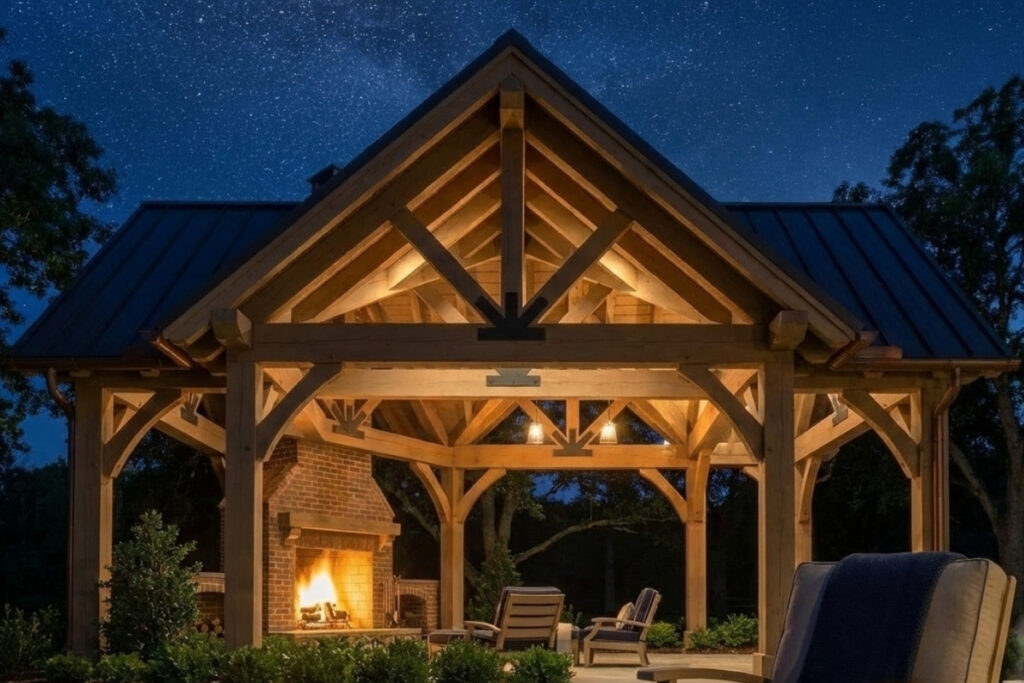
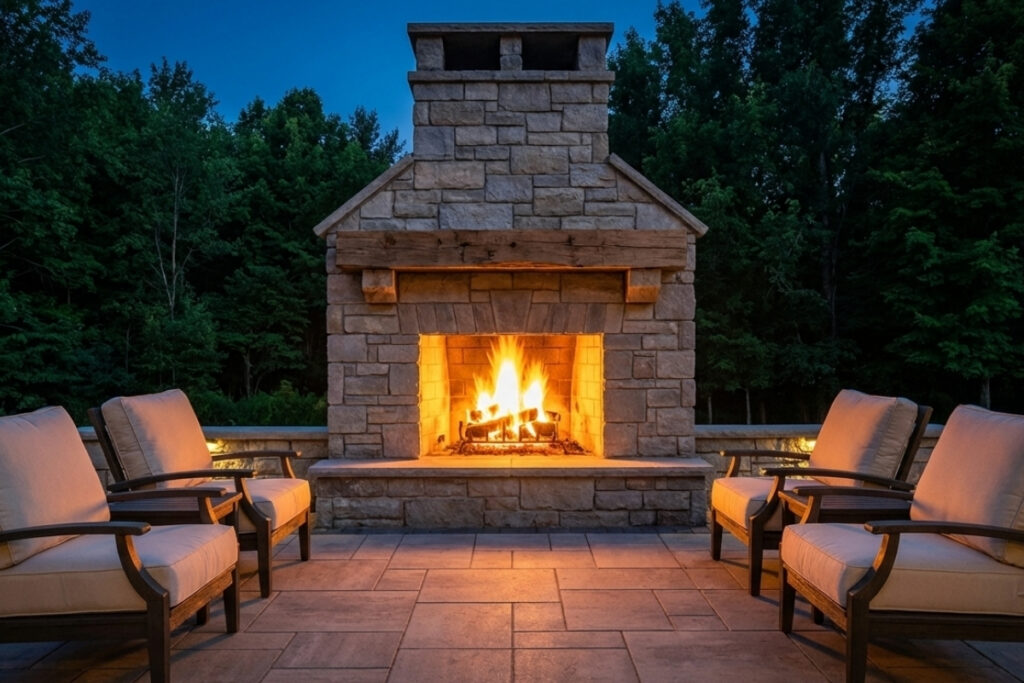
A vertical stone structure with a firebox, chimney, and hearth — the outdoor version of your living room fireplace. The chimney draws smoke upward instead of letting it follow the wind, solving the biggest complaint about fire pits. The structure becomes the visual anchor of the patio, and the radiant heat is directed forward toward the seating area.
Outdoor fireplaces are a bigger investment ($12,000–$25,000) but they transform the patio from a surface with furniture into an architectural space. We build fireplaces in natural stone, manufactured stone veneer over concrete block, and brick.
Best placement: The far end of the patio, facing back toward the house. When you step outside, the fireplace is the first thing you see — the focal point that draws you into the space.
Linear Gas Fire Table
A rectangular table (48–72 inches long) with a gas burner running down the center, fire glass media, and a seating-height or coffee-table-height surface. No structure, no masonry — just a functional piece that combines furniture and fire.
Fire tables work with sectional seating in a lounge configuration. Two sofas flanking a long fire table creates an outdoor living room that's comfortable and warm without the permanence of a built-in pit.
Budget: $2,500–$6,000 for a quality built-in unit. Pre-fabricated tables range from $800–$3,000 but aren't as durable as custom builds in our freeze-thaw climate.
Fire Wall / Linear Burner in a Wall
A linear gas burner (24–72 inches long) set into a retaining wall, seat wall, or freestanding feature wall. The flame runs along the wall face, creating a dramatic horizontal fire line. It's contemporary, space-efficient, and visually striking — especially with landscape lighting washing the wall surface.
Fire walls work well as dividers between patio zones or as feature elements along the property boundary. We integrate linear burners into retaining walls regularly, combining structural function with fire feature ambiance.
Material and Style Pairings
Traditional / Colonial
- Round fire pit in brick or natural stone
- Bluestone cap
- Herringbone paver patio surround
- Wood-burning
- Neighborhoods: Shaker Heights, Chagrin Falls, Gates Mills
Contemporary / Modern
- Rectangular fire pit in smooth concrete or porcelain
- Stainless steel burner with fire glass
- Large-format paver patio in gray tones
- Gas
- Neighborhoods: Rocky River, Westlake, Bay Village
Rustic / Natural
- Fieldstone or boulder fire pit
- Irregular flagstone or gravel surround
- Wood-burning with log storage
- Properties: Hinckley, Bath, Medina, rural Lorain County
Resort / Luxury
- Fire pit with full seat wall, integrated lighting, and water feature
- Natural stone veneer with granite cap
- Gas with electronic ignition
- Premium paver patio with outdoor kitchen nearby
- Properties: Pepper Pike, Hunting Valley, Bath
Practical Considerations for Ohio
Drainage
Water inside the fire pit is a chronic issue here. We install a drain gravel bed and perforated pipe beneath every pit to channel rainwater away from the burn area. Gas burner pans include weep holes. Wood-burning pits get a sloped base that prevents pooling. Never skip the drainage — a rain-filled fire pit in April is not what you want.
Setbacks
Most Northeast Ohio municipalities require 10–15 feet from combustible structures for wood-burning pits and 5–10 feet for gas. Covered porches, overhanging trees, and fence lines factor in too. We check your specific city's requirements before we design. Ohio fire code provides baseline regulations.
Wind
Cleveland's prevailing winds come from the southwest. Orient wood-burning pits so smoke blows away from seating and away from the house when possible. If site constraints limit orientation options, a partial windscreen wall (3–4 feet tall, stone or masonry, on the windward side) manages smoke effectively.
Gas fire pits don't have the smoke issue, but wind affects flame stability. Tall glass wind guards maintain a clean flame in breezy conditions.
Footing
Every permanent fire feature sits on a reinforced concrete footing poured below frost line — 42 inches in Northeast Ohio. This prevents the structure from heaving and cracking during freeze-thaw cycles. A fire pit on a gravel pad will move. It's not a question of if, but when.
Frequently Asked Questions
How much does a fire pit cost in Northeast Ohio?
A basic custom-built fire pit runs $3,500–$8,000. A fire pit with seat wall and surrounding paver patio runs $8,000–$20,000. Outdoor fireplaces start around $12,000. Gas line installation adds $1,500–$4,000. Check our patio cost guide for full project pricing.
Gas or wood — which should I choose?
Depends on how you'll use it. Gas for frequent, casual use with zero maintenance. Wood for the full campfire experience with more heat. We cover this in detail in our gas vs wood fire pit comparison.
Can I add a fire pit to my existing patio?
Usually yes. We evaluate the existing patio surface and base to confirm it can support the weight and that we can route utilities without major demolition. Paver patios are the easiest to work with — we can remove and reinstall pavers to run gas lines or extend the surface.
What's the best fire pit shape?
Round fire pits create equal gathering — everyone is the same distance from the flame. Rectangular pits work better with linear seating arrangements and contemporary design. There's no wrong answer. It depends on your patio layout, furniture plan, and aesthetic preference.
Do I need a permit for a fire pit?
Gas fire features typically require a gas permit and inspection in most Northeast Ohio municipalities. Wood-burning fire pits may require a fire permit depending on your city. Outdoor fireplaces almost always need a building permit due to the structural footing and chimney. We handle all permitting.
Ready to add fire to your backyard? Request your design consultation — we'll evaluate your property, discuss styles and fuel options, and design a fire feature that fits your space and how you live outdoors. For more outdoor space inspiration, check our patio ideas for Northeast Ohio.
Bee Green Outdoor Living designs and builds custom fire features across Greater Cleveland, Medina County, and Lorain County.