French Drain vs. Catch Basin: Which Do You Need?
Water fixes often come down to French drains versus catch basins — each tackles a separate kind of issue. Picking the incorrect option leads straight into wasting funds on a solution missing the mark entirely. It happens more than you might think: someone puts in a French drain when a catch basin should have gone in first — or flipped it — the flooding stays, yet bills keep climbing.
This is how every system functions — which one fits each situation, along with how they interact across buildings holding more than one drainage issues.
How a French Drain Works
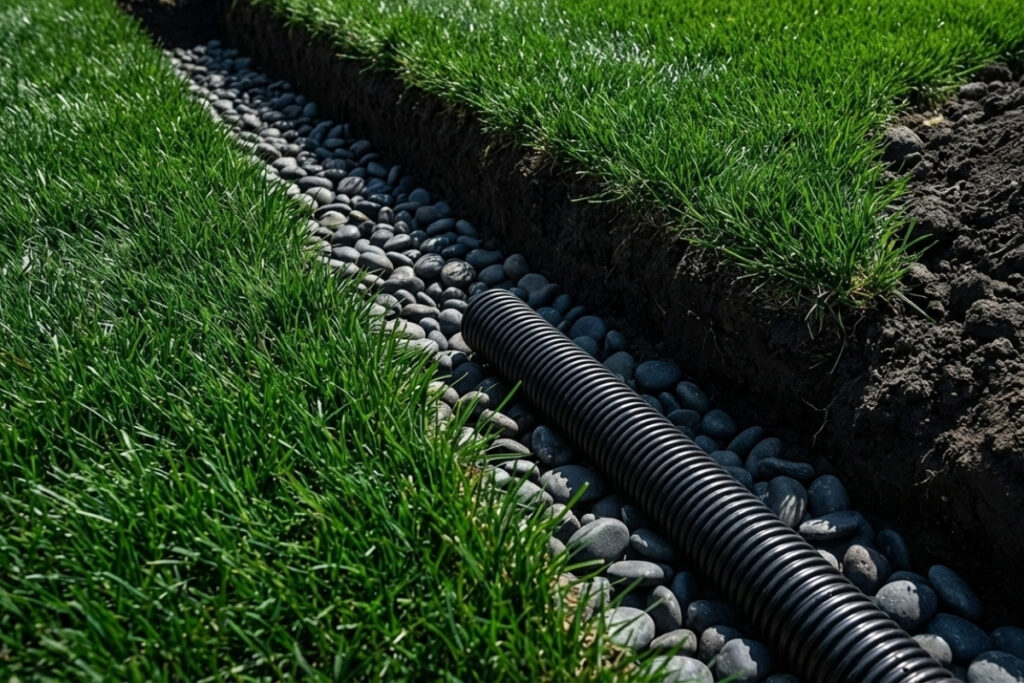
A French drain is an underground drainage system designed to intercept subsurface water — water that's moving through the soil below the surface.
Construction:
- A trench is dug (typically 18–24 inches deep, 12 inches wide)
- The trench is lined with non-woven geotextile filter fabric
- A perforated pipe (4-inch corrugated or rigid PVC) is placed at the bottom
- The trench is filled with clean, washed drainage gravel (57-stone)
- The filter fabric is folded over the top of the gravel
- Soil and sod cover the finished trench — it's invisible on the surface
How it works: Water migrating through the soil reaches the gravel-filled trench and flows downward into the gravel zone (gravel is far more permeable than the surrounding clay soil). The water enters the perforated pipe through holes along its length and flows by gravity through the pipe to a discharge point — a storm sewer connection, dry well, or daylight outlet at a lower elevation.
Key point: French drains work below the surface. They intercept groundwater, subsurface water flow, and hydrostatic pressure before that water reaches your foundation, patio, or lawn surface.
How a Catch Basin Works
A catch basin collects surface water — water that's visible on top of the ground, running across your lawn, pooling in low spots, or flowing off hardscape surfaces.
Construction:
- A box (typically 12×12 or 18×18 inches) with a grated top is installed at a low point
- The box connects to solid (non-perforated) pipe underground
- The pipe carries collected water by gravity to a discharge point
- The box includes a sump (sediment trap) at the bottom to catch debris before it enters the pipe
How it works: Surface water flows across the ground, reaches the grated inlet, drops into the box, and is routed through solid pipe to a discharge point. It's a collection and conveyance system — it picks up water that's already visible on the surface and moves it somewhere useful.
Key point: Catch basins deal with water you can see. Standing puddles, sheet flow across patios, runoff from downspouts — these are catch basin problems.
The Comparison
| Factor | French Drain | Catch Basin |
|---|---|---|
| Collects | Subsurface water | Surface water |
| Visible | Hidden underground | Grated inlet visible at surface |
| Pipe type | Perforated (holes allow water in) | Solid (sealed — carries water only) |
| Best for | Wet soil, foundation drainage, high water table | Puddles, low spots, patio runoff |
| Maintenance | Low (inspect outlet annually) | Moderate (clean debris from sump 1–2x/year) |
| Cost per linear foot | $25–$50 | $15–$35 (pipe) + $300–$800 per basin |
| Typical project cost | $2,000–$6,000 | $1,500–$5,000 |
When You Need a French Drain
Wet Basement or Foundation Moisture
If your basement walls show water staining, efflorescence (white mineral deposits), or dampness — especially after rain — subsurface water is pressing against your foundation. A French drain along the exterior foundation perimeter intercepts that water before it reaches the walls.
This is the most common French drain application in our service area. Clay soil across Cuyahoga, Medina, and Lorain counties holds water against foundations for days after rain events. The perimeter French drain breaks the hydrostatic pressure cycle.
Chronically Saturated Soil
If areas of your yard stay soggy or spongy for days after rain — not puddles on the surface, but waterlogged soil — the water table is high or subsurface flow is accumulating in that area. A French drain placed between the water source (uphill, or a high water table) and the problem area intercepts the flow underground.
Behind Retaining Walls
Every retaining wall we build includes a French drain. Water trapped behind a retaining wall creates hydrostatic pressure that the wall wasn't designed to resist. The drain behind the wall — a perforated pipe in gravel at the wall base — relieves that pressure by carrying water to a daylight outlet or storm connection.
Retaining walls that fail prematurely almost always have a drainage problem — and a missing or failed French drain is the most common cause. The NCMA (National Concrete Masonry Association) emphasizes drainage as the single most critical element of retaining wall longevity.
Intercepting Hillside Water Flow
On sloped properties — common in Brecksville, Broadview Heights, Bath, Hinckley, and the hilly areas of Medina County — water moves downhill through the soil. A French drain placed across the slope intercepts that subsurface flow before it reaches the house, patio, or lower yard. We call this a curtain drain — same construction, placed perpendicular to the flow direction.
When You Need a Catch Basin
Standing Water After Rain
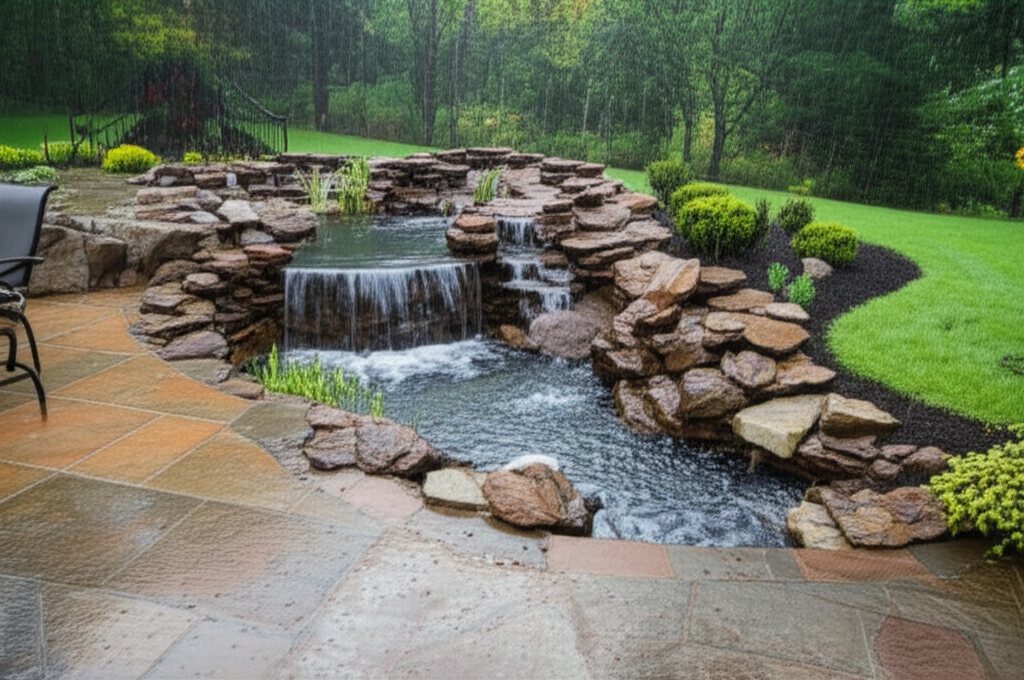
Puddles that form in the same spot after every rain — in the lawn, at the base of a slope, in a low spot near the driveway — are surface water collection problems. A catch basin at the low point collects the water and pipes it away.
Patio and Driveway Runoff
Hardscape surfaces redirect water. A patio that replaced an area of lawn now sends rainwater toward the house, the neighbor's yard, or a low spot. Catch basins at patio edges and driveway aprons intercept this runoff before it becomes a problem.
Every patio we build includes a drainage plan. Where surface water needs management, catch basins or channel drains are part of the design — not an afterthought.
Downspout Discharge Collection
Roof downspouts concentrate large volumes of water at small points. A catch basin directly below the downspout collects the roof water and routes it underground to a discharge point away from the foundation. This is one of the most cost-effective drainage improvements available — often $500–$1,000 per downspout.
Low Spots at Driveway or Walkway Edges
If water collects where the driveway meets the garage, where a walkway dips, or at any transition between grades, a catch basin at that point solves it. In winter, these collection spots become ice hazards — reason enough to address them.
When You Need Both
Many properties — especially those with Ohio's clay soil — have both surface water and subsurface water issues. Using both systems together is common in our drainage projects.
Typical combined system:
- French drain along the foundation perimeter (subsurface)
- Catch basins at patio edges and low spots (surface)
- Underground downspout routing connecting to the catch basin pipe system
- Common discharge point (storm sewer, dry well, or daylight)
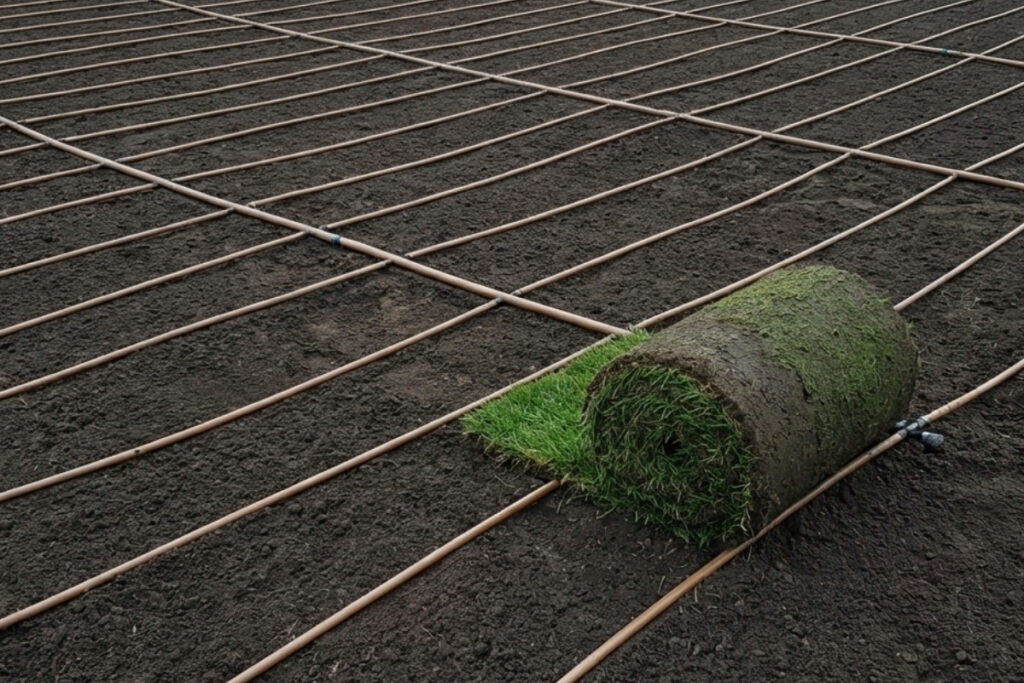
The French drain handles what's happening underground. The catch basins handle what's happening on top. They often share the same discharge pipe run, reducing total installation cost.
Cost Breakdown
French Drain
| Component | Cost |
|---|---|
| Trenching (18–24" deep) | $8–$15/linear foot |
| Pipe (4" perforated) | $2–$4/linear foot |
| Drainage gravel (57-stone) | $5–$10/linear foot |
| Filter fabric | $1–$2/linear foot |
| Backfill and restoration | $5–$10/linear foot |
| Total installed | $25–$50/linear foot |
Typical project: 50-foot French drain along one side of a foundation: $1,250–$2,500. Full perimeter drain (120–150 feet): $3,000–$7,500.
Catch Basin
| Component | Cost |
|---|---|
| Catch basin box (12×12 or 18×18) | $150–$400 each |
| Grate (cast iron or polymer) | $50–$150 each |
| Solid pipe (4" from basin to discharge) | $10–$20/linear foot installed |
| Discharge connection or outlet | $200–$500 |
| Total per basin + pipe run | $800–$2,500 |
Typical project: Two catch basins with 40 feet of pipe to discharge: $2,000–$4,500.
Combined System
A combined French drain + catch basin system for a typical residential property runs $4,000–$12,000 depending on the scope. Properties with severe drainage issues (multiple water sources, extensive pipe runs, multiple basins) can reach $15,000+.
DIY Considerations
French drains: Digging a proper trench in Ohio clay is extremely labor-intensive. The pipe must maintain consistent slope (minimum 1% grade) or water sits in the pipe instead of flowing. Incorrect fabric placement or wrong gravel type leads to clogging within a few years. Professional installation is strongly recommended for any French drain over 20 feet.
Catch basins: A single catch basin with a short pipe run to daylight is DIY-feasible for a handy homeowner. The box, pipe, and fittings are available at home centers. The key is getting the pipe slope right and making a solid discharge connection. For anything connecting to a municipal storm system, professional installation is required (and usually code-required).
Frequently Asked Questions
Which is more cost-effective — a French drain or a catch basin?
Catch basins are typically less expensive per unit of water managed for surface water problems. French drains are more expensive but solve subsurface problems that catch basins can't. The right answer depends on whether your problem is surface water, subsurface water, or both. A free drainage evaluation identifies the actual problem.
How long do these systems last?
French drains with quality pipe, clean gravel, and proper filter fabric function for 20–30+ years. Catch basins are essentially permanent — the box and pipe don't degrade. The maintenance item for both is the discharge outlet and any sediment buildup. Annual inspection of the outlet and periodic catch basin cleaning keep the system functioning indefinitely.
Can a French drain solve standing water in my yard?
Only if the standing water is caused by a high water table or subsurface saturation. If the standing water is surface runoff pooling in a low spot, a catch basin is the right fix. If the soil itself is saturated (spongy, mushy), a French drain intercepts the subsurface water. Sometimes both: a French drain to lower soil moisture and a catch basin to capture surface runoff.
Do I need a permit for drainage work?
Connecting to municipal storm sewers typically requires a permit. Discharging to daylight on your own property usually doesn't. Dry well installations may require a permit in some jurisdictions. Regrading near property lines may have setback requirements. We check local requirements for every project. Ohio EPA provides stormwater management guidance for residential projects.
Will a French drain make my yard dry enough for a patio?
Often yes. If your planned patio area has saturated soil, a French drain upslope from the patio location can lower the water table enough for proper patio construction. We address drainage issues before (or during) patio installation — not after. Drainage is part of every outdoor living project we design.
Not sure which drainage system you need? Request your free drainage evaluation — we'll walk your property, identify the water source, and recommend the right solution. Most properties need a straightforward fix, not a complex system. See our drainage warning signs guide to understand what your yard is telling you.
Bee Green Outdoor Living provides professional drainage solutions across Greater Cleveland, Medina County, and Lorain County.