8 Signs You Need Better Yard Drainage
Drainage problems don't announce themselves with a single dramatic event. They build gradually. The yard stays wet a little longer after rain. A low spot develops. The basement smells damp. You blame the weather, or the season, or the neighbor's new patio. But the pattern gets worse, not better — because the underlying cause (poor drainage) doesn't fix itself.
In Northeast Ohio, drainage issues are more common than most homeowners realize. Our heavy clay soil percolates slowly, our annual rainfall (39 inches) is substantial, and many properties — especially in the older Cleveland suburbs, Medina County, and Lorain County — were graded to minimum standards decades ago. Add a patio or driveway that redirects runoff, and the drainage that used to be adequate isn't anymore.
Here are the eight warning signs that your yard has a drainage problem — and what they mean.
1. Standing Water More Than 24 Hours After Rain
The most obvious sign. After a typical rain event, surface water should be gone within a few hours. Puddles that persist for a full day — or longer — mean the soil isn't absorbing water and surface grade isn't moving it to a discharge point.
Where to look: Low spots in the lawn, areas near downspout discharge points, the base of slopes, and any flat zone between the house and property line.
What it means: The grade is flat or slightly depressed, creating a collection point with no outlet. In clay soil (which describes most of Cuyahoga, Medina, and Lorain counties), the soil absorption rate is too slow to handle the volume.
The fix: Regrading to establish positive slope toward a discharge point, or installing a catch basin with underground piping to carry the water away. Sometimes both.
2. Water Staining on Foundation Walls
Go into your basement after a heavy rain and look at the walls. Dark staining, mineral deposits (white efflorescence), or visible moisture along the wall-floor joint are all evidence that water is reaching your foundation from the outside.
What it means: The grade around your foundation is directing water toward the house rather than away from it. Or the original perimeter drain (if one exists) has failed — clogged, collapsed, or disconnected. Hydrostatic pressure from saturated soil pushes water through any crack or joint in the concrete.
The fix: Exterior regrading to establish 2% minimum slope away from the foundation for the first 6–10 feet. Downspout extensions or underground routing. If those don't resolve it, an exterior French drain along the foundation perimeter. Our drainage solutions page covers these systems in detail.
Why it matters: Persistent foundation moisture leads to mold, structural deterioration, and significant property value loss. The EPA recommends addressing moisture sources rather than treating mold symptoms.
3. Mushy or Spongy Lawn Areas
If parts of your lawn feel soft underfoot — like walking on a wet sponge — even days after the last rain, the soil beneath the turf is saturated. The grass may still look green, but the root zone is waterlogged.
Where to check: Shaded areas (slower evaporation), areas downslope from impervious surfaces (driveways, patios), and zones between your house and the neighbor's.
What it means: Subsurface water is accumulating and has nowhere to go. This could be a high water table, an underground spring, or surface water that's infiltrating the soil and getting trapped above the clay layer.
The fix: A French drain — a perforated pipe in a gravel trench — intercepts the subsurface water and carries it to a discharge point. The key is identifying the water source and placing the drain between the source and the problem area.
4. Erosion Channels in the Yard
Visible ruts, channels, or grooves worn into the soil surface by water flow. Start small and get deeper with each rain. Bare soil appears where turf has been washed away.
What it means: Concentrated surface runoff is moving fast enough to erode soil. This often starts at a downspout discharge point, at the edge of a patio, or at a break in grade where water accelerates downhill.
What to do: First, address the water source — redirect downspouts, install a catch basin at the patio edge, or grade the surrounding area to slow and spread the flow. Then repair the erosion — fill, compact, and re-establish turf. A retaining wall may be needed if the slope is significant.
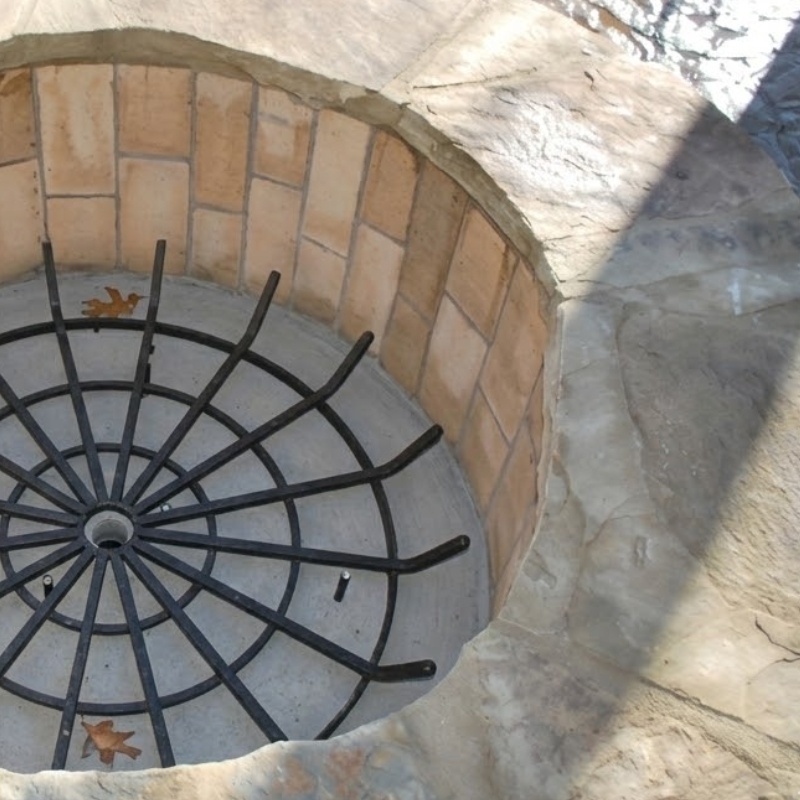
5. Downspouts Dumping at the Foundation
Walk outside during a rain and look at your downspouts. If they terminate at the base of the house wall — or if their extensions are disconnected, clogged, or pointing the wrong direction — roof water is concentrating directly against your foundation.
The math: A 2,000 sqft roof collects approximately 48,000 gallons of water annually in Northeast Ohio. That's about 1,200 gallons per inch of rain. If it's all landing within 2 feet of your foundation, that's enormous hydrostatic pressure on the walls.
The fix: Underground downspout routing — solid pipe buried 12+ inches deep, carrying roof water from the downspout to a discharge point at least 10 feet from the house. It's one of the most cost-effective drainage improvements available. Budget: $200–$600 per downspout for underground routing.
6. Mold or Musty Smell in the Basement
You might not see standing water. You might not see wall stains. But if the basement smells musty or damp, moisture is getting in somewhere. Mold grows wherever relative humidity exceeds 60% for extended periods — and it doesn't need visible water to establish.
What it means: Chronic low-level moisture intrusion. Could be vapor transmission through the concrete (the foundation is wicking moisture from saturated soil), failed or absent waterproofing, or condensation from poor ventilation combined with exterior moisture sources.
What to do: Start with exterior drainage improvements — they address the source. Interior dehumidifiers treat the symptom, not the cause. A drainage assessment evaluates whether exterior grading, downspout management, or a French drain system will resolve the moisture source.
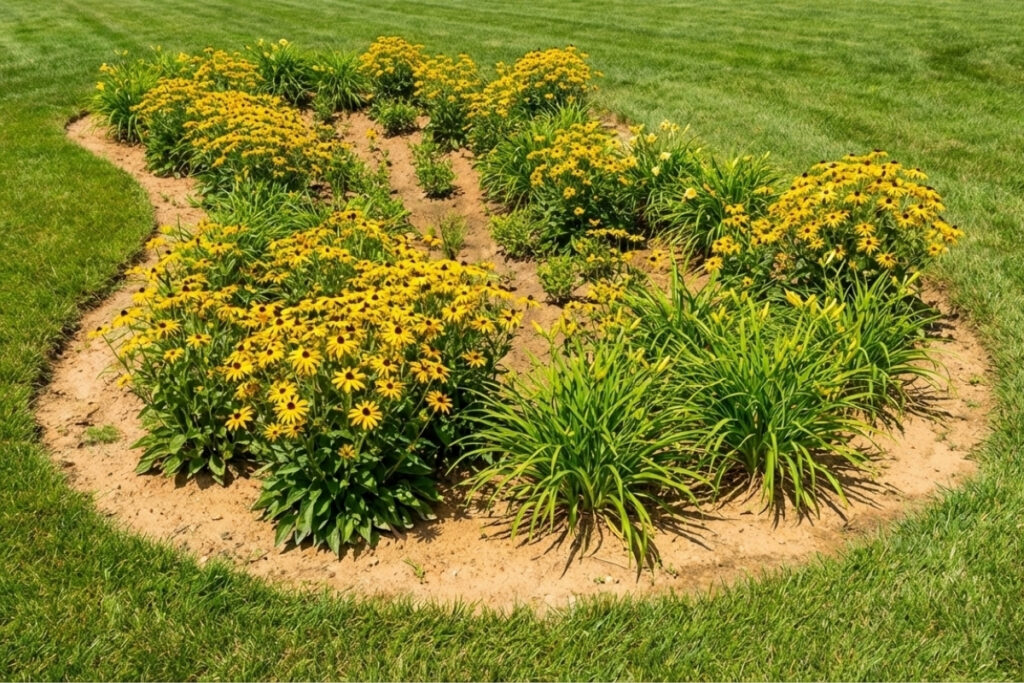
7. Ice Buildup on Walkways or the Driveway in Winter
If specific spots on your walkway, driveway, or patio consistently ice up faster than the rest — and stay icy longer — water is collecting in those areas. In summer, you might not notice the shallow ponding. In winter, it becomes a sheet of ice.
Common locations: The base of a slight dip in a walkway, the low spot where a driveway meets the garage, or the area where a patio meets the house wall.
The fix: A channel drain (linear drain) flush with the surface intercepts water before it pools. Regrading to eliminate the dip or low spot. Sometimes both. This is also a safety issue — repeated icing in the same location is a slip-and-fall hazard. On properties in Lakewood, Rocky River, North Olmsted, and other densely built suburbs, walkway icing from poor drainage is a liability concern.
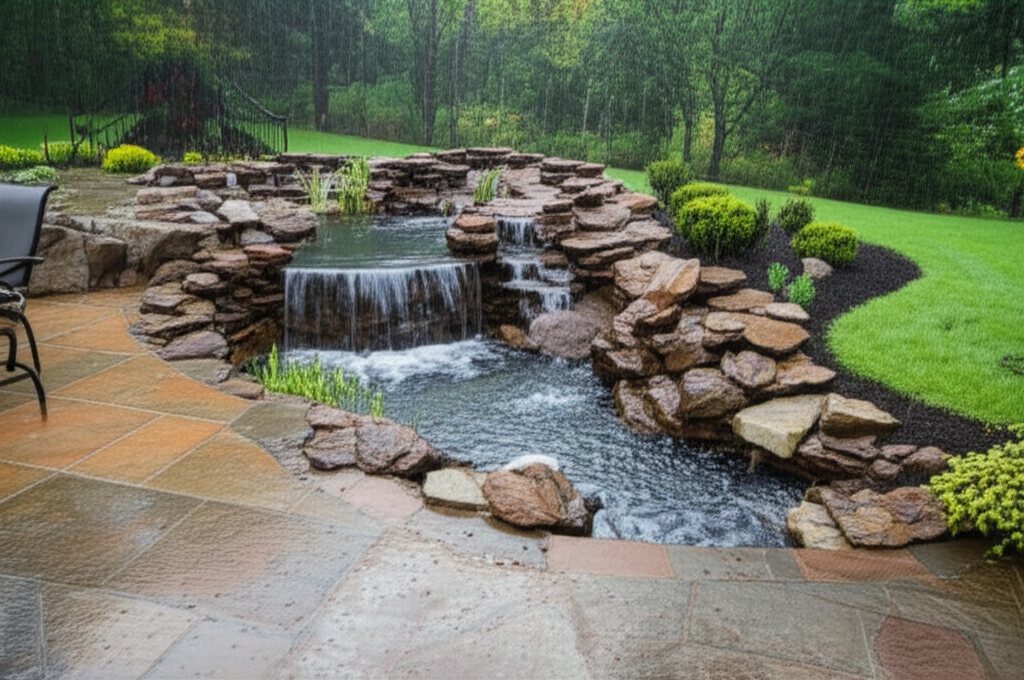
8. Cracks in Patio or Driveway Surfaces
If your concrete patio, stamped concrete, or driveway is developing cracks in specific areas (not just normal control joint cracking), the base may be undermined by water. Subsurface erosion — water washing away the aggregate base or subgrade beneath a slab — creates voids that cause the surface above to settle and crack.
The pattern to watch for: Cracking concentrated near a downspout discharge, at the base of a slope, or along an edge where the patio meets the yard. Random cracking across the entire surface is usually a base compaction issue. Cracking in one specific zone is often a water issue.
The fix: Address the drainage problem first (redirect the water source), then repair the surface. For paver patios, the pavers can be lifted, the base re-compacted, and the pavers relaid. For concrete, damaged sections may need to be replaced. See our hardscaping services page for surface repair options.
The Bottom Line: Drainage Gets Worse, Not Better
A single sign on this page shows damage already unfolding. What wears the soil keeps digging in. After rain hits damp earth, swelling happens quicker with winter's chill follow. Water slips in well when cracks keep widening under moist conditions.
Failing to act just increases what's already broken.
Oddly enough, several common problems with home drainage in Northeast Ohio can be resolved through straightforward methods – French drains, catch basins comes into play, along with tweaking the ground's incline and rerouting gutter flow. It's not about constructing a wall to block water like a dam does. Rather, it means allowing water a clear path to move far from walls or green spaces without any barriers.
Frequently Asked Questions
How much does yard drainage work cost?
Simple fixes (downspout extensions, minor regrading): $500–$2,000. French drain installation: $25–$50 per linear foot ($2,000–$5,000 for a typical run). Comprehensive yard drainage system with multiple drains, catch basins, and discharge: $5,000–$15,000. The cost depends on the scope of the problem and site conditions.
Can I improve drainage myself?
Minor improvements — extending downspouts, adding soil to regrade small areas — are DIY-reasonable. French drain installation, catch basin systems, and anything involving connection to municipal storm sewers should be done professionally. Improper pipe slope (too flat = standing water in the pipe; too steep = water outruns sediment and clogs downstream) is the most common DIY drainage failure.
Should I fix drainage before or after a patio project?
Before — or during. Every patio installation we build includes drainage planning. Adding a patio after ignoring a drainage problem guarantees the problem gets worse, because you've added impervious surface that redirects even more water. When we build outdoor living projects, the drainage infrastructure goes in during excavation.
Will homeowner's insurance cover drainage damage?
Generally, no. Most homeowner's policies exclude gradual water damage, ground water, and surface water intrusion from coverage. Sudden events (burst pipe) are typically covered; chronic drainage problems are not. Addressing drainage proactively is significantly less expensive than dealing with the structural damage it eventually causes.
How do I get a drainage assessment?
We do free on-site evaluations. We walk the property, identify water sources and problem areas, and explain what's happening and what it takes to fix it. Ideally, we visit during or shortly after rain — seeing the water in action is the best diagnostic tool. Schedule your drainage assessment.
Seeing these signs on your property? Request your free drainage evaluation — we'll walk your site, identify the sources, and recommend the most effective solution. Most drainage problems have a straightforward fix when diagnosed correctly.
Bee Green Outdoor Living provides professional drainage solutions across Greater Cleveland, Medina County, and Lorain County.