Landscaping Cost Guide for Northeast Ohio Homeowners
What people ask first in those early meetings? "How much will this cost?" Truth is, there’s no single number. It changes based on how big the project gets. That isn’t avoiding the question — it’s what happens when building something unique.
Starting over by touching up plantings near a house twice the size of average homes shifts everything compared to upgrading a whole property design around an open-air cooking space on broader grounds.
Truth is, you need a clear picture first — no calls till then. That’s what professional landscaping means in practice, along with its price tag in Northeast Ohio, plus why things land that way, and ways to view it as an investment.
Landscaping Cost Ranges by Project Type
These are ranges we see regularly across Cuyahoga, Medina, and Lorain counties. Your project will fall somewhere in these ranges depending on site conditions, plant selections, and scope.
Foundation Planting Renovation: $5,000 – $15,000
This is the most common landscaping project for existing homes. It involves removing overgrown or dated plantings around the house foundation and replacing them with a designed planting plan.
What's typically included:
- Removal and disposal of existing plant material
- Bed regrading and soil amendment (compost incorporation)
- New plant installation: evergreen structure shrubs, flowering shrubs, perennials, and groundcovers
- 2-3 inches of mulch
- Bed edge definition
What pushes costs higher in this range:
- Larger homes with more linear footage of foundation beds
- Premium plant selections (larger caliper specimens, specialty cultivars)
- Significant regrading needed for drainage correction
- Stump grinding from removed trees or large shrubs
- Adding landscape lighting to the new beds
A straightforward foundation renovation on a 2,000-square-foot colonial — removing old yews and azaleas, installing a layered design with boxwood, hydrangeas, perennials, and groundcover — typically lands in the $7,000-$10,000 range.
Full Landscape Installation: $10,000 – $30,000
This covers comprehensive landscaping for a standard residential lot, usually as part of new construction or a major outdoor living project. The scope goes beyond foundation beds to include the full property — side yards, backyard planting areas, tree installation, and integration with hardscape elements.
What's typically included:
- Scaled landscape design plan
- Foundation plantings (front and rear)
- Privacy screening and buffer plantings
- 2-4 shade or ornamental trees
- Garden bed creation with soil prep
- Sod installation for lawn areas
- Full-property mulch application
- Irrigation tie-in (if system is being installed concurrently)
What pushes costs higher:
- Larger lot size (over half acre)
- Significant grading and earthwork
- Large-caliper tree specimens (a 4-inch caliper red oak costs $1,800-$2,500 installed vs. $400-$600 for a 2-inch)
- Extensive privacy screening (evergreen hedges are plant-intensive)
- Rock or boulder features in planting beds
Most of the full-landscape projects we install alongside patios and outdoor living spaces fall in the $15,000-$25,000 range.
Large-Scale Landscape Renovation: $40,000 – $60,000+
These are significant property-wide projects — new construction estates, complete tear-out-and-replace renovations on large lots, or phased multi-year landscape plans executed in a single season. The work often includes elements that overlap with site work: grading, drainage, retaining walls, and major tree installation.
What's typically included (in addition to everything above):
- Comprehensive property design with multiple outdoor zones
- Extensive grading and drainage work
- 6+ tree installations including large-caliper specimens
- Retaining walls or seat walls in planting areas
- Full irrigation system
- Landscape lighting package
- Multi-zone planting: front entry, side yards, rear entertaining area, perimeter screening
These projects are less common but represent the full scope of what integrated landscape design-build delivers.
Where the Money Goes: Cost Breakdown
Understanding how landscaping costs break down helps you make informed decisions about where to invest and where to economize.
Plant Material: 40-50% of Total Cost
This is the single largest line item. Plants are priced by species, size, and availability. A few examples of current wholesale-to-installed pricing in the NEO market:
- Emerald Green arborvitae (5-6 ft): $120-$180 installed
- Green Velvet boxwood (18-24 inch): $80-$120 installed
- Limelight hydrangea (3 gal): $60-$85 installed
- Shade tree, 2-inch caliper (Red Maple, Red Oak): $400-$650 installed
- Ornamental tree (Serviceberry, Redbud): $350-$550 installed
- Perennials (1 gal): $18-$30 installed
- Ornamental grasses (1 gal): $18-$30 installed
Plant selection is where you have the most control over budget. Choosing 3-gallon shrubs instead of 5-gallon saves 30-40% on plant costs with only 1-2 seasons of difference in fill-in time. Specifying 2-inch caliper trees instead of 3-inch saves hundreds per tree.
Labor: 25-35% of Total Cost
Landscape installation is physically demanding, skilled work. Crews are digging in heavy clay soil, moving balled-and-burlapped trees that weigh 200-400 pounds each, grading beds to drain properly, and planting hundreds of individual plants at the correct depth and spacing. A typical 4-person crew can install a $15,000 landscape project in 2-3 days.
Labor costs in Northeast Ohio for qualified landscape installation crews run $45-$65 per man-hour. This is skilled trade labor — not general laborers with shovels. Our crews know the difference between planting a tree at the root flare and burying it 4 inches too deep (which slowly kills the tree over 5-10 years).
Soil Work and Site Prep: 10-15% of Total Cost
Northeast Ohio's heavy clay soil almost always requires amendment for planting beds. Compost incorporation, regrading for drainage, and bed preparation are unglamorous but critical. Skipping soil prep to save money is false economy — plants installed in unimproved clay establish slower, grow less vigorously, and fail at higher rates.
Soil amendment typically runs $3-$5 per square foot of bed area. For a project with 800 square feet of planting beds, that's $2,400-$4,000 in soil work alone. It's invisible after installation, but it's the foundation that everything else depends on.
Mulch: 3-5% of Total Cost
Double-shredded hardwood mulch installed at 2-3 inches of depth runs roughly $75-$100 per cubic yard, delivered and installed. A typical residential project needs 8-15 yards. It's a modest line item but it finishes the project — bare soil between new plantings looks incomplete and invites weed establishment.
Design Fees: 5-8% of Total Cost
Professional landscape design ranges from $500-$2,500 depending on the scope and detail level. Some firms charge design fees separately; others (including Bee Green) incorporate design costs into the installation contract. Either way, you're paying for it — and you should. A designed landscape outperforms a "let's figure it out as we go" installation every single time.
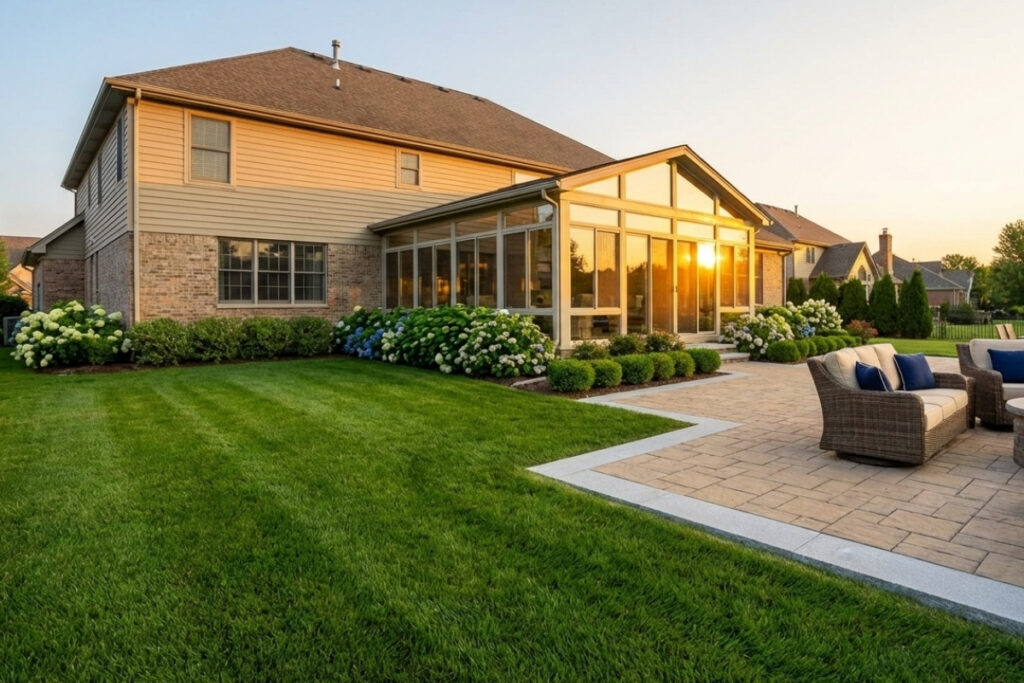
What Drives Costs Up (and What Doesn't Matter as Much)
Factors that significantly increase cost:
- Large plant sizes. Bigger specimens cost exponentially more and require heavier equipment to install. Going from a 2-inch caliper tree to a 4-inch can triple the cost.
- Extensive screening. A 100-foot evergreen hedge at 3-foot spacing requires 33+ trees. That adds up quickly.
- Poor existing conditions. Significant regrading, drainage correction, stump removal, and demolition of old hardscape all add to the budget before a single plant goes in.
- Irrigation. A dedicated irrigation system adds $3,000-$8,000 depending on the number of zones, but dramatically improves plant survival and long-term landscape health.
Factors that matter less than people think:
- Plant species. Most common landscape shrubs and perennials are within 20-30% of each other in price. Choosing ninebark over boxwood doesn't radically change the budget.
- Mulch type. The difference between standard double-shredded hardwood and premium dyed mulch is minimal in the overall project cost.
- Bed shape and layout. Curved beds don't cost more than straight ones. Design complexity is mostly a design-time cost, not an installation cost.
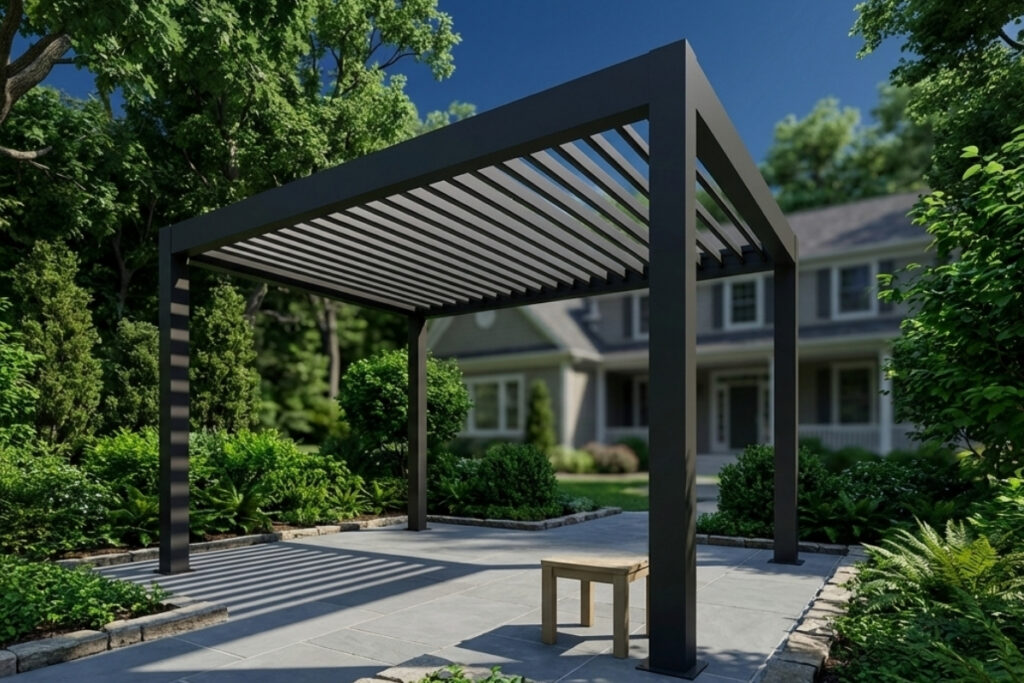
Is Professional Landscaping Worth the Investment?
The data says yes. Multiple studies, including the National Association of Realtors' Remodeling Impact Report, consistently show that landscape improvements return 100-200% of their cost at resale. Mature trees alone can add 10-15% to a property's assessed value.
But resale value isn't the only calculus. A properly designed and installed landscape:
- Reduces heating and cooling costs through strategic shade tree placement and windbreak screening
- Manages stormwater better than bare lawn, especially on clay soils where runoff is already a problem
- Increases usable outdoor living space
- Improves the daily experience of arriving at and living in the home
The homeowners who regret their landscaping investment are rare. The homeowners who wish they'd done it sooner are common.

How to Budget a Landscaping Project
If you're in the planning stage, here's a practical approach:
- Determine your realistic budget range. Be honest about what you're comfortable spending. We'd rather design a $10,000 landscape that gets fully installed than a $25,000 design that sits on paper because the budget wasn't there.
- Prioritize by impact. Foundation plantings and the front entry deliver the most visible improvement per dollar. Backyard plantings enhance the living experience. Screening solves specific functional problems.
- Consider phasing. A multi-year phasing plan lets you spread costs across two or three seasons. Install the structural elements (trees, evergreens, hardscape-adjacent plantings) in year one, then fill in with perennials, groundcovers, and secondary beds in subsequent years.
- Don't skip the infrastructure. Soil prep, drainage, and irrigation aren't the exciting parts of a landscape project, but they're what separate a landscape that thrives from one that struggles.
Frequently Asked Questions
When do landscaping prices change during the year?
Plant material pricing is relatively stable from spring through fall. However, scheduling during peak season (May-June) can be tighter. Fall installations sometimes benefit from nursery end-of-season pricing on remaining stock, though specific cultivar availability may be more limited.
Should I get multiple quotes for landscaping?
Yes, but compare apples to apples. A quote that specifies "10 shrubs and 20 perennials" without naming species, sizes, or a design plan is not comparable to a detailed proposal with a scaled planting plan, named cultivars, specified container sizes, and defined soil preparation. The cheapest bid is almost always cheapest for a reason — smaller plants, less soil prep, fewer plants per bed, or no design whatsoever.
Can I save money by buying plants myself?
Technically, yes — but it usually doesn't work out that way. Contractor pricing at wholesale nurseries is 30-50% below retail garden center pricing. The markup you see in a landscape proposal typically covers delivery logistics, plant guarantees, and the ability to source specific cultivars in quantity. Homeowner-purchased plants also typically don't carry a contractor's installation warranty.
Do you finance landscaping projects?
We don't offer in-house financing, but many homeowners use home equity lines of credit or personal loans for landscape investments. Given the documented return on investment, landscaping is one of the more financially rational home improvement expenditures.
Bee Green Outdoor Living provides professional landscape design and installation across Northeast Ohio. Contact us for a project consultation and honest cost estimate.