Landscaping Ideas for Northeast Ohio Homes
Online pieces about landscaping keep saying the same thing: bring in color, make things focus. Good tip, unless where you're located has seasons that refuse to play nice together. At Northeast Ohio, one season stretches out half a year, starving every green thing tagged beyond Zone 6a.
What takes root must handle sticky soil, winter shocks cracking soil apart under tiny trees, then sweltering wet days stacking pressure on vulnerable greens by late summer.
These happen to be the exact landscaping approaches we put into practice for residents living within Greater Cleveland, Medina, and Lorain County. Not just pinched-from-internet inspirations like those seen in sun-drenched parts of California — these are practical choices tested under local conditions.
Foundation Plantings That Actually Fit the House
The most impactful landscaping change most homeowners can make is updating their foundation plantings. If your home was built before 2005, there's a good chance the foundation beds are filled with overgrown yews, leggy rhododendrons, and a few mystery shrubs that nobody can identify anymore.
A well-designed foundation planting uses layered heights — tall anchors at the corners, mid-height shrubs along the wall, and low perennials or groundcovers at the bed edge. The key is selecting plants whose mature size fits the space. That 18-inch boxwood at the nursery grows to 4 feet. Plan for where a plant is going in 5 years, not where it is today.
What works in NEO foundation beds:
- Corner anchors (4-6 ft): Green Giant arborvitae (for corners with room), Hicksii yew, Winterberry holly. These provide year-round structure and frame the architecture.
- Mid-layer (2-4 ft): Green Velvet boxwood, Blue Princess holly, Little Henry sweetspire, Incrediball hydrangea. These fill the wall plane with texture and seasonal interest.
- Front edge (under 2 ft): Catmint (Walker's Low), creeping phlox, sedum (Autumn Joy), daylilies, Karl Foerster feather reed grass as accents.
The biggest mistake we see is planting too close to the foundation wall. Shrubs need at least 3 feet of clearance from the house for air circulation and to keep root systems away from the footer. Crowded foundation plantings hold moisture against siding and invite pest problems.
Privacy Screening That Works Year-Round
What people ask about most isn’t price — it’s how much quiet a property can be. Sitting outside some fresh stone patio, you’d rather look away from the kitchen window next door. In NEO, things get tricky: by November, every leafy tree turns bare, leaving empty views just when cover matters most.
A steady backdrop comes from evergreen screens. When room is limited — below half the height of plants you can place one line of Emerald Green arborvitae, spaced about 3 feet apart, to form an unbroken wall in three to four seasons. For bigger grounds, place two rows of Green Giant spaced 5 feet apart offbeat, helping growth happen quicker and thicker. These trees rise fast — about 3 feet annually if surroundings help — and reach heights near 40-50 feet.
Mixed screening uses long-acting evergreens under snow while bringing in fade-prone plants so yards feel alive when leaves return. Behind a stand of dense Norway spruce, early warmth brings red twig dogwood into view alongside viburnum and tall grasses that stretch through seasons without losing presence. Depth comes not from volume but layering different forms across the ground plane.
Deer love arborvitae — it's like candy to them, especially in quieter parts of Medina and Lorain counties. Where animals gather often, trees pick up stress fast. Holly like Blue Princess or Nellie Stevens, plus inkberry or spruce, usually stay ignored by white tails. These options might work better where browsing happens regularly.
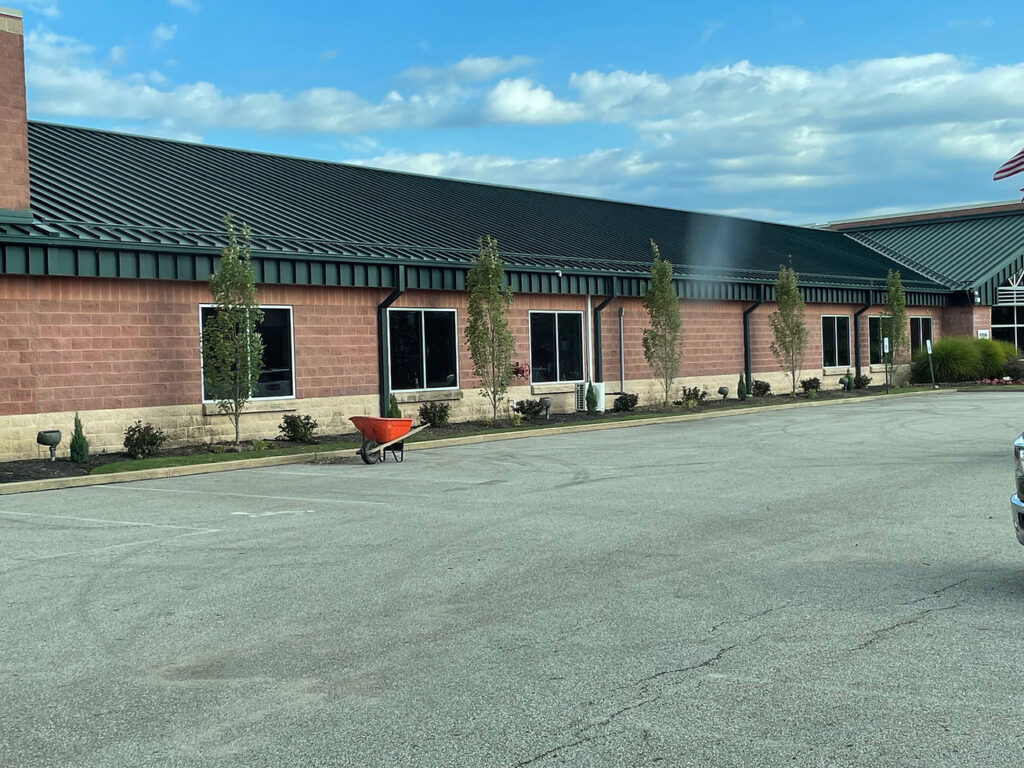
Curb Appeal Upgrades That Add Real Value
Curb appeal isn't about flowers in the mailbox. The landscaping elements that genuinely increase property value are structural — defined bed edges, properly scaled plantings, healthy trees, and a clean relationship between the lawn, beds, and hardscape.
High-impact curb appeal projects:
- Defined bed edges with fresh mulch: This alone changes how the entire front yard reads. Clean-cut natural edges (no plastic edging) with 2-3 inches of double-shredded hardwood mulch make even modest plantings look intentional and maintained.
- A specimen tree in the front yard: One well-placed ornamental tree — a multi-stem serviceberry, a red-leafed Japanese maple (Bloodgood is the standard for NEO), or a native redbud — becomes the centerpiece of the front landscape. Typical cost installed: $400-$1,200 depending on caliper.
- Walkway border plantings: Low perennials and groundcovers along a front walkway soften the hardscape edge. Catmint, creeping phlox, and low sedum varieties handle foot traffic proximity and road salt splash from winter.
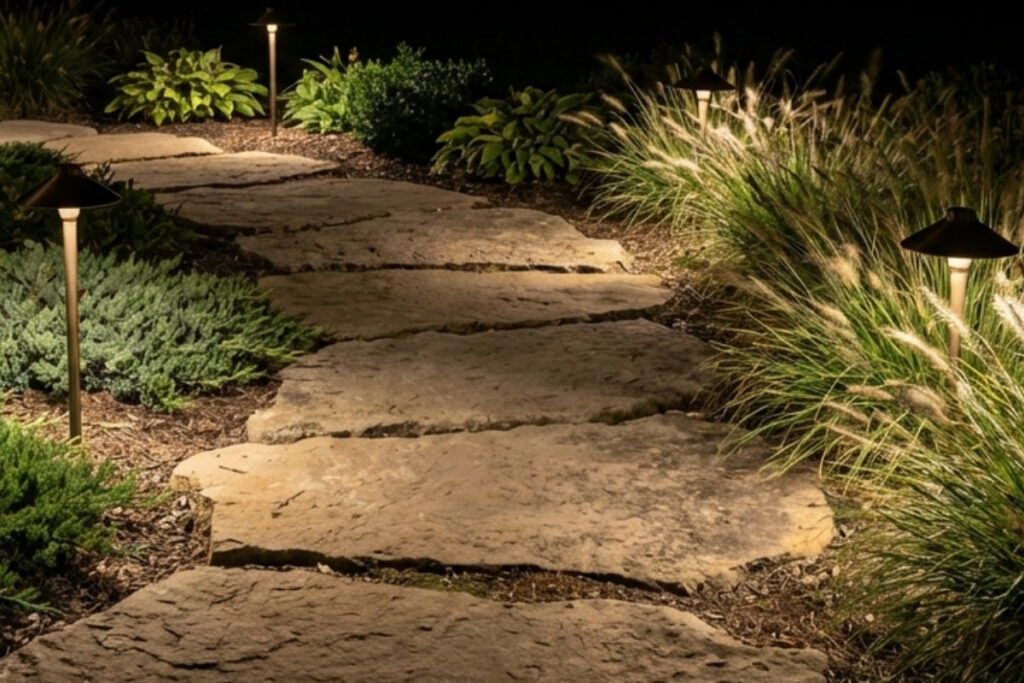
- Landscape lighting: Uplighting on trees and architectural downlighting at the entry extends curb appeal into the evening hours. Path lights along the walkway add safety and polish. A basic front-yard lighting package runs $2,500-$5,000 installed.
The National Association of Realtors consistently reports that landscaping improvements return 100-200% of their cost at resale — one of the highest ROI home improvements available.

Low-Maintenance Landscaping for Busy Homeowners
"Low maintenance" doesn't mean "no maintenance." Every landscape needs some attention. But the difference between a high-maintenance landscape and a practical one is significant — we're talking about 2-3 hours per month versus a full weekend every week.
Low-maintenance design principles for NEO:
- Fewer plant varieties, larger groupings. A bed with 15 different species requires 15 different pruning, feeding, and care schedules. A bed with 5 species in bold groupings looks better and takes a fraction of the effort.
- Native and adapted plants. Plants that evolved in this climate don't need you to fight their battles. Black-eyed Susan (Rudbeckia), coneflower (Echinacea), switchgrass (Northwind), and ninebark thrive in clay soil without amendment or supplemental irrigation once established. They handle our winters without protection and our summers without extra water.
- Groundcover instead of mulch in shaded areas. Under mature trees where grass won't grow and mulch washes away, a groundcover planting — pachysandra, sweet woodruff, or native wild ginger — eliminates the annual mulch-and-weed cycle.
- Drip irrigation: An irrigation system removes the single most time-consuming maintenance task from your list. Drip zones for planting beds and rotor zones for lawn areas keep everything watered on schedule. The system pays for itself in reduced plant replacement costs within a few years.

Four-Season Interest: Designing for the Full Calendar
In Northeast Ohio, winter runs roughly from late November through mid-April. That's nearly five months where your landscape is bare if you planted nothing but deciduous flowering shrubs and perennials. Designing for four-season interest means something is always contributing.
Winter (November-March): Evergreen structure — boxwood, holly, arborvitae, spruce — provides green mass when everything else is dormant. Red twig dogwood and yellowtwig dogwood add vivid stem color against snow. Ornamental grasses like Karl Foerster and Northwind switchgrass hold their form and seed heads through winter.
Spring (April-May): Redbud, serviceberry, and magnolia bloom before leaf-out, giving the earliest color. Daffodils and crocus naturalized in beds provide ground-level color in March and April. Flowering quince and forsythia are among the first shrubs to bloom.
Summer (June-August): This is peak landscape season. Hydrangeas dominate — Limelight, Incrediball, and Bobo bloom from July through frost. Perennials like coneflower, black-eyed Susan, Russian sage, and daylilies carry color through the hottest months. Ornamental grasses reach full height and begin to flower.
Fall (September-November): Red maple and sugar maple deliver the headline color. Burning bush used to be the go-to fall-color shrub but is now classified as invasive in Ohio — we use chokeberry (Aronia), fothergilla, and Virginia sweetspire as native replacements with equally intense fall color. Asters and mums extend perennial bloom into October.
Backyard Spaces That Connect to the Landscape
The best outdoor living spaces don't end at the patio edge. The landscaping around and beyond the hardscape defines the atmosphere of the space. A few principles we apply on every landscape project:
- Frame the view from the seating area. Stand where the homeowner will actually sit and design the landscape from that perspective. What needs to be screened? Where does the eye need to be drawn?
- Use plantings to define outdoor rooms. Low hedges, ornamental grasses, and perennial borders can separate a dining area from a fire pit zone without walls or fences.
- Plant shade trees strategically. A red oak or honeylocust planted 20 feet south of the patio will shade the seating area in 8-10 years. That's long-term thinking, but the homeowner who plants now is the one who benefits.
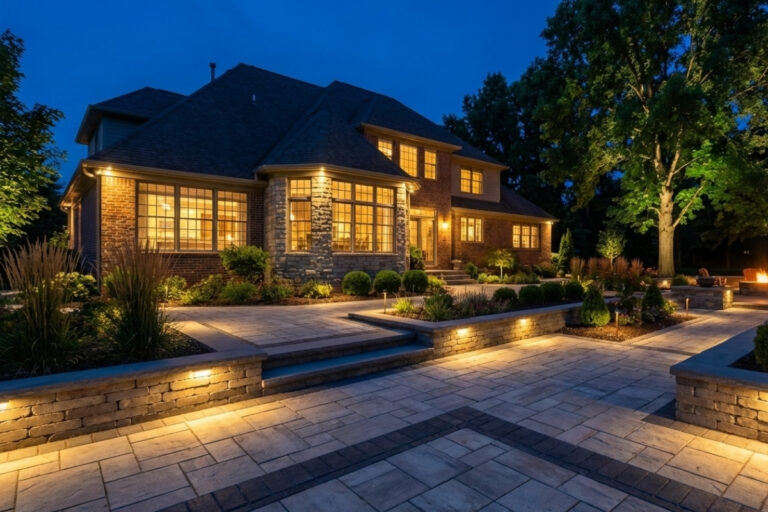
- Connect to outdoor lighting. Uplighting on trees and accent lighting in planting beds extends the landscape's presence after dark. Without lighting, the landscape disappears at sunset and the patio feels like it's floating in a void.
Frequently Asked Questions
What's the best time of year to start a landscaping project in Northeast Ohio?
Fall (September-October) is the best planting window for most trees and shrubs — warm soil promotes root establishment while cool air reduces transplant stress. Spring (April-May) is a close second. For projects that include hardscaping, grading, or irrigation, starting construction in late spring gives the full season to complete everything and plant before fall.
How long does a new landscape take to fill in?
Most professionally installed landscapes look good at installation and reach designed fullness in 2-3 growing seasons. Trees take longer — expect 5-8 years for meaningful canopy development from standard nursery stock. We design for the mature landscape, which means new plantings may look a little sparse in year one. That's intentional. Planting at finished density leads to overcrowding within a few years.
Can you work with an existing landscape or does everything get ripped out?
We keep what's healthy and well-placed. Many of our projects are partial renovations — removing overgrown or diseased material, reconfiguring beds, and integrating new plantings with existing ones. There's no reason to remove a healthy 30-year-old Japanese maple just because the yews around it need to go.
Bee Green Outdoor Living provides landscape design and installation across Northeast Ohio. Contact us for a free consultation on your landscaping project.