How to Choose the Right Pavers for Your Project
Walk into a paver showroom and you'll see 200+ products on the wall. Different sizes, textures, colors, thicknesses, and price points. It's overwhelming — and most homeowners leave more confused than when they walked in.
Here's how we narrow it down. After installing pavers across Northeast Ohio for over two decades, the decision framework is simpler than the showroom suggests. Four questions get you to the right product: What application? What style? What size? What budget?
Step 1: Match the Paver to the Application
Not all pavers work for all jobs. The application determines the minimum strength, thickness, and installation requirements.
Patio and Walkway Pavers
Minimum requirements: 8,000+ PSI compressive strength, 2-3/8 inch thickness (standard), pedestrian rating.
This is where you have the most freedom. Virtually every paver product from major manufacturers is rated for pedestrian use. Your choices are driven by aesthetics, not engineering. Standard interlocking pavers, large-format slabs, and even natural stone–style products all work for patios and walkways.
Driveway Pavers
Minimum requirements: 8,000+ PSI (10,000+ PSI recommended), minimum 2-3/8 inch thickness (3-1/8 inch for heavy vehicles), vehicular rating, herringbone pattern required.
Driveways demand more. Vehicle loads, turning forces, and repeated traffic require pavers with higher compressive strength and a pattern that interlocks aggressively enough to prevent shifting. Herringbone (45° or 90°) is the ICPI-recommended pattern for vehicular applications — the angled orientation distributes directional loads across multiple units.
Not every paver product is rated for driveways. Check the manufacturer's spec sheet for vehicular classification before committing. Our paver installation team can confirm which products qualify.
Pool Deck Pavers
Requirements: Slip-resistant surface texture, light color (reduces heat absorption), low water absorption, chemical resistance.
Pool decks have specific needs that standard pavers don't always meet. Dark-colored pavers absorb heat and become uncomfortable underfoot in July. Smooth-surface pavers become slippery when wet. The best pool deck pavers have a textured surface, light tones, and minimal water absorption.
Porcelain pavers are our top recommendation for pool decks — cool underfoot, slip-resistant when wet, and immune to pool chemical damage. If staying with concrete pavers, choose a light-colored product with a textured (not smooth or polished) surface.
Step 2: Choose Your Style
Paver style determines the aesthetic of your outdoor space. There are three broad categories, and most products fall into one of them.
Traditional / Tumbled
Small-format pavers (4×8, 6×6, 6×9) with tumbled edges that give the surface an aged, Old World character. Warm earth tones — tans, browns, terracotta blends. Patterns like herringbone and running bond create a classic look.
Good for: Colonial homes, Tudors, Craftsman-style houses, traditional neighborhoods. Popular in Shaker Heights, Chagrin Falls, Rocky River, and the older Cleveland suburbs where the patio should feel like it's been there for decades.
Products to look at: Unilock Copthorne, Belgard Dublin Cobble, Techo-Bloc Villagio, Cambridge Ledgestone.
Transitional / Textured
Mid-sized pavers (8×16, 12×12, multiple-size random layouts) with natural stone–inspired textures. Colors range from warm tans to cool grays. These products bridge traditional and contemporary — they work with most home styles.
Good for: Split-level homes, newer construction, transitional architecture, homeowners who want character without going full traditional or full modern.
Products to look at: Unilock Beacon Hill Flagstone, Belgard Mega-Lafitt, Techo-Bloc Blu 80mm, Cambridge RoundTable.
Contemporary / Large-Format
Large slabs (18×18, 24×24, 24×36, up to 24×48) with smooth or lightly textured surfaces. Neutral grays, charcoals, and near-white. Minimal joints, clean lines. The effect is modern, almost indoor-like.
Good for: Contemporary and mid-century modern homes, minimalist design, indoor-outdoor transitions. Properties in Westlake, Bay Village, and the lakefront communities where modern architecture is common.
Products to look at: Techo-Bloc Blu Grande, Unilock Umbriano, Belgard Dimensions, porcelain pavers (various manufacturers).
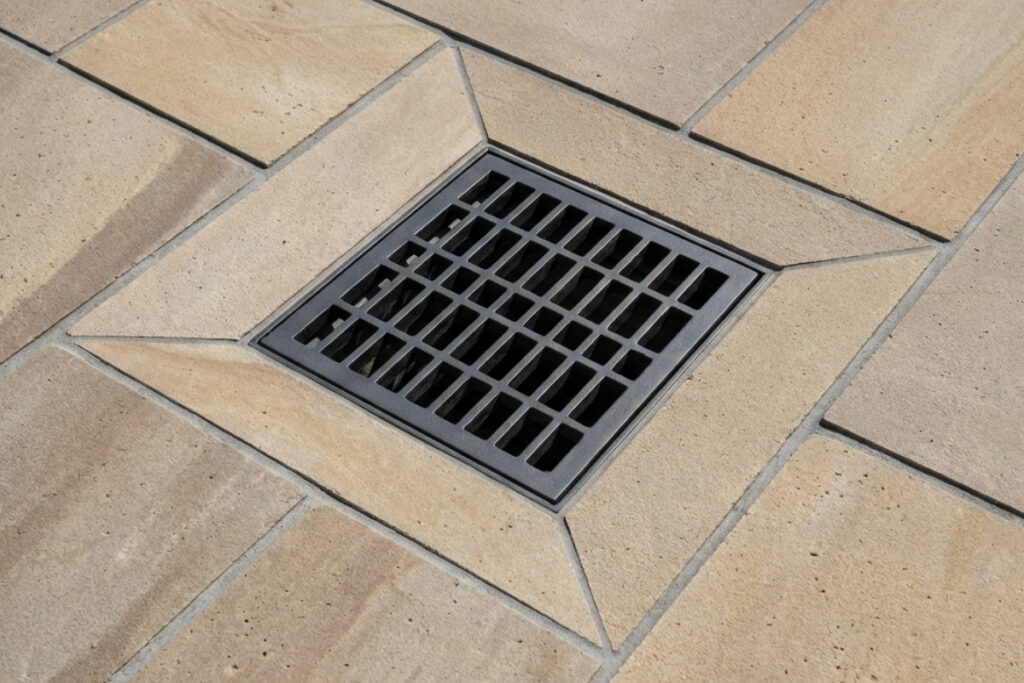
Large-format pavers require a flatter, more precise base. Any imperfection in the setting bed telegraphs through a large, thin slab. Installation cost is slightly higher per square foot due to the additional base precision and the weight-handling requirements.
Step 3: Size and Pattern
Size Affects Everything
Paver size changes the visual scale of the patio, the installation complexity, and the cost.
Small pavers (4×8, 6×6): More pieces per square foot = more labor to set = slightly higher installation cost per square foot. But the smaller units create a more detailed, textured surface. They also handle curves and irregular shapes better with less cutting waste.
Standard pavers (6×9, 8×8, 8×16): The workhorses. Balanced between installation efficiency and design flexibility. Most residential patios use pavers in this size range.
Large-format pavers (18×18, 24×24, 24×36+): Fewer pieces per square foot, but each piece weighs significantly more. The base must be laser-level precise. Cutting waste is lower (fewer cuts needed for a simple rectangle), but each cut is through a larger piece. The visual result is a cleaner, more expansive surface.
Pattern Selection
Herringbone (45° or 90°): The strongest interlock. Best for driveways and high-traffic areas. Creates visual energy and direction. 45° herringbone is more dynamic; 90° is more structured.
Running bond: Simple offset pattern — each row shifts by half a paver. Clean, efficient, and works with almost any paver shape. Good for walkways and patios where simplicity is the goal.
Stacked bond (soldier): Grid pattern with no offset. Very modern. Minimal interlock — requires strong edge restraint. Best for pedestrian surfaces where the contemporary look matters more than structural interlock.
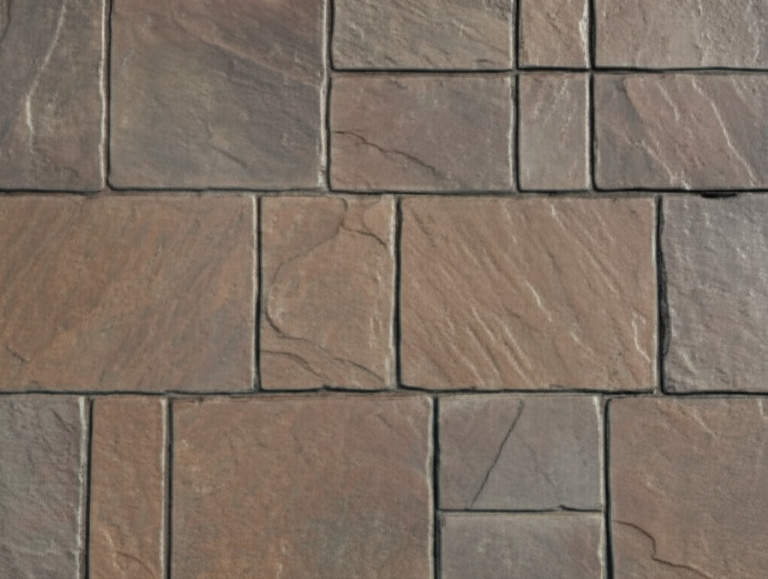
Random/ashlar: Multiple paver sizes combined in a repeating random arrangement. Creates a natural stone–like appearance with manufactured pavers. The "random" look is actually a calculated pattern that repeats, but the repetition isn't visually obvious.
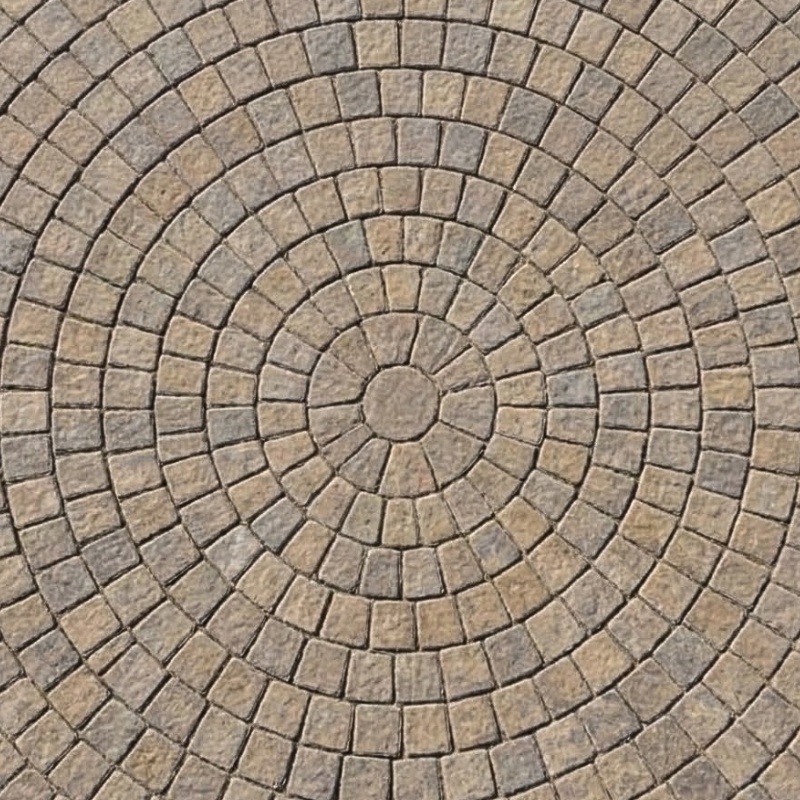
Circular/fan: Radiating patterns around a focal point — fire pit, fountain, or tree. Dramatic visual impact. Requires extensive cutting at the perimeter (every paver in the outer ring needs a custom cut). Budget additional cutting labor.
Step 4: Budget Considerations
Paver costs in Northeast Ohio break into three tiers. The base construction cost is essentially the same across all tiers — what changes is the product cost.
| Tier | Per Sq Ft (Installed) | Products |
|---|---|---|
| Standard ($25–$32) | Holland, Classic Cobble, basic tumbled | Budget-friendly, proven performers |
| Mid-range ($32–$42) | Beacon Hill, Richcliff, Blu, Lafitt | Best value — most design variety |
| Premium ($40–$55) | Arcana, Borealis, Industria, large-format | Designer products, unique textures |
Porcelain pavers ($40–$70/sqft) are in their own category with unique performance characteristics. See our patio materials comparison for how porcelain stacks up.
For detailed pricing by project size, see our patio cost guide.
Where to Spend and Where to Save
Spend on the patio field. The field — the main surface area — is what you'll look at every day. Invest in a product you genuinely like, not just the one that's on sale.
Save on hidden areas. Walkways that see limited traffic, utility pad surrounds, and areas behind walls don't need premium products. Standard-tier pavers perform identically in hidden or utilitarian applications.
Upgrade borders selectively. A contrasting paver or natural stone border adds visual impact at a fraction of the cost of upgrading the entire field. A $32/sqft field with a $50/sqft stone border looks more expensive than it is.
Color Selection Tips
For Ohio Specifically
Warm tones (tans, browns, terracotta): Look great 8 months of the year. In winter, against brown grass and bare trees, they blend in. If your outdoor space matters visually year-round (visible from inside the house), warm tones can feel flat from November through March.
Cool tones (grays, charcoals, blue-grays): Hold their visual contrast year-round. Against winter's muted palette, gray pavers still read as intentional and architectural. Against summer green, they provide clean contrast.
Multi-color blends: Products with 3–5 color tones blended together hide dirt and staining better than solid colors. They also create natural visual interest without relying on pattern complexity. Multi-tone blends are the most forgiving choice for families with kids, dogs, and regular outdoor cooking.
General Color Rules
- Lighter colors make spaces feel larger. Darker colors feel more intimate.
- Match undertones, not exact colors. Your patio doesn't need to match your house — it needs to harmonize. Warm house = warm pavers. Cool house = cool pavers.
- View samples outside in natural light, not under showroom fluorescents. The colors look different.
- Lay at least a 4×4 section of samples in your yard before committing. The sample chip on the wall doesn't represent how a full patio will read at scale.
Manufacturer Comparison
We install products from all major manufacturers. Here's how they compare:
Unilock: Premium positioning. EnduraColor technology for fade resistance. Strongest large-format and contemporary product lines. Higher price point — you're paying for proprietary finishes and textures.
Belgard: Widest product range from entry-level to premium. Good regional availability. Solid mid-range value. The Mega-Lafitt and Dimensions lines compete well with Unilock's premium offerings.
Techo-Bloc: Design-forward. Architectural style products that push aesthetic boundaries. Premium pricing. The Blu series and Borealis are distinctive products with no direct competitor match.
Cambridge: ArmorTec surface protection is a genuine differentiator — the treated surface resists staining and fading. Good color range. Competitive mid-range pricing.
All four manufacturers produce quality products that perform well in Northeast Ohio's freeze-thaw climate. The choice is driven by aesthetics and budget, not durability — they're all durable enough.
Frequently Asked Questions
What pavers are best for Northeast Ohio weather?
Any concrete paver from a major manufacturer (Unilock, Belgard, Techo-Bloc, Cambridge) handles freeze-thaw well — they're manufactured to 8,000+ PSI and tested for hundreds of freeze-thaw cycles. Porcelain pavers with near-zero water absorption are the most freeze-thaw resistant option available. The weak link in any paver system is the base, not the paver itself.
Should I choose thick or thin pavers?
Standard 2-3/8 inch (60mm) pavers work for most residential applications. For driveways or areas supporting heavy loads, 3-1/8 inch (80mm) pavers provide additional strength. Large-format slabs are sometimes thinner (40–50mm) but require a more precise base and are pedestrian-use only.
Do paver colors fade over time?
Quality pavers with integral color (pigment throughout the unit, not just surface) don't fade significantly. Unilock's EnduraColor and similar technologies provide additional fade protection. Surface-applied color (color hardener) on some economy products can wear over time. Stick with integral-color products from major manufacturers and fading isn't a concern.
Can I mix different pavers on one project?
Yes — and we encourage it for design impact. A field paver with a contrasting border paver is the most common combination. Different patterns in different zones (herringbone dining area, running bond lounge area) using the same product creates subtle visual separation. Natural stone accents mixed with manufactured pavers add a premium touch at strategic locations. See our creative hardscaping ideas for mixing approaches.
How do I get samples?
Most manufacturers offer sample kits or individual sample pavers. We bring samples to your property during the design consultation so you can see colors and textures in your actual setting — natural light, against your house, next to your landscaping. That's the only way to evaluate color accurately.
Ready to choose your pavers? Request your design consultation — we'll bring samples, walk your property, and help you select the right product for your style, application, and budget. For an overview of all patio material options, see our best patio materials guide.
Bee Green Outdoor Living installs premium pavers from all major manufacturers across Greater Cleveland, Medina County, and Lorain County.