What to Include in Your Outdoor Kitchen
A porch cook area might just mean a grill built into a wall with room to set drinks. Or it could grow into something big — cold storage, running water, even a brick pizza corner, stools for guests, music played outside. The real issue here? Not how fancy it can get. But whether the design lines up with your real meals on the patio and who shows up to share them.
For two decades, we installed outside kitchens at Greater Cleveland, Medina County, then Lorain County. Most used? Not always the largest or priciest. Outcomes rely more on matching layout to real-life outdoor habits. Start by deciding what should show up in yours.
The Must-Haves (Every Outdoor Kitchen Needs These)
1. A Quality Built-In Grill
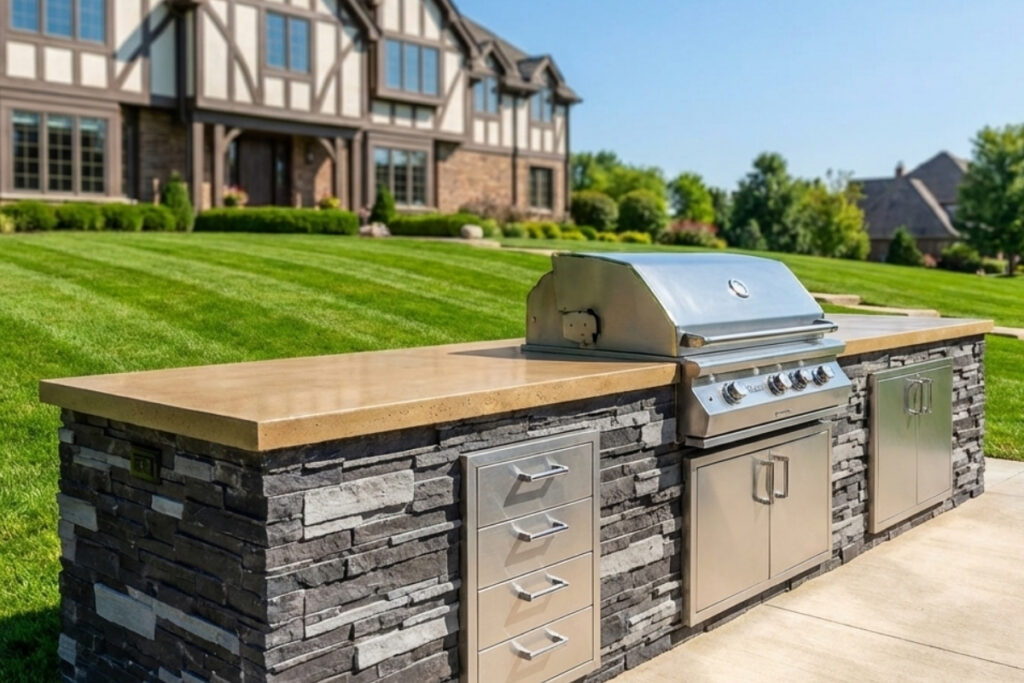
The grill is the centerpiece. Everything else supports it. A built-in grill is permanently installed in a masonry or steel-frame island, connected to a dedicated gas line, and sized for your typical cooking load.
What to look for:
- BTU output: 50,000–80,000 BTU for a standard 36-inch grill. More isn't always better — efficient burner design matters more than raw BTU.
- Cooking surface: 600–900 square inches covers most families and entertaining needs. 36-inch models are the sweet spot. 48-inch for serious entertainers.
- Construction: 304 stainless steel minimum. Lower grades corrode in our humid Ohio climate.
- Brands we install most often: Lynx, Alfresco, Blaze, Bull, and Summerset. Each has strengths at different price points. Our outdoor kitchen page covers appliance options in more detail.
Budget: $1,500–$5,000+ for the grill itself (installation separate).
2. Counter Space
The single biggest complaint we hear about existing outdoor kitchens? Not enough counter space. You need room to prep, plate, set down drinks, and stage food going on and off the grill — all at the same time.
Minimum recommendation: 36 inches of counter on each side of the grill. If you're doing anything beyond basic grilling (sides, appetizers, multi-course meals), add more.
Countertop materials that work in Ohio:
- Granite: The standard. Heat-proof, stain-resistant with sealing, handles freeze-thaw. $50–$100/linear foot installed.
- Porcelain slab: Newer option. Virtually indestructible, UV-stable, zero maintenance. $70–$120/linear foot.
- Bluestone: Natural stone with character. Needs sealing. $60–$90/linear foot.
- Concrete (cast-in-place or precast): Industrial aesthetic. Can be formed to any shape. $40–$80/linear foot.
Avoid quartz (engineered stone) outdoors — the resin binders degrade with UV exposure and freeze-thaw. It's an indoor product.
3. Storage
Outdoor cooking generates clutter: utensils, seasonings, charcoal, lighter, cleaning supplies, covers. Without dedicated storage, all of that ends up inside your house — which defeats part of the purpose.
Built-in stainless steel drawers and doors in the island base provide weatherproof storage at the point of use. Minimum: one drawer unit (for tools and accessories) and one cabinet door (for propane, cleaning supplies, or a trash pull-out).
4. Adequate Lighting
You'll be cooking after dark. Guaranteed. And you can't grill by feel.
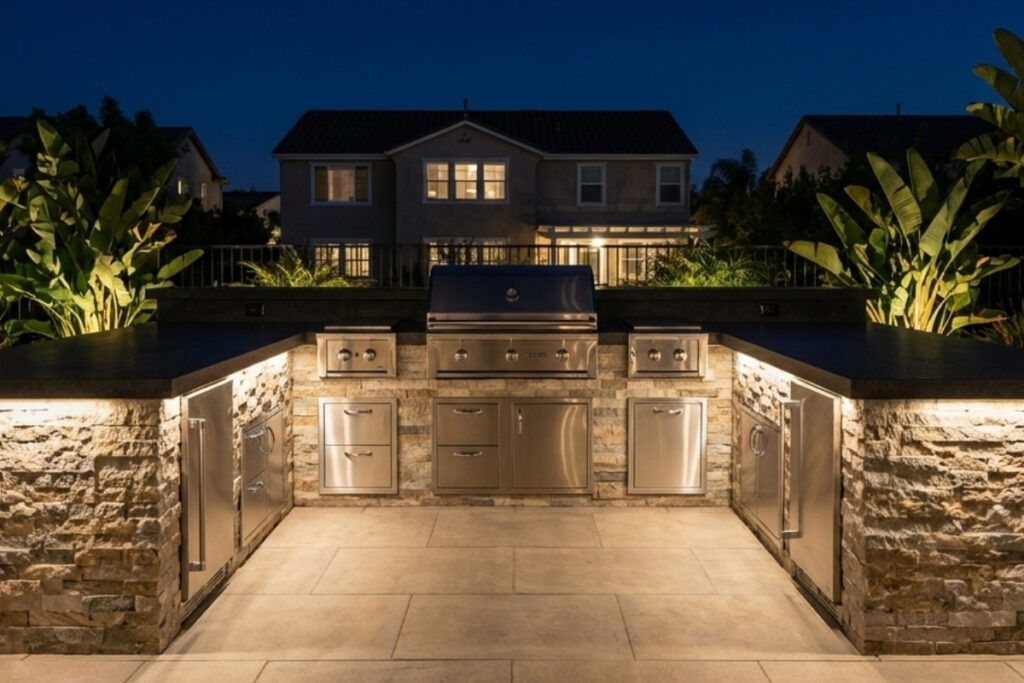
Task lighting under a pergola or directly above the grill surface is essential. LED strip lighting under countertop overhangs provides ambient light for the prep and serving zones. Integrate outdoor lighting planning into the kitchen design from the start — retrofit lighting is always more expensive and less clean.
5. Gas Line (Natural Gas or Propane)
A dedicated gas line powers the grill and any other gas appliances (side burner, pizza oven, fire feature). Natural gas is preferable — unlimited fuel supply, no tanks to refill. If natural gas isn't accessible at the kitchen location, a buried propane tank is the alternative.
Gas line work requires a permit and inspection in most Northeast Ohio municipalities. We handle both. Budget $1,500–$4,000 for the gas line depending on distance from the meter.
Strong Additions (High-Value Upgrades)
Refrigeration
An outdoor-rated undercounter refrigerator keeps drinks, marinades, and perishables at the cooking station instead of requiring trips inside. It's the upgrade that most changes the cooking workflow — once you have it, you wonder how you cooked without it.
Key specs: Look for outdoor-rated compressors (designed for temperature extremes), stainless steel cabinet, UL-listed for outdoor installation. Standard undercounter units are 24 inches wide.
Budget: $800–$2,500 for the unit. Requires a dedicated electrical circuit (GFCI protected).
Sink with Running Water
A sink in the outdoor kitchen transforms it from a cooking station to a self-contained workspace. Rinse vegetables, wash hands, clean up — without going inside.
Requirements: Hot and cold water supply lines, drain line routed to your home's sewer or septic, and a freeze-protection plan. In Northeast Ohio, outdoor water lines must be winterized — we install drain-down valves that allow you to empty the lines before the first hard freeze. Plumbing adds $2,000–$5,000 to the project.
Side Burner or Power Burner
A gas side burner adjacent to the grill handles pots, pans, and sauces that don't belong on grill grates. A standard side burner (12,000–15,000 BTU) handles sauces and sides. A power burner (30,000–60,000 BTU) handles stock pots, crawfish boils, and deep frying.
Pizza Oven
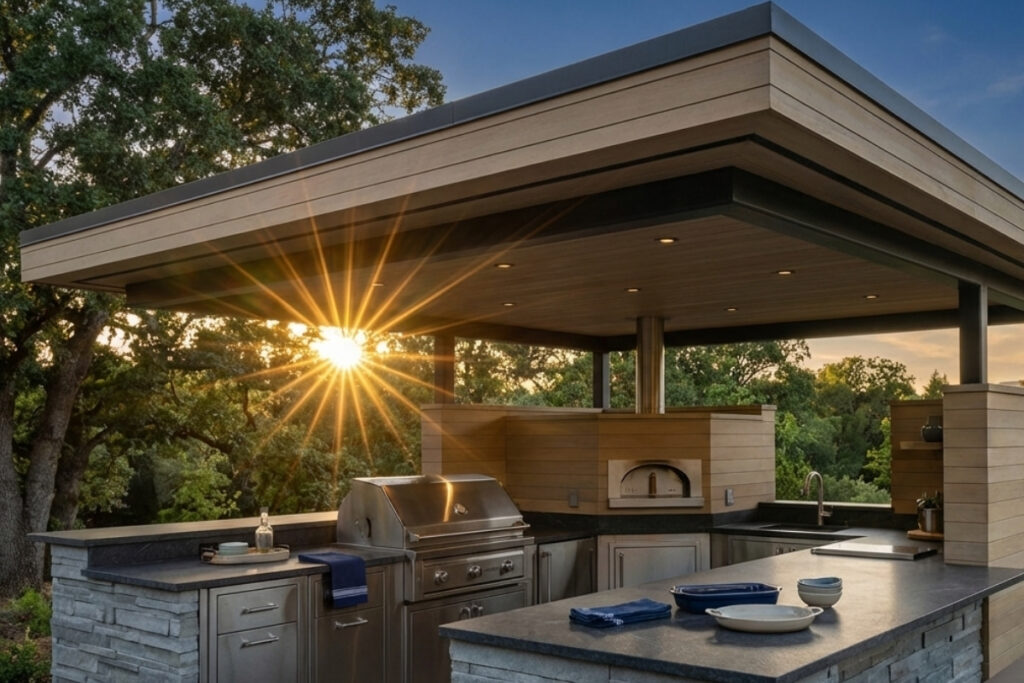
Wood-fired or gas-fired pizza ovens have exploded in popularity. They cook at 700–900°F, producing pizza in 90 seconds with a char and texture no conventional oven matches. Beyond pizza, they handle bread, roasted vegetables, meat, and fish at temperatures that create flavors you can't get any other way.
Options: built-in masonry ovens ($5,000–$15,000+ installed), modular insert ovens ($2,000–$5,000 plus installation), and countertop portable units ($300–$1,500 — not built-in, but functional).
Bar Seating / Counter Overhang
A raised or cantilevered counter section (typically 12–15 inches deep) with bar stools on the guest side creates casual seating that faces the cook. It's the social hub of every outdoor kitchen we build — guests gravitate to the bar counter. Allow 24 inches of counter width per seat.
Nice-to-Haves (If Budget Allows)
Built-In Smoker
For low-and-slow cooking — brisket, ribs, pulled pork, whole chickens. Built-in pellet or charcoal smokers integrate into the island alongside the gas grill. They require their own chimney or venting provision.
Ice Maker / Ice Chest
Drop-in ice bins ($200–$600) provide basic ice storage. Outdoor-rated ice makers ($1,500–$3,000) produce ice on demand. Either eliminates the constant inside trips for ice that plague every outdoor party.
Sound System
Outdoor-rated speakers integrated into the kitchen structure or surrounding hardscaping. Hardwired systems ($800–$2,500 installed) provide better sound quality and reliability than portable Bluetooth speakers.
Warming Drawer
Keeps food at serving temperature while you finish the rest of the meal. A luxury, but practical for multi-course outdoor dining. $1,000–$2,000 for an outdoor-rated unit.
Layout Considerations
The Work Triangle
Indoor kitchen design uses the work triangle — grill, prep area, and sink at three points, with efficient movement between them. The same principle applies outdoors. Don't put the sink 15 feet from the grill. Don't put the fridge behind the cook's back. Keep your primary workflow in a compact zone.
L-Shape vs. Straight vs. U-Shape
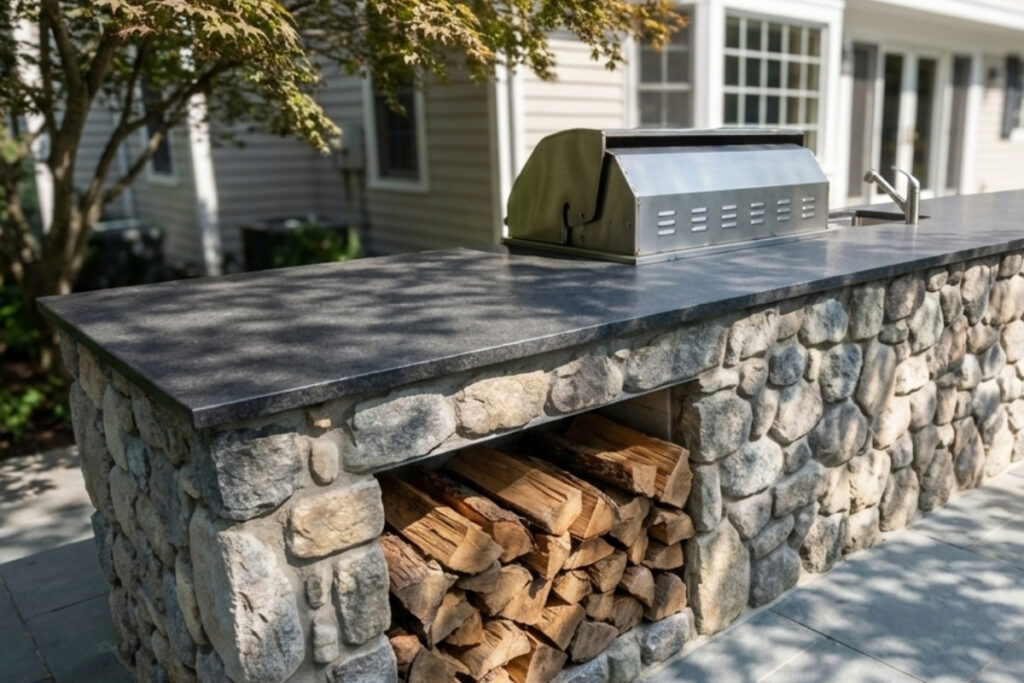
Straight island: The simplest layout. Grill in the center, counter on both sides. Works for kitchens up to about 12 feet long. Good for narrow spaces and modest budgets.
L-shape: Adds a perpendicular counter section — usually for bar seating, a sink station, or secondary prep space. Creates a defined cooking zone with more counter area. Our most-built configuration.
U-shape: Wraps the cook on three sides. Maximum counter and appliance capacity. Requires more space (12×12 foot minimum footprint) and budget. Best for dedicated entertainers who use the outdoor kitchen as their primary cooking space in season.
Orientation
Face the grill away from the prevailing wind (southwest in Northeast Ohio) to manage smoke direction. Face the bar seating toward the patio and yard — guests want the view. If possible, position the kitchen where the cook can see and interact with guests at the dining table and fire pit area.
Materials That Survive Ohio Weather
Everything in an outdoor kitchen takes a beating from our climate. Material selection matters.
Island structure: Concrete block (CMU) or galvanized steel framing. Both are fire-rated, weatherproof, and permanent. The island is then finished with natural stone veneer, manufactured stone, stucco, or tile.
Countertops: Granite, porcelain, or bluestone (see above). All handle freeze-thaw and UV exposure.
Appliances: Must be rated for outdoor installation. Indoor appliances used outdoors will corrode, void their warranty, and potentially create safety hazards. The NFPA (National Fire Protection Association) sets standards for outdoor gas appliance installation.
Electrical: All outdoor kitchen circuits must be GFCI-protected per the National Electrical Code. Dedicated circuits for refrigeration and high-draw appliances. Weatherproof boxes and covers on all receptacles.
Frequently Asked Questions
How much does an outdoor kitchen cost?
Entry-level (built-in grill, counter, basic storage): $10,000–$18,000. Mid-range (grill, fridge, counter, sink, bar seating): $20,000–$40,000. Full build (multiple appliances, premium materials, plumbing, electrical): $40,000–$80,000+. See our outdoor kitchen cost breakdown for detailed pricing.
Can I use my outdoor kitchen in winter?
The grill and gas appliances work year-round. Water lines need to be winterized (drained) before sustained freezing temperatures. Refrigeration should be unplugged when temps drop below 35°F for extended periods. The structure itself is permanent and weather-proof — only the plumbing is seasonal.
Do I need permits for an outdoor kitchen?
Gas work requires a gas permit. Electrical work requires an electrical permit. Plumbing may require a plumbing permit. The structure itself (if it doesn't support a roof) usually doesn't require a building permit, though some municipalities have requirements. We check and handle permitting for every project.
What's the best countertop for an outdoor kitchen in Ohio?
Granite is the proven standard — it handles heat, freeze-thaw, staining (when sealed), and UV without issues. Porcelain slab is the newer premium option with even better performance (zero water absorption means superior freeze-thaw resistance). Both are excellent choices in our climate.
How long does an outdoor kitchen last?
The masonry structure and stone finish are permanent — 30+ years with no structural maintenance. Countertops (granite, porcelain) last 20–30+ years. Appliances have 10–15 year lifespans depending on brand and use frequency. The National Association of Realtors rates outdoor kitchen additions among the highest in homeowner satisfaction.
Ready to plan your outdoor kitchen? Request your design consultation — we'll walk your site, discuss your cooking and entertaining style, and design a kitchen that fits how you actually live outdoors. For layout and style inspiration, see our outdoor kitchen design ideas.
Bee Green Outdoor Living designs and builds custom outdoor kitchens across Greater Cleveland, Medina County, and Lorain County.