What Does Professional Landscaping Include?
"Landscaping" means different things to different people. Some homeowners think of mowing and mulch. Others picture a full property redesign with grading, drainage, plantings, and irrigation. The term covers a wide range of work, and the confusion leads to mismatched expectations — someone calls asking for "landscaping" and actually needs a $40,000 landscape renovation, or they expect a $2,000 mulch-and-plant job.
Here's what professional landscape design and installation actually includes, what it doesn't, and how to know which level of service your property needs.
Landscape Design
Every professional landscape project starts with a design. Not a sketch on a napkin — a scaled planting plan that specifies:
- Plant species and cultivars — exact varieties, not just "some bushes"
- Plant sizes at installation — container size, caliper for trees, height for shrubs
- Planting locations — precisely placed on a scaled drawing with proper spacing
- Bed layout — shape, dimensions, edge profiles
- Soil amendments — what needs to be added and where, based on existing soil conditions
- Mulch specifications — type, depth, coverage area
- Irrigation requirements — which zones serve which planting areas
The design process typically involves a site visit, property measurements, soil assessment, sun/shade mapping, and a conversation about what you want the landscape to accomplish (privacy, curb appeal, outdoor living integration, low maintenance, etc.).
Design fees for residential landscapes in Northeast Ohio typically run $500–$2,500 depending on property size and project complexity. Most design-build firms (including us) apply design fees toward the installation contract.
Site Preparation
Before a single plant goes in the ground, the site needs to be prepared. This is the work most homeowners don't see — and it's where the difference between professional and amateur installation shows up five years later.
Existing Plant Removal
If the project is a renovation (and most are), the first step is removing what's already there. Overgrown yews, dead azaleas, invasive plants, stumps, and decades of matted root systems. This isn't just pulling plants — it's excavating root balls, grinding stumps, and hauling material off site.
Grading and Drainage
Water needs to flow away from the house, away from the patio, and toward appropriate drainage points. Many properties in Northeast Ohio have grading issues — low spots that pond, slopes that direct runoff toward the foundation, and flat areas where clay soil holds standing water.
Professional grading addresses these problems before planting. Sometimes it's minor — reshaping bed areas to promote surface drainage. Sometimes it requires bringing in topsoil, installing French drains or catch basins, or regrading significant portions of the yard.
In our clay-dominant soils, drainage is not optional. Plants sitting in waterlogged clay develop root rot regardless of how hardy they are.
Soil Preparation
Northeast Ohio clay soil is not ready for planting in its native state. It's dense, poorly draining, and often compacted from construction equipment during home building. Professional soil preparation includes:
- Soil testing — pH, nutrient levels, organic matter content
- Amendment incorporation — typically 3–4 inches of compost tilled into the top 12 inches of soil
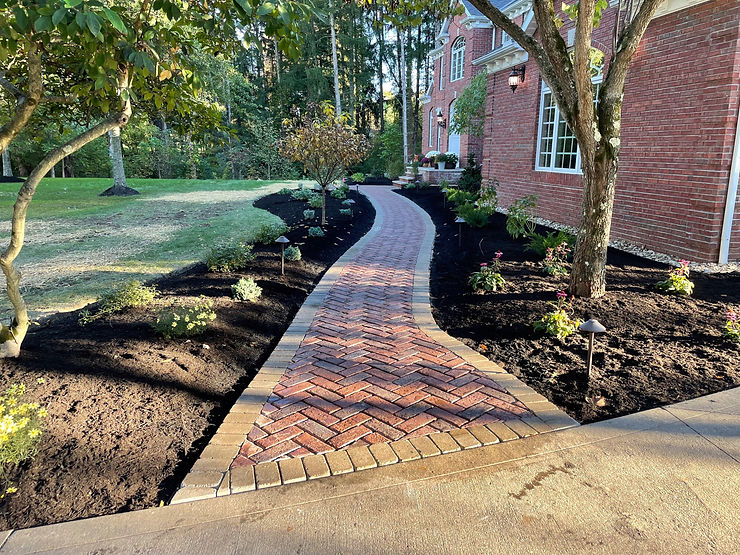
- Bed edging — clean-cut natural edges (we don't use plastic edging in planting beds — it heaves in freeze-thaw cycles and looks cheap)
- Final grading — smooth, consistent grade with proper drainage pitch
This preparation creates a growing environment where roots can actually penetrate and establish, instead of circling inside a planting hole surrounded by impenetrable clay.
Plant Installation
With the site prepared, planting follows the design plan precisely. Professional installation means:
Proper planting depth — The single most common planting mistake is burying the root flare on trees. The root flare (where the trunk widens at the base) must be at or slightly above grade. Burying it causes bark decay, girdling roots, and slow death over 5–10 years. We check every tree we install.
Correct spacing — Plants are spaced based on mature size, not nursery size. A 3-gallon shrub that's 18 inches wide at installation might be 5 feet wide in 7 years. Spacing at installation looks open — that's intentional. Crowding plants for immediate fullness creates a tangled mess within a few growing seasons.
Root preparation — Container-grown plants often have circling roots that need to be loosened or scored before planting. Balled-and-burlapped trees need wire baskets removed or folded down and burlap pulled back from the trunk. Failure to address root issues at planting leads to establishment failure.
Staking (when necessary) — Trees are staked only when wind exposure or slope requires it, and stakes are removed after one growing season. Permanent staking weakens trunks.
Mulching
Mulch serves three functions: moisture retention, weed suppression, and soil temperature moderation. Professional mulching means:
- 2–3 inches of mulch over all planting beds — not the 6-inch piles you see at strip malls
- Mulch pulled back from tree trunks — no mulch volcanoes (the mounded-up mulch around tree bases that causes bark rot)
- Appropriate material — double-shredded hardwood bark for most beds, pine bark or leaf mulch for acid-loving plants
Proper mulch depth matters. Too thin and it doesn't suppress weeds. Too thick and it blocks water and air from reaching roots.
Irrigation
Right after planting, young seeds need consistent moisture during their first growing season. Over at Northeast Ohio, additional watering happens from May through October since relying solely on rainfall often isn’t enough.
Freshly laid planting spots often need irrigation system installation or adjustments during pro landscape work. Water flows directly to these areas via drip lines, working alongside rotators that manage separate zones – all planned around each plant's actual water needs.
Without irrigation, we give straightforward advice about watering. Amounts per plant are spelled out precisely, along with frequency and duration – matched to what each plant needs.
What Professional Landscaping Does NOT Include
This distinction trips up a lot of homeowners. Design-build landscaping firms install landscapes. Most don't maintain them. Here's what's typically not included:
- Mowing — We don't mow lawns.
- Fertilization and weed control — That's a lawn care service.
- Seasonal cleanup — Leaf removal, spring cleanup, fall bed prep.
- Pruning — After the first year, ongoing pruning is the homeowner's responsibility (or a maintenance contractor's).
- Mulch refresh — We install mulch at completion. Annual refresh is maintenance.
- Snow removal — Separate service entirely.
At Bee Green, we handle design and installation — creating new landscapes and renovating existing ones. We're happy to recommend reputable maintenance providers in your area for ongoing care.

Cost Ranges for Northeast Ohio
Landscaping costs vary widely based on scope:
| Project Type | Typical Range |
|---|---|
| Foundation planting renovation | $5,000–$15,000 |
| Privacy screening installation | $3,000–$10,000 |
| Full landscape design + installation (standard lot) | $10,000–$30,000 |
| Large-scale renovation with grading, drainage, irrigation | $30,000–$60,000+ |
| Estate-level landscape (multi-acre) | $50,000–$100,000+ |
Plant material typically accounts for 40–50% of the total. Labor, soil work, equipment, and materials make up the balance. For detailed pricing, see our landscaping cost guide.
How Landscaping Connects to Outdoor Living
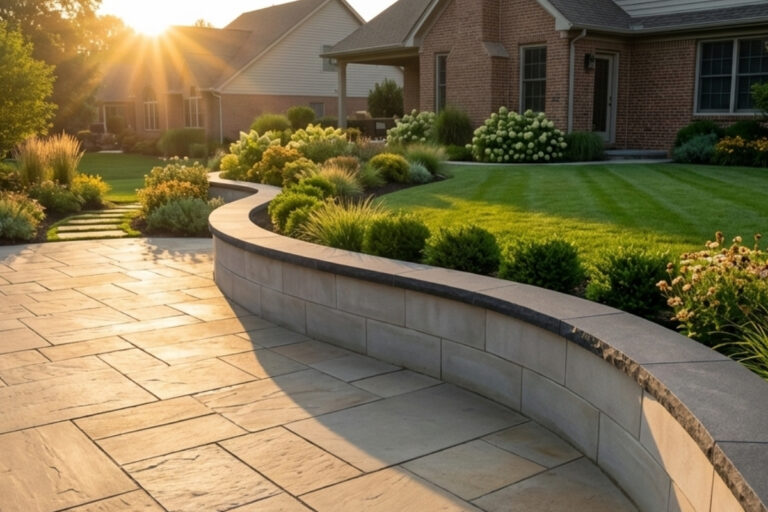
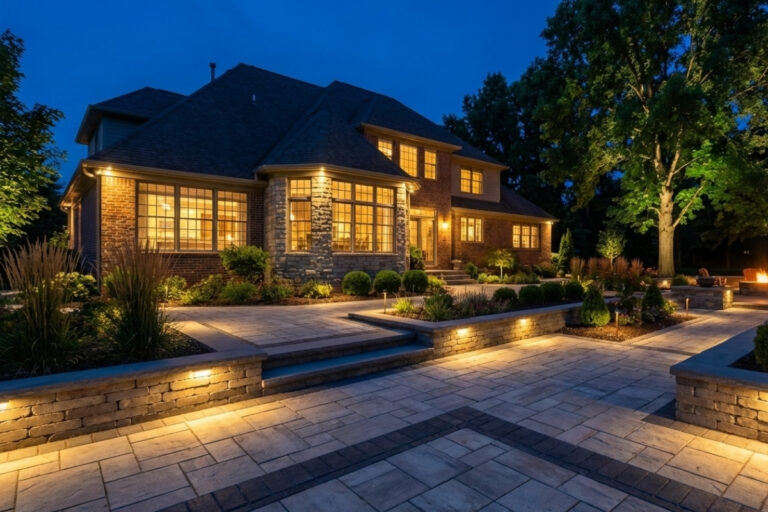
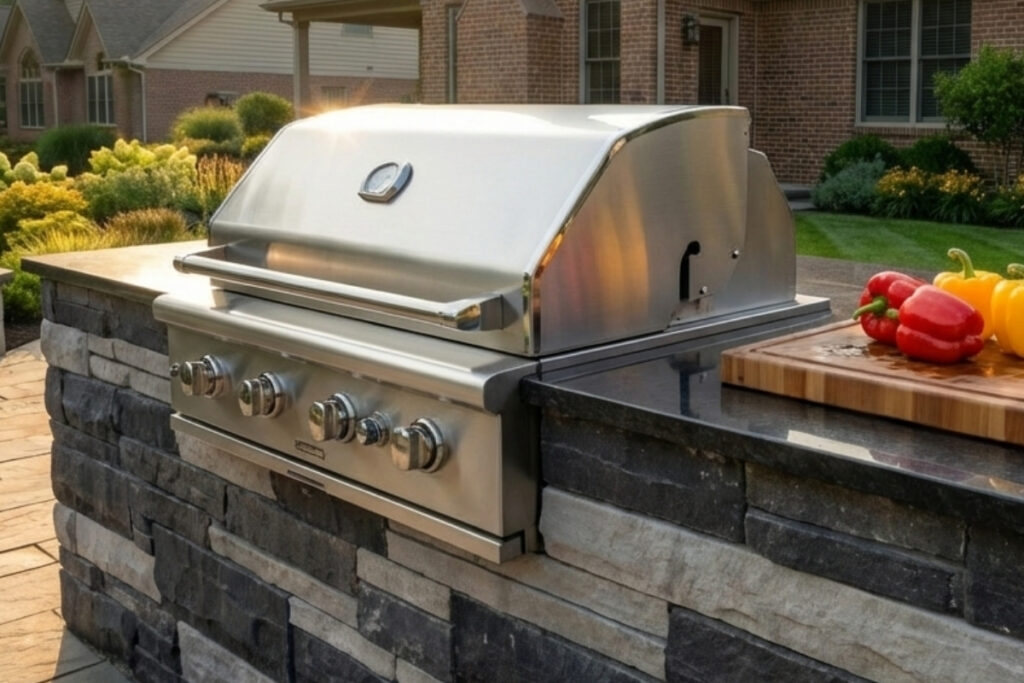
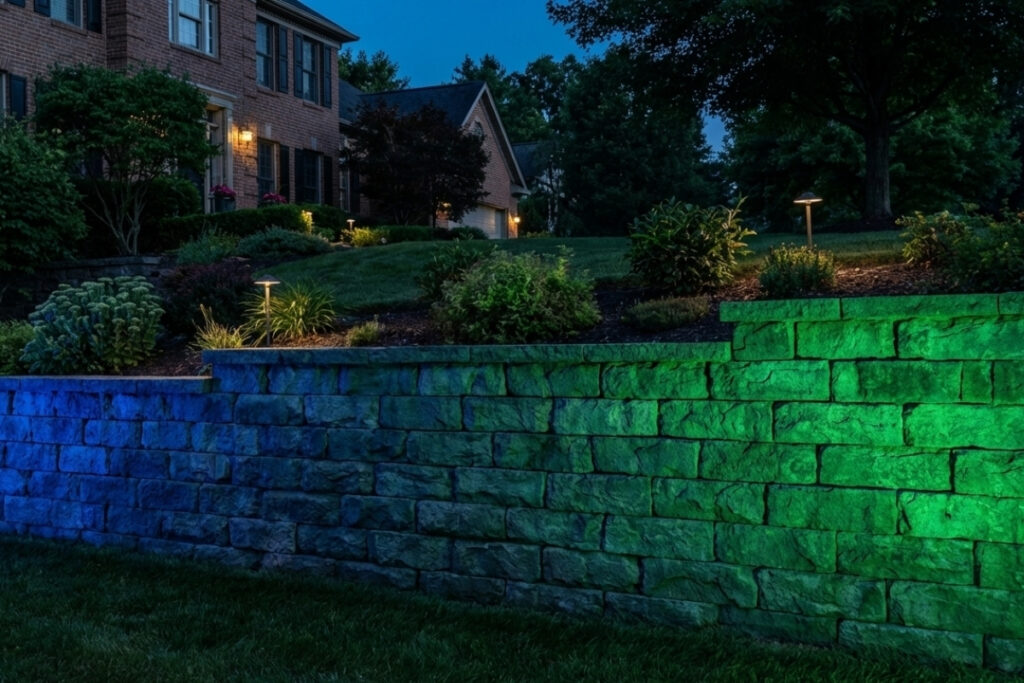
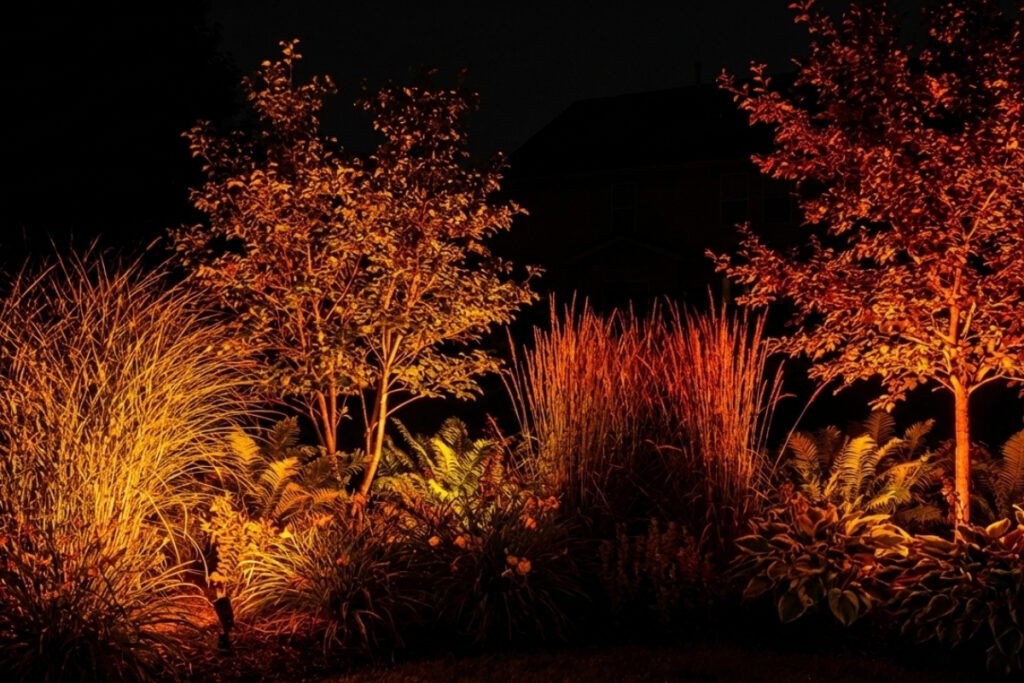
Before anything else, work in the landscape tends to start first – then spill into related steps near hardscaping construction. The outdoor patio shows up ahead of the rest, coming into view first. Walls appear next, rising slowly without much fanfare. Built-ins follow, carefully fitted into place so they do not draw attention away. Much later still, plants begin putting down roots, bringing balance and softness across every hard surface. Even now, around bends through the garden, shrubs hide the edges of stone work above a hush of leaves under trees stretching toward evening light. Fences go up where sight needs to stop, marking personal spaces even on wide plots. When light fades, landscape lighting shifts into view, tracing warmth onto specific greenery, softly marking boundaries as night deepens.
Shape begins when landscape design moves hand in hand with hardscape choices; otherwise, a paved section could sit alone among roots, looking awkward, like something added without thought.
Frequently Asked Questions
How long does a landscape installation take?
Foundation planting renovations take 2–5 days. Full landscape installations with grading, drainage, and irrigation take 1–3 weeks. Large-scale projects may span several weeks. Plant installation itself is fast — site preparation, grading, and underground work take the most time.
Do you warranty the plants?
We provide a one-year warranty on all plant material installed by our crews, contingent on following the watering and care instructions we provide. The warranty covers defective stock and installation errors — not drought stress from underwatering, mechanical damage, or chemical exposure.
When is the best time to have landscaping done?
Spring (April–May) and fall (September–October) are the ideal windows. Fall is slightly better for trees and shrubs — warm soil promotes root growth while cool air reduces stress. We install throughout the growing season, but spring and fall produce the best establishment results. Learn more about our approach to landscaping in Northeast Ohio.
Bee Green Outdoor Living provides professional landscape design and installation across Northeast Ohio. Contact us for a free consultation or learn more about our landscaping services.