Landscaping & Outdoor Living Market Trends (2026 Report)
Twelve years in the field, yet nothing shifts how quickly alfresco spaces evolve today.
More and more people are turning their backyards into real lifelines during winter months. Outdoor upgrades rank near the top when it comes to payoff on cost, says National Association of Realtors reports. Money flowing into decks, patios, and grills keeps rising each season. It is not just a little trend gaining steam — it is full force. Outside home spaces might reach more than $230 billion worldwide by 2028 — with U.S. and Canadian backyards leading much of that rise.
Here’s what’s going on. Homeowners want different things now. Some shifts come from new materials. Others tie into bigger trends taking shape slowly ahead.
Looking at the country along with what's happening in Northeast Ohio, eight patterns stand out. Numbers from the trade support these observations. From firsthand work designing patios and yards over two decades plus in Cuyahoga, Medina, and Lorain areas, the insights gain weight.
1. Outdoor Kitchens: From Luxury to Standard Feature
Five years ago, outdoor kitchens were aspirational. Something you'd see in a magazine and think, "Maybe someday." That's shifted dramatically.
According to the American Institute of Architects, outdoor kitchens have appeared on the wish list of over 70% of residential design inquiries in the past two years. Modular outdoor kitchen systems from manufacturers like Techo-Bloc and others have brought price points down significantly, making entry-level outdoor kitchens accessible to a much wider range of homeowners.
What's driving this? A few factors converge:
- Post-2020 lifestyle shifts. Entertaining at home became the norm, and that habit stuck.
- Modular systems. Pre-engineered island kits mean less custom masonry, faster installation, and lower costs. A functional outdoor kitchen with a built-in grill, countertop space, and storage can start in the $8,000-$12,000 range.
- Resale value. Outdoor kitchens consistently rank among the top features buyers look for. Not just in luxury homes — in mid-range neighborhoods too.
I've seen this firsthand. We're installing more outdoor kitchens per season than ever, and the requests are coming from homeowners across every price point. If you're considering one, our guide on outdoor kitchen design ideas covers what to think about before you build.
The trend line is clear: outdoor kitchens are becoming standard, not special.
2. Hardscaping Replacing Softscaping
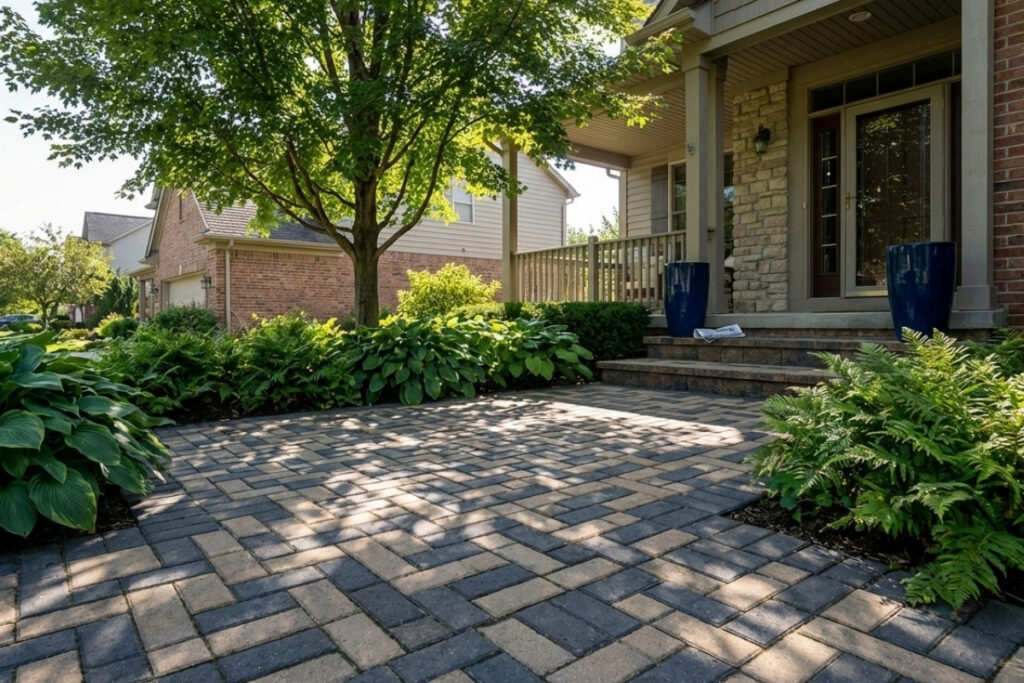
Here's a fundamental shift that's reshaping the entire industry. Homeowners are choosing hardscape over lawn.
Nationally, the move away from turf-dominated yards has been driven by drought concerns, water restrictions, and a growing preference for low-maintenance outdoor spaces. In the Southwest and West Coast, this shift has been dramatic. In Ohio, drought isn't our primary driver — but the desire for usable, low-maintenance outdoor space absolutely is.
The numbers tell the story. According to the Interlocking Concrete Pavement Institute (ICPI), paver production in North America has grown by an average of 6-8% annually over the past five years. Hardscape materials now account for a larger share of residential outdoor project budgets than plantings and sod combined.
What we're seeing on the ground:
- Smaller lawn areas, larger patio footprints. The average patio we install has grown from roughly 300 square feet to 450-500 square feet over the past decade.
- Hardscape as the foundation. Patios, walkways, and retaining walls form the backbone of the design. Plantings accent — they don't dominate.
- Porcelain pavers emerging. More on this in the materials section, but porcelain is changing what's possible with outdoor flooring.
For a deeper look at the data behind this shift, check out our hardscaping industry statistics breakdown. And if you want to see what modern hardscape-forward design actually looks like in Ohio, we covered that in our modern landscaping ideas post.
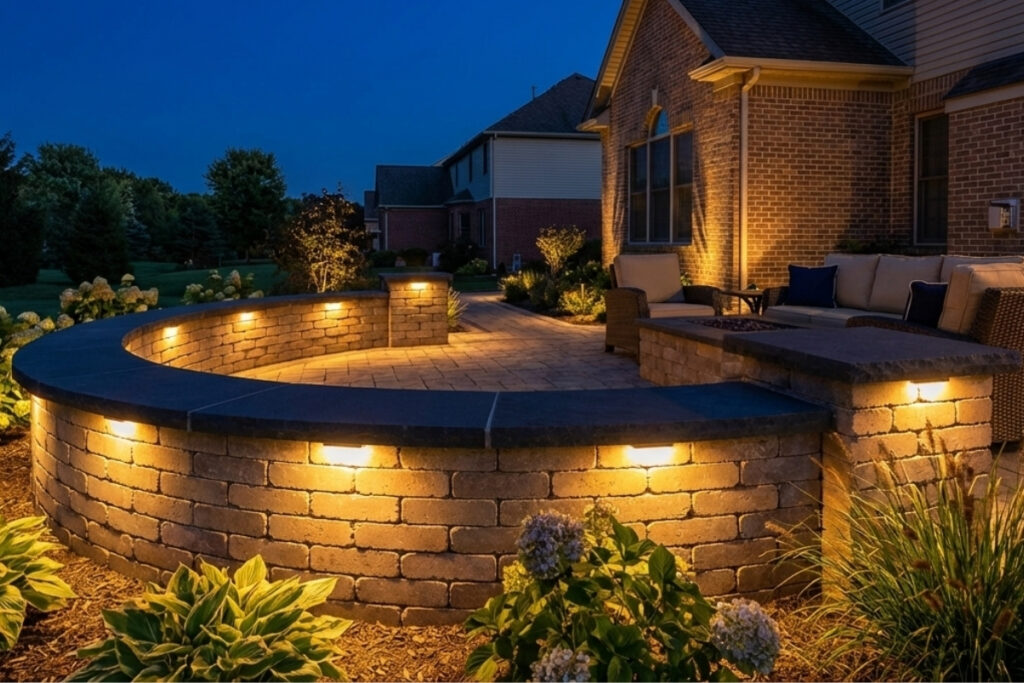
3. Multi-Zone Outdoor Rooms
This is maybe the most interesting design trend happening right now. Homeowners aren't building "a patio" anymore. They're building outdoor rooms. Multiple rooms.
The concept borrows directly from interior design: define zones for different activities, connect them with transitions, and create flow. A single backyard might include:
- A dining zone with a pergola-covered table for eight
- A lounge zone with built-in seating around a fire feature
- A cooking zone with a full outdoor kitchen
- A transition zone with hardscape walkways, level changes, or planting beds creating separation
This multi-zone approach changes how we design and how homeowners use their space. Instead of one flat patio that serves every purpose (and none of them well), you get distinct areas that each feel intentional. Level changes — even a single step up or down — create psychological separation between zones without walls.
I'll be honest: this is where great design separates itself from average work. Anyone can pour a rectangle of concrete. Creating connected outdoor rooms that flow naturally? That takes planning. If you're thinking about a multi-zone layout, starting with a solid patio plan is critical.
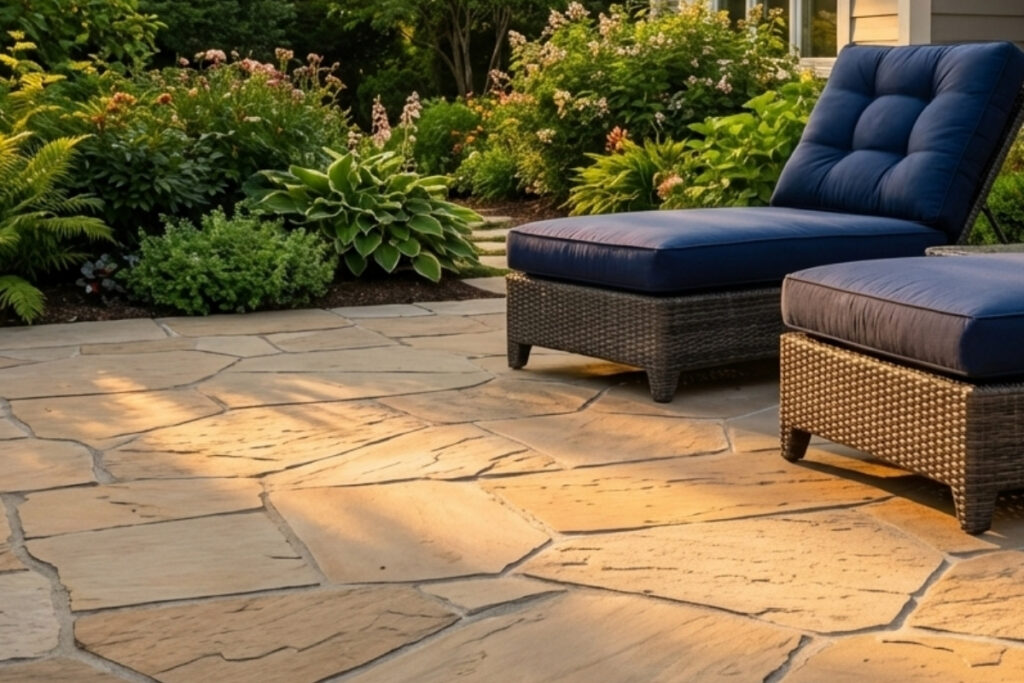
4. Fire Features as Centerpieces
Fire pits and outdoor fireplaces have moved from "nice to have" to the single most requested feature in outdoor living design. And it's not close.
Industry surveys consistently place fire features at the top of homeowner wish lists — above outdoor kitchens, above water features, above everything else. The appeal is universal: warmth, ambiance, a gathering point.
A few data points worth noting:
- Gas fire features now outsell wood-burning options in new installations by a significant margin. Convenience wins. Push-button ignition, no smoke, no ash cleanup, adjustable flame height.
- Fire tables and linear fire features are growing faster than traditional round fire pits. The modern aesthetic is driving demand for sleeker, more architectural designs.
- Season extension is the practical justification. In northern markets like ours, a fire feature can add two to three months of comfortable outdoor use in spring and fall.
Here in Northeast Ohio, fire features make enormous sense. Our outdoor season without one runs roughly May through September — maybe four to five usable months. Add a fire pit or fireplace, and you're comfortable from late March through November. That's nearly tripling your shoulder-season comfort.
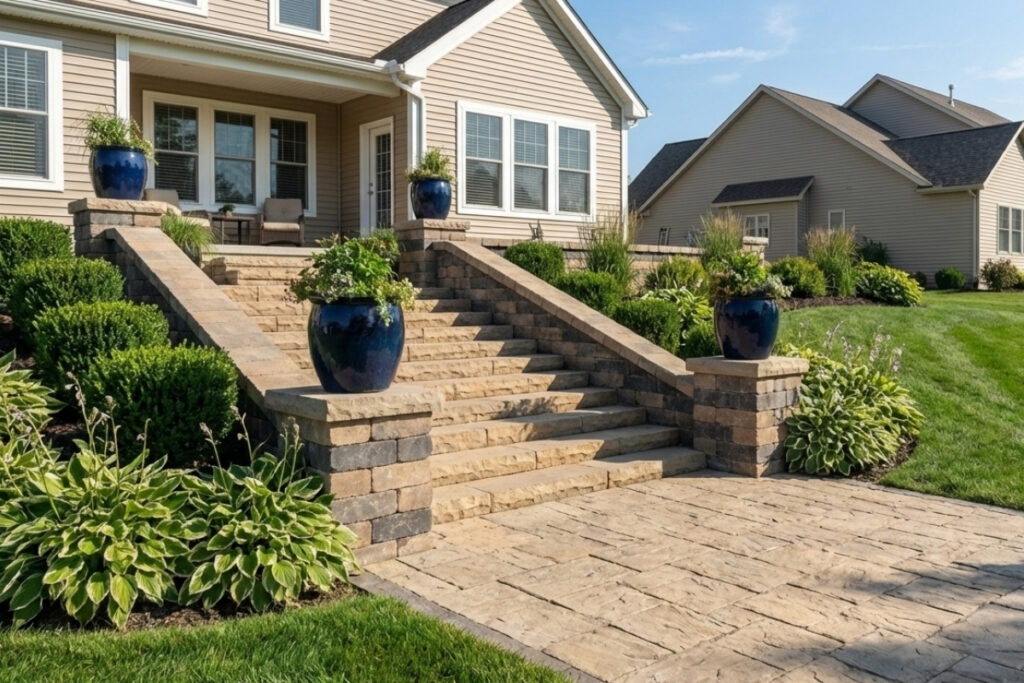
5. Sustainable and Low-Maintenance Design
Sustainability in outdoor living used to mean "plant a tree." It's become far more sophisticated than that.
Today's homeowners want outdoor spaces that are beautiful, functional, AND environmentally responsible — without requiring constant upkeep. That combination is driving several specific product and design trends:
- Permeable pavers. These allow rainwater to infiltrate through the paver joints rather than creating runoff. Municipalities across Ohio are increasingly encouraging (and in some cases incentivizing) permeable hardscape installations for stormwater management.
- Native plantings. Ohio native perennials, grasses, and shrubs require less water, less fertilizer, and less maintenance than traditional ornamental plantings. They also support local ecosystems — pollinators especially.
- Rain gardens and bioswales. Functional stormwater features that double as attractive landscape elements. We're incorporating these into more designs every year.
- LED landscape lighting. Energy consumption is a fraction of older halogen systems. Modern LED fixtures last 50,000+ hours and offer tunable color temperatures. The quality of light has improved dramatically.
- Drought-tolerant design principles. Even in Ohio, where rainfall is generally adequate, designing with water efficiency in mind reduces maintenance and creates more resilient landscapes.
The overarching theme: homeowners don't want to choose between beautiful and sustainable. They expect both. And honestly, they should — the products and design knowledge exist to deliver both simultaneously.
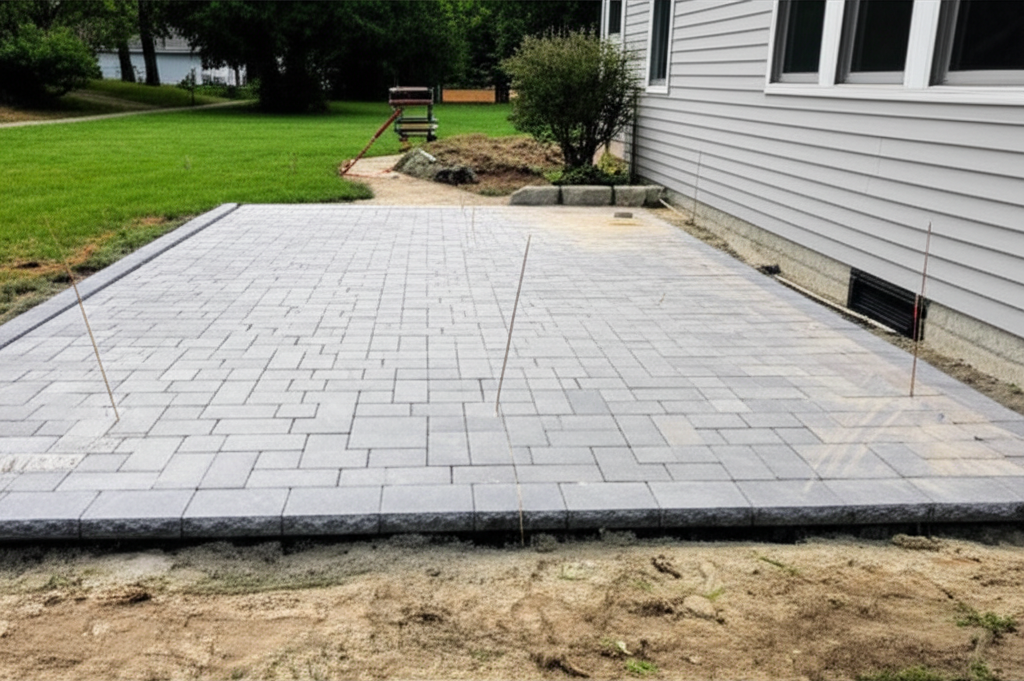
6. Technology Integration in Outdoor Spaces
This trend is still in its early stages, but the trajectory is unmistakable. Technology is coming to the backyard.
Where we're seeing adoption now:
- Smart lighting controls. Wi-Fi and Bluetooth-enabled landscape lighting systems that homeowners control from their phones. Scheduling, dimming, color changes, zone control — all from an app. This is arguably the most mature outdoor technology category.
- Automated irrigation. Smart controllers that adjust watering based on weather data, soil moisture, and plant type. Systems like Rachio and Hunter's Hydrawise have made this accessible and genuinely useful.
- Wi-Fi-enabled outdoor appliances. Smart grills, connected refrigerators rated for outdoor use, Bluetooth audio systems designed for weather exposure. The outdoor kitchen is becoming as connected as the indoor one.
- Design visualization. Augmented reality tools that let homeowners see proposed designs overlaid on their actual yard. We're using 3D rendering increasingly in our design process, and the technology keeps improving.
Where it's heading: integrated outdoor automation systems that tie lighting, audio, heating, and irrigation into a single platform. Think whole-home automation extended to the outdoor environment. We're not fully there yet in most residential applications, but the pieces are falling into place.
7. Material Innovation
What we can now get hold of wouldn’t have seemed real back when I began working here. How fast things keep changing – especially hardscape items – has grown stronger than before.
What stands out most is the role of porcelain pavers. Once mainly seen in European regions, they’re now drawing attention across North America. Their benefits add up quickly – water absorption barely registers, handling cold temperatures well even in harsh climates like Ohio. Over time, hues stay true without shifting, while stains barely touch the surface. Surprisingly light in weight, their thickness feels nearly invisible under foot. Fine ones they are. Still, getting them placed right involves a hurdle: workers need sharp awareness about how porcelain differs during setup compared to concrete stones.
A big change? Large-format pavers taking center stage. For years, most installs stuck to classic 6×6 or 6×9 sizes. Now, 24×24 shows up often. Sometimes it's 36×24 instead. That shift brings sharp new looks – smooth layouts, fewer gaps between pieces. Firms such as Unilock now spend large sums on building products of major scale.
Now picture outdoor kitchens built with new kinds of veneer material – lighter, slimmer versions of real stone. These engineered options work just like full slabs yet take less time to set up. Because they weigh less, crews move them faster under heavy loads. Even natural-looking alternatives made on demand beat traditional thick cuts easily. Fire pits get similar upgrades too, shaped tight without excess bulk. Walls meant for seating often use these too, stacked neat across yards. Affordability sneaks in quietly alongside speed of build day.
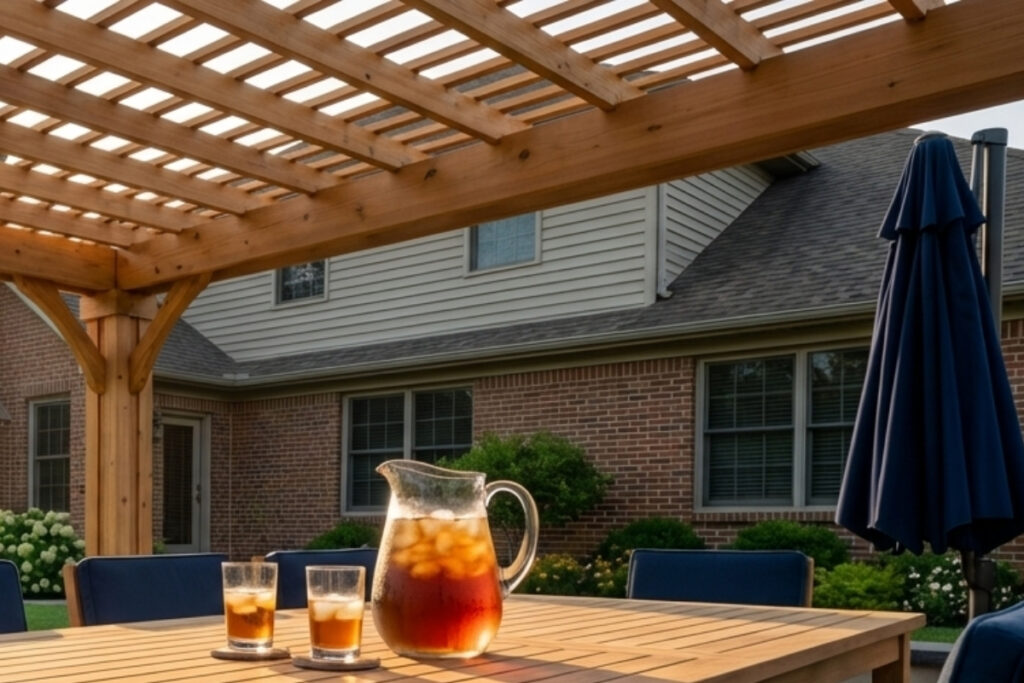
Pergolas built from mixed materials earn a nod here. Not just stone or steel – some use aluminum shaped like wood, while others rely on fiber-strengthened frames. Then there's composite decking that mimics timber but won’t splinter or crack. Such builds give the appearance of real timber without the constant upkeep. When winter’s chill meets summer’s wetness, as in Ohio, regular lumber falls short fast. These built-to-last options last far longer under similar stress.
8. Season Extension in Northern Markets
This trend is personal to us. In Northeast Ohio, season extension isn't just a trend — it's the single most impactful thing we can do for our clients.
The standard unimproved outdoor season here runs roughly mid-May through mid-September. Call it four months, maybe five if the weather cooperates. With intentional design, we can extend that to eight, nine, even ten months of comfortable outdoor use.
How:
- Covered structures. A pergola with a solid or louvered roof keeps rain off and provides shade. Add it over a dining or lounge area and you've eliminated weather as a limiting factor for most of the year.
- Radiant heating. Infrared heaters mounted under a covered structure can extend comfortable use well into November and start again in early March.
- Fire features. As covered earlier, a fire pit or fireplace provides warmth and extends shoulder-season comfort by two to three months.
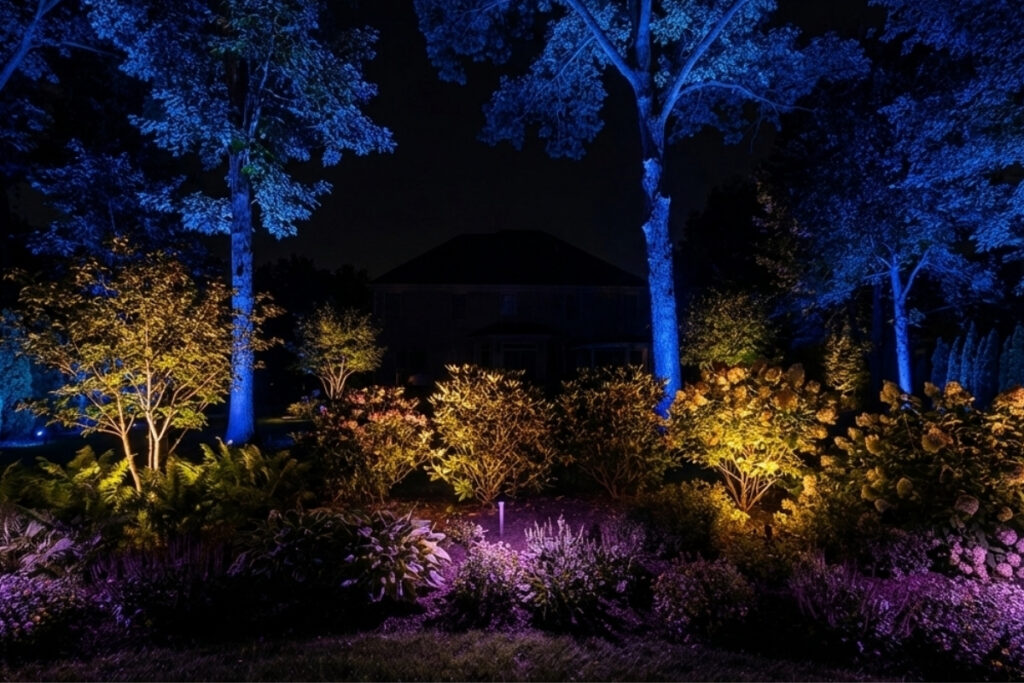
- Landscape lighting. Quality lighting makes outdoor spaces usable after dark. October darkness at 6:30 PM doesn't end your evening if you have well-designed landscape lighting.
- Windscreens and partial enclosures. Strategic placement of walls, privacy screens, or plantings to block prevailing winds makes an enormous difference in perceived temperature.
Stack these together and you've fundamentally changed the equation. A $60,000 outdoor living space that's usable for ten months is a very different value proposition than one that sits idle for seven months of the year.

Regional Spotlight: Northeast Ohio
National trends are useful context, but what matters to our clients is what's happening locally. Here's what I'm seeing across Cuyahoga, Medina, and Lorain counties.
The housing market is influencing outdoor investment. With home values strong across the region, homeowners are more willing to invest in outdoor improvements. We're seeing larger average project sizes, and more homeowners choosing to phase projects over two or three seasons rather than compromising on quality to hit a lower budget.
New construction vs. renovation. New construction in developing areas like southern Medina County often includes basic outdoor elements — a small patio, maybe a walkway. But we're seeing strong demand for upgrading those builder-basic outdoor spaces within two to three years of move-in. In established neighborhoods — places like Strongsville, North Royalton, Broadview Heights — the renovation and replacement market is booming. Aging patios and retaining walls from the early 2000s are reaching end of life.
Popular project types by area:
- Medina and Brunswick areas: Large patio-and-fire-pit combinations. Families with acreage wanting to define usable outdoor space within larger yards.
- Strongsville, North Royalton, Broadview Heights: Full outdoor living packages — patio, kitchen, fire feature, lighting. These established communities have homeowners who've been in their homes long enough to invest significantly.
- Columbia Station, Grafton, LaGrange: Mixed new construction upgrades and rural property transformations. Larger lots allow for more ambitious multi-zone designs.
Material preferences locally: Concrete pavers remain dominant, but we're seeing growing interest in natural stone accents and porcelain pavers among design-conscious homeowners. Unilock and Belgard products continue to perform well in our freeze-thaw climate.
What These Trends Mean for Homeowners
Suppose you want to start something outside – this year, maybe later. What sticks after going through it all? That changes. One thing holds steady.
Start by spending on solid hardscapes. A strong paver patio – built right with proper groundwork – becomes a lasting value. It forms the base that shapes what comes after. Starting with weak foundations or low-quality supplies might seem like a shortcut today. Yet fixes pile up fast – by ten years, budgets crack under repeated repairs.
Start thinking about what comes next. Building piece by piece isn’t always an option. Still, shape things so they can grow all at once. Start running electric conduit once the patio begins, no matter the outdoor kitchen is far off – two years plus some. For a later fireplace, leave gas lines ready with short runs tucked in place. Mapping things out carefully today clears paths for big savings down the road.
Focus on multi-use spaces. Outside areas that do many things tend to work best. Dinner for just a couple happens on Tuesdays, yet the same spot handles crowds by Saturdays. Places where comfort stays just as strong in April as in July. Value grows when things can adapt.
Chasing fads without thinking? Not each fad fits each home or owner. A $40,000 backyard cook space misses its purpose when dinner never happens. A fire pit sitting empty? More like a gap in your backyard design. Shape things so they mean something when you reach for them. Make it count.
Return on investment matters. According to National Association of Realtors, thoughtful outdoor layouts recover 60-80% of their percent of initial cost when selling – sometimes more, especially where demand runs high. Spaces that feel alive often tip the scale. This kind of planning isn’t about adding expense – it shapes value. Buying into your home value.
Out here, things are moving quicker than before. What we design now carries little resemblance to past work – just compare recent efforts with those from half a decade back. Quality goods, sharper thinking on layout, higher hopes from people living there. Standing where we are? That place feels different right now. Being a resident weighing options brings real value now too.
Feel free to reach out if any of those ideas fit your situation – we’re here to listen. Request Your Design Consultation Now, imagine where things could go from here.