Gas vs. Wood Fire Pit: Which Should You Build?
A flicker on the patio – gas versus wood fires – seems like a small choice until it nags at you. Heat rises whether flames roar from fuel or logs. Yet one hums quietly, fed by tap and hose; the other crackles with effort, needing kindling and wind. Both stretch evenings into cooler nights when others draw curtains tight. Still, one fits rhythms built around ease, the other thrives where tending embers defines time. Choose poorly, and the ring remains empty.
Fireplaces appear in homes built over fire features years ago, using firewood plus gas models later on Greater Cleveland, Medina County, and Lorain County. To pick one, people get guidance based on local rules and personal needs.
The Quick Comparison
| Factor | Gas Fire Pit | Wood-Burning Fire Pit |
|---|---|---|
| Installation cost | $5,000–$15,000 | $3,500–$10,000 |
| Fuel cost | $0.50–$1.50/hr (natural gas) | $5–$8/bundle; free if you split your own |
| Startup | Instant — flip a switch | 15–30 minutes to build a fire |
| Smoke | None | Yes — direction depends on wind |
| Maintenance | Annual inspection, minimal | Ash cleanup after every use |
| Ambiance | Clean, controlled flame | Crackling, wood smoke, campfire feel |
| Heat output | 40,000–90,000 BTU | 80,000–200,000+ BTU (depends on wood) |
| Season | Year-round, no restrictions | Subject to local burn bans (rare in NEO) |
| Safety | No sparks, controlled flame height | Sparks, flying embers possible |
Gas Fire Pits: What You're Getting
A flicker inside a gas fire pit draws from either your home's main gas line or a sealed container filled with propane. Underneath lies a shallow tray holding a burner, part of the structure that makes up the pit. Peeking out above? Sometimes bits of glowing material – fire glass, rocky pieces, or circular ceramic pieces – sit arranged on the surface. Firms like Belgard produce items designed to merge into rock-based road surfaces. Over at Unilock, similar objects serve the same purpose – blending into place. Their supplies come in shapes fitting exactly what comes next.
A flash appears once you tap the switch. When the tool quits running, warmth fades along with it. No smoke lingers, not even a hint. Smoke never leaks. Trailing flames have vanished completely.
The Practical Advantages
Fireside time arrives on Tuesday evening. Long past work hours, only now – a quarter hour sipping beside the flickering light with something steaming in palm. Click. Illumination flows through pipes, meaning no walk outside needed. Here it goes – switch everything up.
Flames take twice five to twenty minutes starting, yet once lit, heat fades fast within half an hour. Warm necessary air arrives only when space grows tight and lungs work fast.
One reason visitors return to the gas setups in Strongsville, Westlake, and Brunswick? The fire pit lights easily – simply turn the knob, walk away. Because there’s so little effort involved, turning on the flame feels natural, second nature even.
Without a plan, smoke just flows. From wood fire pits, it slips out freely. Across landscapes, gusts carry it haphazardly – seen in Northeast Ohio, swirling unpredictably. Where the haze piles up, that is where they stand, attention pulled by its drift. A cloud of smoke could drift inside if a backyard grill faces the front door, particularly while windows remain fully open. Close living sets the scene – places such as Lakewood, Rocky River, or cramped neighborhoods where homes almost touch – and the air's murkiness doesn’t only show, it often changes how people live day to day.
Smoke never comes from a gas fire pit. Right up close, the sight remains open to everyone nearby. Sometimes it's best to leave windows slightly ajar. Most folks nearby probably can’t even tell you’re around.
A single check-in each year keeps operations moving. Crumbs pile up here and there – that’s roughly how maintenance unfolds. Ash removal stops being someone’s task. Grime cleaning vanishes from the list entirely. Firewood sits untouched, needing nothing – not drying, no prep work. Those after cozy heat with less effort often choose gas without hesitation.
Year-round use. Gas fire pits never stop, no matter the season or rules. Where open flames are banned – like in Northeast Ohio – alternatives must step in. During peak heat waves, full bans pop up every once to keep things safe. Gas takes over then, calm and steady on its own terms. No sparks ever lift into the atmosphere because there is nothing to ignite that way. It stays under control, never spreading where it might harm someone.
Where Gas Falls Short
That glow from fire doesn’t really fit. Truth is, an open flame sits tidy inside a pit. Yet, silence – no sizzle. Light does not flash through the space. Rather than swirling, flames sit motionless along uniform edges.
By morning glow, no soot speckles your arm. Even after fire drew you near, another circle waits for true warmth – copies echo noise, missing what it's like.
Less raw heat. On a single gas flame, output ranges from 40,000 to 90,000 BTU. Heat crackling up from wood logs climbs well past that mark. By early November, nights chill to around 40°F. That slight difference becomes aware. Heat arrives in its own way. A soft kind of illumination slips along only a few feet if gas powers it. From the wood stove, warmth drifts past the limits of our little group circle, further than seems proper.
Setting up costs go higher here. Getting gas to the fire pit means running a line from the main meter, which adds expense – costs rise between $1,500–$4,000 and further amounts depending on how long the run is. On top of that, the burner and start-up kit add another $800–$2,000 dollars compared to just a standard wood flame model. A proper gas fire pit tends to fall near the range of $5,000–$15,000 once all pieces are part of the package.
One thing ties natural gas to fixed fuel systems – it comes through one channel consistently. Propane sits in tanks, requiring frequent fills because supply can disappear suddenly without warning. This shift doesn’t alter the core, though having trees around means fire fuel is close at hand. When those trees aren’t near, the store from the hardware district shows up.
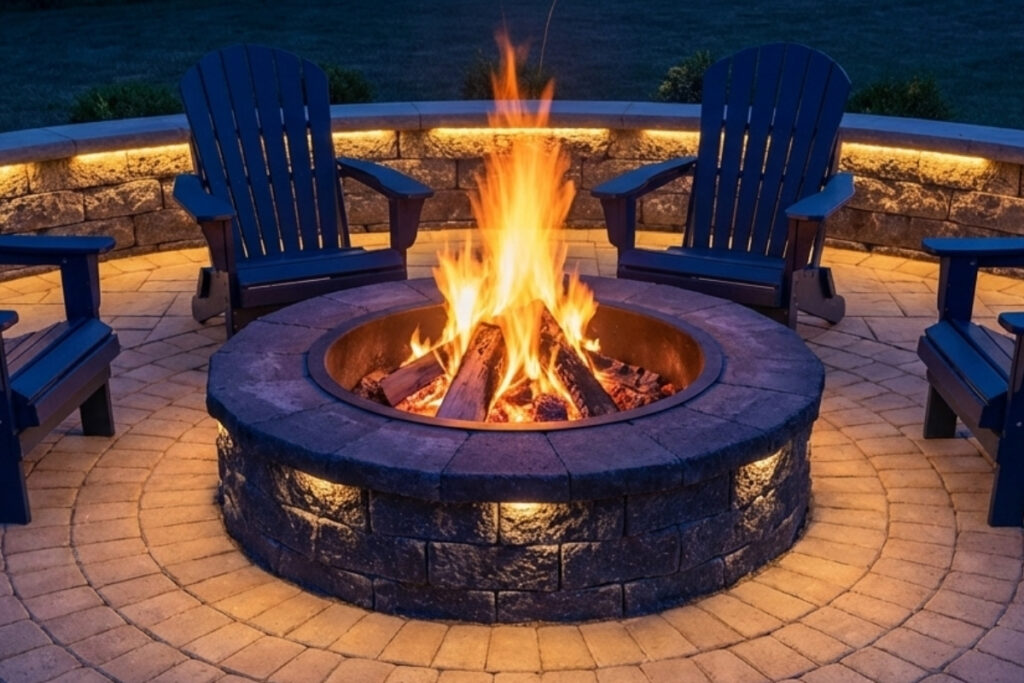
Wood-Burning Fire Pits: What You're Getting
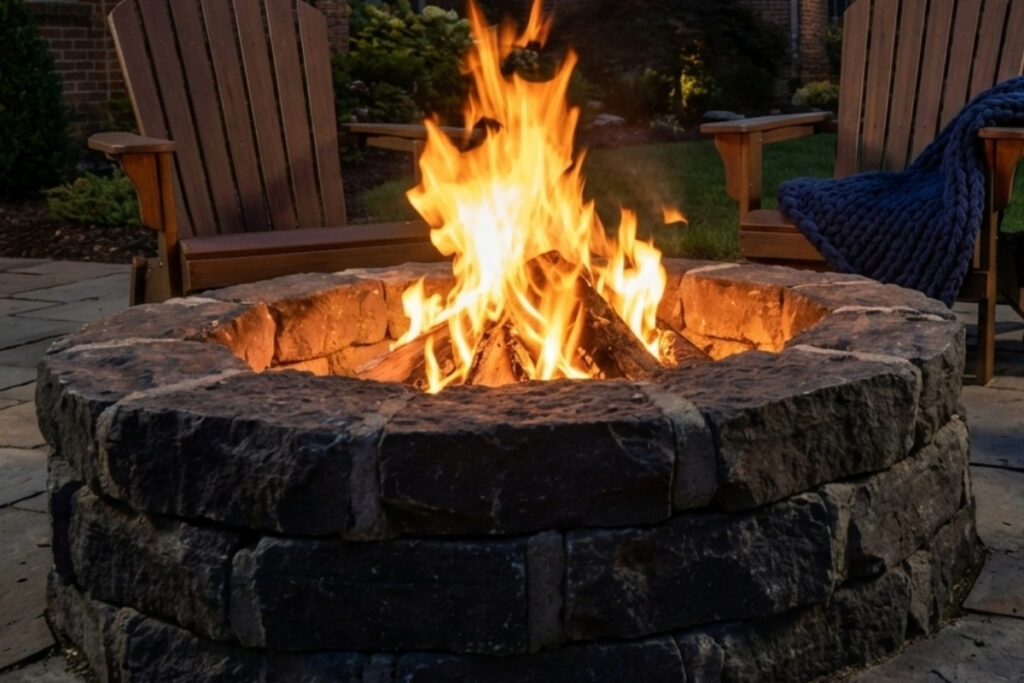
A flame climbs from split wood in a circle of stone. Above, nothing but open blue stretches on out. Rocks pile up tall, forming walls without walls. Heat curls along the edge of firelight, biting thin air. Every snap tells something different – not about the wood but how damp or dry the night feels. Height changes sound, even if you do not notice right away. Heat flickering under open sky makes things feel close to bone, back to old pulses.
Something hidden drives most actions humans take, tracing through groups gathered around firelight centuries past.
The Practical Advantages
That moment. Smoke from oak drifts up when wood sparks on rocks. Light creeps across charred logs as they catch. A small heap, now roaring, lights the night air.
Peeking at the log records. Smell of burning wood lingers in the air, drawing neighbors closer. Flames crackle instead of humming machinery beneath a glass cover. Instead of pressing buttons, someone lifts a grate, revealing charred bark and flickering embers. Gatherings form around warmth, not because of lighting controls. Evening chats return when kindling is stacked just right.
Heat like nothing else. Warm necessary air comes from a hardwood fire in a thoughtful setup. Cold nights in early fall, when October shifts into November across regions like Medina, Hinckley, and further south in our reach, bring people close to heat at 15 feet through well-built wood flames. No substitute burns quite the same way.
Fewer upfront expenses. No need for gas pipes, burner setups, or ignition parts. A tailored stone or block fire pit — built right with drainage and solid footing — often sits between $ and $, adjusted by scale and material choice. Under $5,000, basic constructions begin. According to National Association of Realtors, outdoor cooking spots stand out in satisfaction, yet none beat the effect of a wood-fired pit. That kind of setup brings strong return for minimal starting cost.
A spark in the open. Place a wood-fired pit wherever fits — not limited by wiring or zoning lines. Even at a distance, far from buildings, near water or wide spaces, access remains clear. Okay. That kind of positioning works well when dealing with broad land areas.
Where Wood Falls Short
Smoke. There's no way around this one. Wood produces smoke. Wind shifts. Smoke follows people (actually, it follows the low-pressure zone created by your body — there's physics behind the joke). On patios close to the house, smoke infiltrates through windows and doors. On tight suburban lots, it reaches the neighbors.
Setup and cleanup. Building a fire takes time and skill. Cleaning out ashes after every fire is a chore. Storing firewood — properly stacked, covered, away from the house — requires space. None of this is difficult, but it adds friction to every use.
Spark risk. Wood fires produce sparks and occasional flying embers. On a paver patio, that's purely cosmetic (a spark mark on a paver is a non-issue). On a wood deck or near fabric cushions, it's a legitimate concern. Spark screens help but don't eliminate the risk entirely.
Municipal considerations. Most Northeast Ohio communities allow residential fire pits within setback requirements (typically 10–25 feet from structures). Some communities require a permit for wood-burning features. Ohio's fire code provides baseline regulations, but your city may have additional rules. We check requirements for your municipality before we design.
Cost Breakdown
Gas Fire Pit — Total Project Cost
| Component | Cost Range |
|---|---|
| Fire pit structure (stone, block, or concrete) | $2,500–$6,000 |
| Gas burner and ignition system | $800–$2,500 |
| Gas line installation (meter to pit) | $1,500–$4,000 |
| Fire glass or media | $200–$600 |
| Permit and inspection | $100–$300 |
| Total installed | $5,000–$15,000 |
Wood-Burning Fire Pit — Total Project Cost
| Component | Cost Range |
|---|---|
| Fire pit structure (stone, block, or concrete) | $2,500–$6,000 |
| Fire brick liner | $300–$800 |
| Drainage and footing | $500–$1,500 |
| Cap stone / coping | $400–$1,200 |
| Total installed | $3,500–$10,000 |
Both cost ranges assume a quality custom-built pit on a proper footing — not a prefab kit from a home center. For detailed patio and fire feature pricing, see our patio cost guide.
Ongoing Costs
Gas: $0.50–$1.50 per hour of use (natural gas). If you use the fire pit 3 hours per week for 30 weeks, that's $45–$135 per year in fuel.
Wood: $5–$8 per bundle of firewood, or roughly $250–$350 per cord if you buy in bulk. A typical evening burns 1–2 bundles. Budget $150–$400 per season, or zero if you have your own wood supply.
Our Recommendation Framework
After building hundreds of fire features across Northeast Ohio, here's how we guide the decision:
Choose Gas If…
- You'll use the fire pit frequently but briefly (weeknight relaxation, morning coffee, quick evening wind-down)
- Your patio is close to the house or close to neighbors
- Low maintenance is a priority
- You want the fire as ambiance and light rather than primary heat
- Your property already has natural gas service with reasonable access to the fire pit location
- You're integrating the fire into a modern or contemporary outdoor living design
Choose Wood If…
- The campfire experience is what you're after — the smell, the sound, the ritual
- You entertain around the fire and want maximum heat for cool-weather gatherings
- Your fire pit location is far from the house (making gas line routing expensive)
- Budget is a driver and you want to minimize installation cost
- You enjoy the hands-on process of building and tending a fire
- Your property has mature trees and a ready supply of seasoned hardwood
Consider Both
Some homeowners build a gas fire table on the main patio for everyday use and a wood-burning pit at the far end of the yard for weekend gatherings. The gas feature handles the casual Tuesday evening. The wood pit handles the Saturday night party with 12 people. Different tools for different occasions.
What About Propane?
Propane is the middle ground when natural gas isn't accessible. A buried or concealed propane tank (typically 100–200 lbs) feeds the fire pit burner without a gas line running back to the house.
Advantages over natural gas: Flexible placement. No gas line trenching cost. Can be installed anywhere.
Disadvantages: Tank needs refilling (they run out, usually at inconvenient times). Propane costs roughly double natural gas per BTU. Larger tanks require code-compliant setbacks and sometimes permits.
We install propane fire features regularly for properties where the pit location is 60+ feet from the gas meter, making a gas line run cost-prohibitive.
Frequently Asked Questions
Which is more cost-effective long-term — gas or wood?
It depends on use frequency. If you're running the fire pit 2–3 hours per week for 7 months, gas costs roughly $100–$200/year in fuel. Wood for the same usage runs $200–$500/year (purchased) or near zero if you have your own supply. Gas saves on maintenance time; wood saves on installation cost. Over 10 years, total costs are similar for average use.
Can I convert a wood fire pit to gas later?
Yes. We retrofit wood-burning pits with gas burner inserts regularly. It requires running a gas line to the pit and installing a burner pan, ignition system, and proper ventilation. Budget $2,500–$5,000 for the conversion. The original pit structure typically stays as-is.
Do gas fire pits work in winter?
Absolutely. Gas ignites reliably regardless of temperature. Many of our clients in the Cleveland area use their gas fire pits year-round — even on the patio in January. The flame and heat are consistent whether it's 70°F or 20°F.
How far does a fire pit need to be from my house?
Most Northeast Ohio municipalities require 10–15 feet from combustible structures for wood-burning pits and 5–10 feet for gas features. Always check your local code — requirements vary by city. We confirm setbacks during the design phase for every project.
What type of wood is best for a fire pit in Ohio?
Seasoned hardwood — oak, hickory, maple, and ash. All are abundant in Northeast Ohio. The wood should be dry (split and stored for at least 6 months). Green or wet wood produces excessive smoke and poor heat. Avoid softwoods like pine for primary burning — they pop, spark excessively, and coat the pit interior with creosote.
Ready to add a fire feature to your outdoor space? Request your design consultation — we'll evaluate your property, discuss gas vs. wood, and design a fire feature that fits how you actually live outdoors. For fire pit design inspiration, check out our backyard fire pit ideas.
Bee Green Outdoor Living designs and builds custom fire features across Greater Cleveland, Medina County, and Lorain County.